
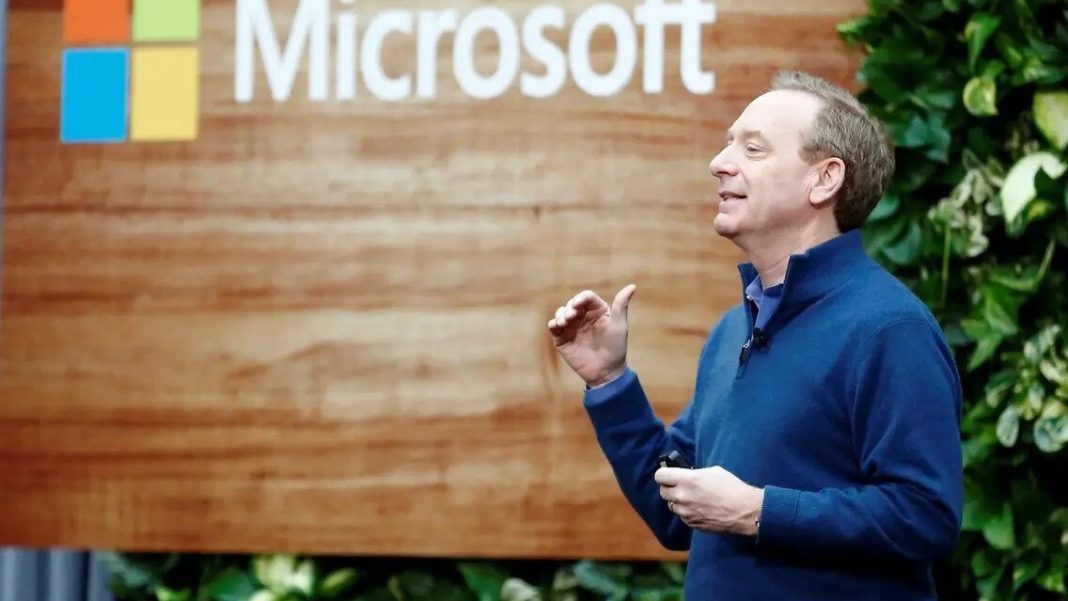
“A wise man learns from his own mistakes, a genius learns from others.”
This insight, cited by Brad Smith in a leadership context, stresses the importance of learning not only from personal experience but also from the experience of others.
Smith used the line when writing about leadership principles, and it reflects a broader philosophy about humility, collaboration and effective decisionmaking that underpins his work at Microsoft and in the tech industry.
PERSONALITY AND LIFE
Bradford Lee Smith was born on January 17, 1959 in Milwaukee, Wisconsin, in the United States. He grew up in Wisconsin where his father worked as an engineer and manager, exposing him early to technical environments and problemsolving settings.
Smith showed leadership qualities from a young age, serving as student body president and editor of his high school paper.
He went on to study at Princeton University, where he graduated with a degree in international relations and economics, and earned his JD from Columbia University, grounding himself in law and policy before entering corporate life.
Smith joined Microsoft in 1993, taking on legal and corporate affairs roles in Europe before becoming general counsel in 2002.
In 2015, he was appointed President and Chief Legal Officer of Microsoft, roles in which he oversees corporate, external and legal affairs for the company.
He has also served as Vice Chair since 2021, leading teams that work on privacy, cybersecurity, digital inclusion, environmental sustainability and human rights.
His leadership extends beyond Microsoft through advocacy on global issues and coauthorship of the bestseller Tools and Weapons: The Promise and the Peril of the Digital Age, which urges the tech sector and governments to take shared responsibility for cuttingedge technologies.
EXPLAINING THE QUOTE AND ITS PHILOSOPHY
“A wise man learns from his own mistakes, a genius learns from others.”
At its heart, the quote highlights two ways of learning.
The first, learning from personal mistakes, is valuable because it shapes character and resilience. But it is also slow and costly: it requires repeated errors before insight is gained.
The second, learning from others, reflects a broader vision. It means observing and applying what others have discovered, avoiding pitfalls and drawing on collective wisdom to reach better decisions faster.
For a leader like Smith, this philosophy is practical daily business.
At Microsoft and in public policy discussions, he often works with regulators, civil society groups and technology peers to understand what has worked, and what has failed, elsewhere.
This approach can prevent repeating errors and can save organisations time, resources and reputational risk. More broadly, it nurtures a culture where teams feel free to share insights and support mutual learning rather than compete in isolation.
On a personal level, it encourages humility: no one knows everything, and the largest challenges, from regulation of artificial intelligence to ensuring digital rights, require listening, adapting and building on the experience of others.
This makes the idea powerful for teams and communities far beyond the corporate world.
MORE QUOTES BY BRAD SMITH
- Create focus: Paint the vision, then articulate priorities to make progress.
- It’s important that you always run to something, not from something.
- We have two ears and one mouth—we should first seek to understand, then be understood.
- Life is a team sport, and we can only fly by embracing one another.
Brad Smith’s emphasis on learning from others’ experiences is a call to active listening and openminded leadership.
While personal effort and reflection are important, the greater wisdom often lies in observing, adapting and collaborating, a philosophy that holds value in business, communities and everyday life alike.


