
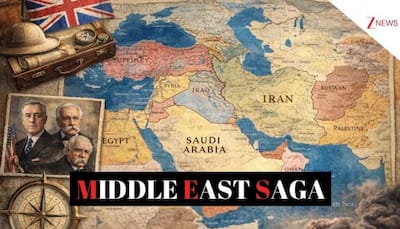
Iran-Israel Clash: The Latest Spark from a Century-Old Colonial Fire
Iran’s direct attack on Israel, involving over 300 drones and missiles, marks a dangerous escalation from shadow war to open confrontation. This unprecedented strike, retaliation for an Israeli hit on Iran’s Damascus consulate, has its roots in colonial borders drawn by European powers over a century ago, which ignored deep ethnic and religious realities.
Key Takeaways
- The modern Middle East map was carved by the 1916 Sykes-Picot Agreement between Britain and France.
- Artificial states like Iraq were created, merging distinct Kurdish, Sunni, and Shia regions.
- The 1917 Balfour Declaration set the stage for the enduring Israeli-Palestinian conflict.
- This colonial legacy fuels sectarian strife, proxy wars, and ongoing regional instability.
The Sykes-Picot Agreement: Drawing Lines on a Map
The modern Middle East was largely shaped by Britain and France through the secret 1916 Sykes-Picot Agreement. This pact divided the Ottoman Empire’s Arab provinces into spheres of influence. Borders were drawn with rulers on maps in distant European capitals, with little regard for the people living there.
Creation of Unstable States
This arbitrary cartography created inherently unstable countries. Iraq, for instance, was cobbled together from three distinct Ottoman provinces: Kurdish Mosul, Sunni Baghdad, and Shia Basra. Britain installed a foreign Hashemite king. Similarly, the borders of Syria, Lebanon, Jordan, and Kuwait served European strategic interests, not coherent national identities.
The Balfour Declaration and the Palestine Problem
The most fateful colonial promise was the 1917 Balfour Declaration. Britain pledged support for “the establishment in Palestine of a national home for the Jewish people,” while also promising to protect existing Arab rights. This contradictory commitment to both Zionists and Arab leaders directly set the stage for the ongoing Israeli-Palestinian conflict.
The Mandate System and Divide-and-Rule
After World War I, the League of Nations formalised European control through the “mandate” system—thinly veiled colonies. Britain got mandates for Palestine and Mesopotamia (Iraq), while France got Syria and Lebanon. These mandates suppressed Arab nationalist movements and continued policies of divide and rule, often privileging minority groups to maintain control.
The Toxic Colonial Inheritance
The colonial legacy left a devastating blueprint for the region:
- Artificial States: Countries with little internal cohesion, prone to sectarian strife and dictatorship.
- The Israel-Palestine Problem: The unresolved core issue that continues to fuel regional violence.
- External Intervention: A pattern of great powers (US, USSR, now Russia) backing sides, turning disputes into proxy wars.
- Resource Curse: Oil discovery further entangled Western interests, often propping up authoritarian regimes.
A Century of Conflict
The Sykes-Picot borders created a region where sect, tribe, and ethnicity often feel stronger than nationality. Constant external interference crushed indigenous political development. From the Arab-Israeli wars and the Iran-Iraq War to the Gulf Wars, the rise of ISIS, and the Syrian civil war, the flames have never died.
Today’s Escalation: History Repeating
The current Iran-Israel escalation is the latest eruption of this long-simmering fire. Actions in Damascus or Tehran are filtered through a century of mistrust, imposed boundaries, and great power rivalry. The lines on the map, drawn to serve long-gone empires, continue to define a tragedy with no end in sight.


