
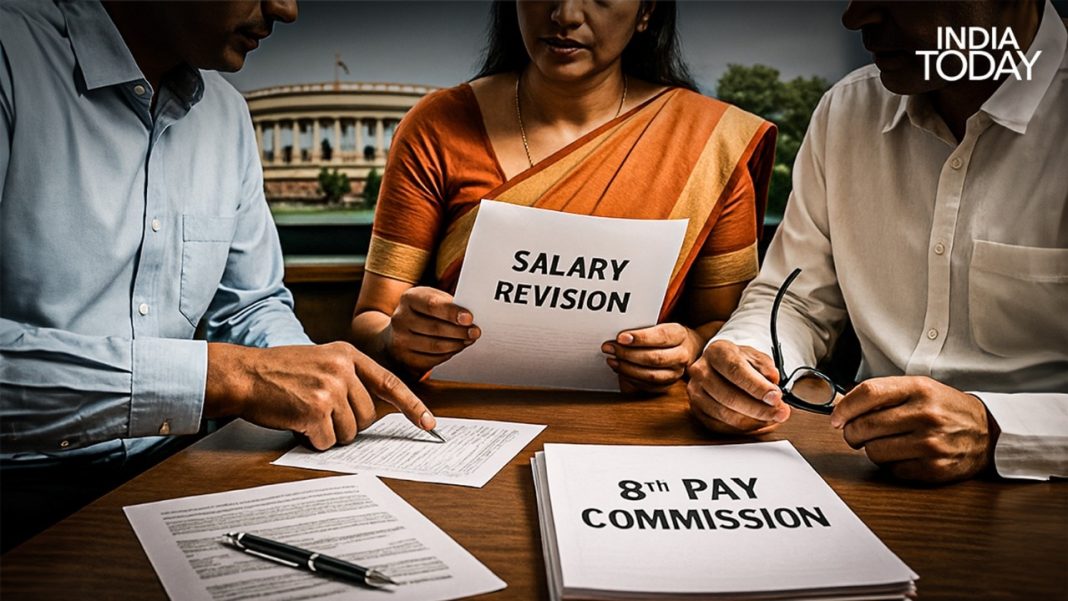
8th Pay Commission: Key Details and Expected Impact
The central government is expected to constitute the 8th Pay Commission in 2026, with its revised salary and pension structure likely to be effective from January 1, 2026. This will directly affect over one crore central government employees and pensioners.
Key Takeaways
- Expected setup and report submission in 2026.
- Implementation likely from January 1, 2026.
- Will review salaries, allowances, and pensions for central government staff.
- Fiscal impact on government finances will be significant.
- State governments and the private sector are also likely to be impacted.
Scope and Review Process
The commission’s mandate includes a comprehensive review of the pay structure, various allowances, and pension benefits. Its recommendations will be formulated considering the current cost of living and inflation rates.
For pensioners, the panel may propose an increase in the minimum pension along with other benefit enhancements.
Fiscal and Wider Economic Impact
The implementation will require substantial additional budgetary allocation from the government, creating a notable fiscal impact. Economically, the hike is anticipated to boost disposable income for a large section of the population, providing a stimulus to the economy.
Linkage to Past and Future
The new recommendations will build upon the framework of the , which was implemented in 2016 with a 23.55% hike. Given persistent inflation, the 8th Pay Commission’s suggestions are expected to be more generous.
The rollout may happen in phases, with the possibility of arrears being paid to employees and pensioners.
Broader Implications
State government employees and pensioners will be indirectly affected, as states typically align their pay revisions with the central structure. Furthermore, private sector companies might revise their own salary scales to remain competitive in the job market.
The commission’s final report will be a closely monitored document for all stakeholders, including the general public.


