
9.1 C
Delhi
Monday, December 1, 2025

Burtele Foot Mystery Solved: Lucy Had Company 3.4 Million Years Ago

Key Takeaways

  • Scientists identify 3.4-million-year-old ‘Burtele Foot’ as Australopithecus deyiremeda
  • This species lived alongside Lucy’s species (A. afarensis) in the same region
  • The discovery proves multiple human ancestors coexisted 3.5-3.3 million years ago
  • Each species had distinct walking styles and dietary preferences

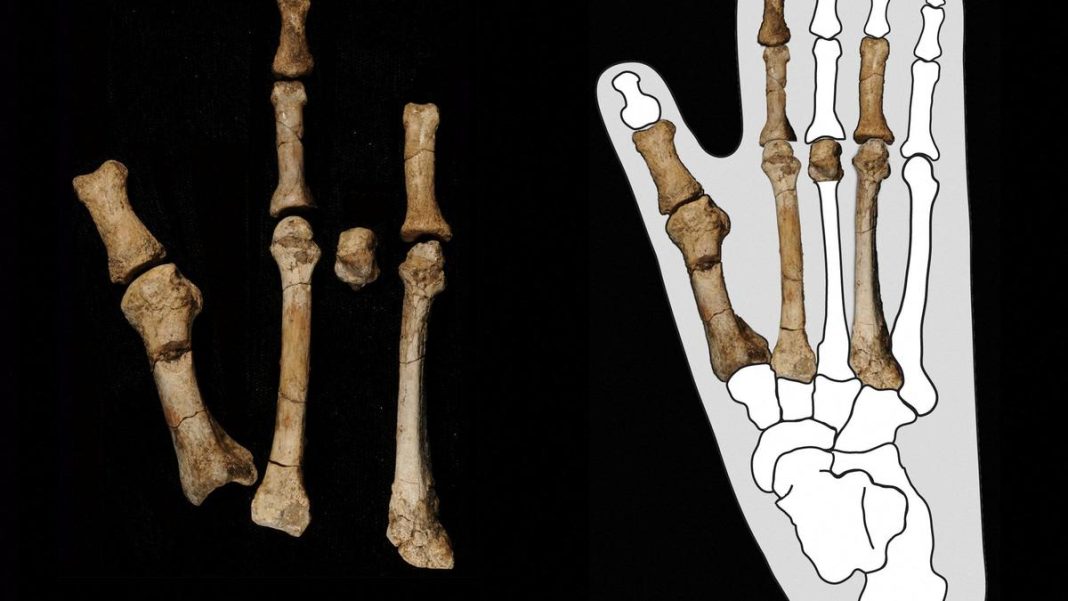
Scientists have finally solved the mystery of the 3.4-million-year-old ‘Burtele Foot’ fossils discovered in Ethiopia. The research reveals these bones belonged to Australopithecus deyiremeda, a human ancestor that lived alongside the famous Lucy’s species during a crucial period in human evolution.

Two Species, One Time Period

The discovery confirms that two closely related hominin species – Australopithecus deyiremeda and Australopithecus afarensis (Lucy’s species) – coexisted in northeastern Ethiopia’s Afar region between 3.5 and 3.3 million years ago. This challenges the previous assumption of linear human evolution with only one species at a time.

“They provide us with the most conclusive evidence showing that A. afarensis – Lucy’s species – was not the only human ancestor that lived between 3.5 and 3.3 million years ago,” said lead author Yohannes Haile-Selassie of Arizona State University.

Distinct Walking Styles

The Burtele Foot showed this species walked upright but with a crucial difference – it retained an opposable big toe similar to tree-climbing apes. While Lucy’s species had a human-like big toe, A. deyiremeda probably pushed off from its second digit when walking.

“It would definitely be less efficient walking on two legs when on the ground. However, it was more effective for tree-climbing – not a bad trade-off, especially in areas where there were large predators,” Haile-Selassie explained.

Different Diaries, Different Survival Strategies

Chemical analysis of tooth enamel revealed stark dietary differences between the two species. Lucy’s species was a generalist, eating grasses along with tree and shrub foods. A. deyiremeda, however, stuck exclusively to tree and shrub-based diets.

“These species were moving around in different ways. There were multiple ways to be human at this time,” said co-author Naomi Levin from the University of Michigan. “We can now associate these different ways of moving around on two feet with different diets.”

Solving the Coexistence Puzzle

The research raises intriguing questions about how these close relatives shared resources without direct competition. Their different locomotion styles and dietary preferences may have allowed them to coexist in the same environment.

“Now that we know they ate different things and that they moved around in different ways, we’re that much closer to solving this puzzle of co-existence,” Levin concluded. The study published in Nature represents a major breakthrough in understanding the complex branching of before Homo sapiens emerged.


Latest

Satellite Discovery Reveals New Walrus Gathering Site in Arctic

Scientists identify never-before-seen walrus haul-out in Svalbard using satellite imagery, revealing crucial data for Arctic conservation efforts.

Next Decade Will Define India’s Space Exploration: Astronaut

Shubhanshu Shukla reveals India's ambitious space plans for 2025-2035, including Gaganyaan mission and expanded space access for civilians.

Graphene’s Quantum Breakthrough: Light-Controlled Electronics Discovered

Scientists directly observe Floquet effects in graphene, enabling instant tuning of electronic properties for quantum computing and advanced sensors.

Venus Wind Mystery Solved: Scientists Find Source of Super-Fast Winds

After 60 years, researchers discover how Venus's atmosphere rotates 60 times faster than the planet itself, revealing the solar thermal tides behind this cosmic phenomenon.

NISAR Satellite Begins Science Phase for Earth Observation

The joint NASA-ISRO NISAR satellite enters its 5-year science mission, providing all-weather data for agriculture, forestry, and climate studies.

Topics

Xiaomi 15 Ultra Gets Android 16 Update in India with New AI Features

Xiaomi 15 Ultra users in India can now update to Android 16 via HyperOS 3. Get the installation steps and details on new AI tools and the HyperIsland feature.

Bitcoin Plunges Below $88,000 as Crypto Sell-Off Intensifies

Bitcoin and Ethereum lead a sharp crypto market decline, with traders eyeing $80,000 as the next key support level amid macro fears.

New Bills to Replace GST Cess on Tobacco, Pan Masala

Government proposes new levy to replace expiring GST compensation cess on tobacco products. Current tax rates for consumers will remain unchanged.

Why HIV Remains Incurable After 40+ Years of Research

Discover the two unique properties that make HIV so difficult to cure and why current treatments require lifelong medication despite scientific advances.

Netflix Warner Bros Bid Faces White House Antitrust Scrutiny

Trump administration officials raise competition concerns over Netflix's potential acquisition of Warner Bros Discovery, warning of major antitrust investigation.

UK Services Sector Hit by Budget Costs and Profit Squeeze

CBI report reveals UK services sector faces sharp profit and employment declines as businesses cannot pass rising costs to customers after Budget measures.

New Health Security Cess on Pan Masala: Rates, Impact and GST Changes

Government proposes production-based cess on pan masala up to ₹2,547 lakh monthly per machine to fund national security and public health initiatives.

China’s Mega Dam on Yarlung Zangbo Raises Water Security Concerns

China begins construction of massive dam on river flowing to India and Bangladesh, threatening water security for 1.3 billion people downstream.
spot_img

Related Articles

Popular Categories

spot_imgspot_img