Key Takeaways
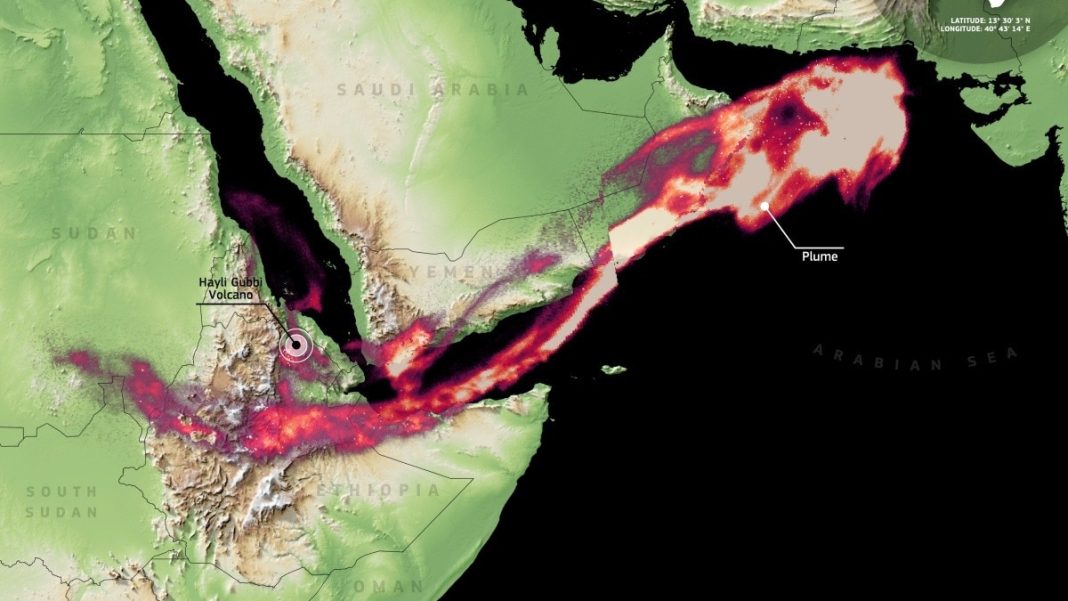
- Ethiopia’s Hayli Gubbi volcano erupted after 12,000 years, sending a massive SO2 plume over 3,700 km to India.
- The eruption caused flight disruptions in India and posed risks to aviation and air quality.
- Satellite data revealed the plume’s rapid eastward movement across the Arabian Sea.
A massive volcanic eruption in Ethiopia has sent a sulphur dioxide plume traveling thousands of kilometers, reaching as far as western India and causing significant flight disruptions. The long-dormant Hayli Gubbi volcano erupted on November 23, 2025, for the first time in nearly 12,000 years.
Eruption Details and Satellite Tracking
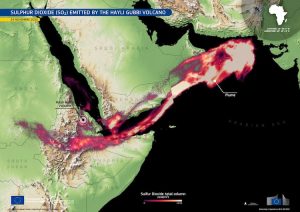
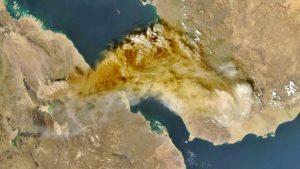
Located about 800 kilometers northeast of Addis Ababa, the shield volcano produced an explosive sub-Plinian eruption. The ash cloud rose to approximately 45,000 feet, reaching commercial airspace heights. Satellites including Copernicus Sentinel-5P captured stunning images showing the vast SO2 plume drifting eastward across the Arabian Peninsula and Arabian Sea before arriving in India.
Immediate Impacts and Atmospheric Effects
The sulphur-rich cloud, containing volcanic ash and glass shards, posed serious threats to aviation safety and air quality. This led to numerous flight cancellations and delays across India. Meteorologists tracked two distinct ash trajectories—one moving northeastward and another northwestward.
As sulphur dioxide reacts with sunlight and atmospheric moisture, it forms sulfate aerosols that can create temporary cooling effects in the atmosphere and worsen regional air pollution levels.
Global Atmospheric Connections
The eruption demonstrated the interconnected nature of Earth’s atmospheric systems, with emissions from East Africa traveling thousands of kilometers to influence South Asian regions. Monitoring agencies continue to use satellites like Sentinel-5P for critical data supporting aviation risk assessments and environmental tracking.
The Hayli Gubbi event highlights our planet’s dynamic geology and underscores the vital importance of space-based observation systems in monitoring atmospheric changes that affect weather, air travel, and climate across continents.