Key Takeaways
- Orcas documented hunting juvenile great white sharks for first time
- Special technique involves flipping sharks upside down to extract nutrient-rich livers
- Warming waters may be making shark nurseries more accessible to orcas
Scientists have made a groundbreaking discovery: orcas are systematically hunting juvenile great white sharks in the Gulf of California, using a sophisticated technique to extract their energy-rich livers. This marks the first documented evidence of killer whales targeting shark nurseries, revealing potential shifts in their seasonal feeding patterns.
Specialized Hunting Technique
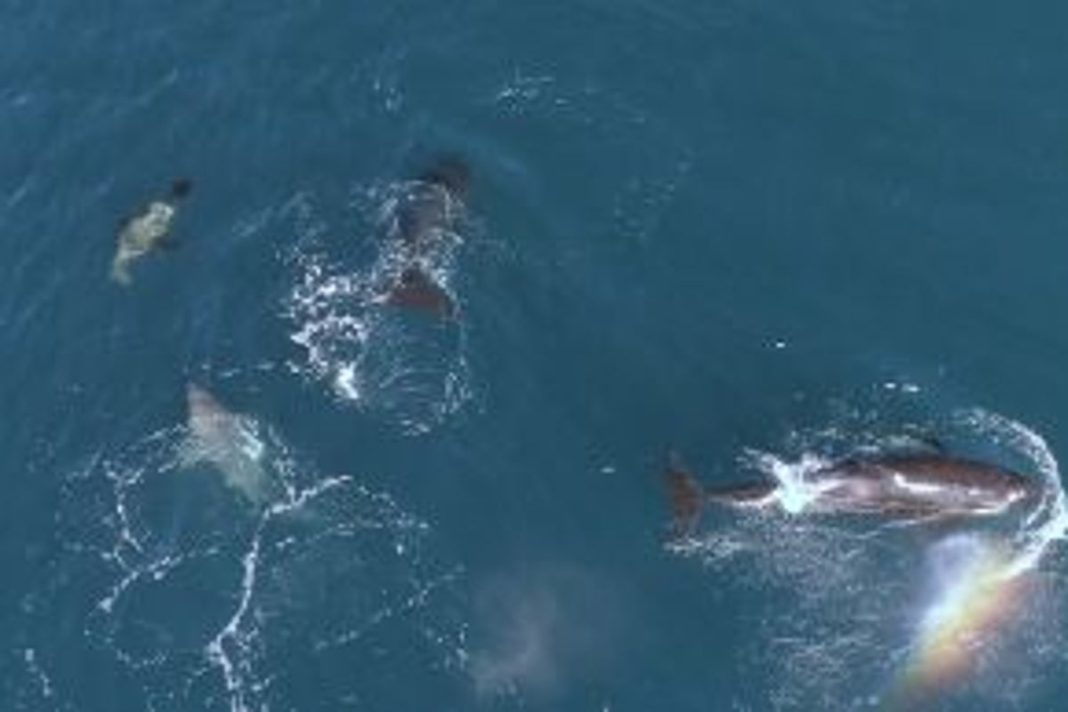
Researchers observed “Moctezuma’s pod” of orcas employing a precise method where they flip juvenile sharks upside down, inducing a paralyzed state called tonic immobility. This makes the sharks defenseless while allowing the orcas to surgically remove their nutrient-dense livers.
Documented Attacks
The study documented two separate hunting events where orcas killed three juvenile white sharks. In August 2020, five orcas were seen pursuing a juvenile shark, pushing it to the surface and working together to turn it upside down. The same pattern repeated in August 2022, with orcas spotted consuming shark livers after similar coordinated attacks.
“I believe orcas that eat elasmobranchs – sharks and rays – could eat a great white shark if they wanted to, anywhere they went looking for one,” said marine biologist Erick Higuera Rivas, study author.
Strategic Intelligence
The hunting behavior demonstrates orcas’ advanced cognitive abilities and social learning. “This behaviour is a testament to orcas’ advanced intelligence, strategic thinking, and sophisticated social learning, as the hunting techniques are passed down through generations within their pods,” Dr. Rivas explained.
Vulnerable Juvenile Sharks
Unlike adult great whites that quickly evacuate areas when orcas are present, juvenile sharks appear naive to the threat. “Adult white sharks react quickly to hunting orcas, completely evacuating their seasonal gathering areas and not returning for months,” said co-author Salvador Jorgensen from California State University. “But these juvenile white sharks may be naive to orcas.”
Climate Change Connection
Researchers suspect warming waters from climate events like El Niño may be altering shark nursery locations, bringing juvenile sharks into closer contact with hunting orcas. Each new generation of young sharks becomes vulnerable seasonal targets as ocean temperatures shift shark habitats.
The study calls for continued monitoring of juvenile white shark movements driven by ocean warming to better understand this emerging predator-prey dynamic.