Bill Gates Shifts Focus: Nuclear War Poses Greater Threat Than Climate Change
Key Takeaways
- Bill Gates argues climate change won’t end humanity, urging focus on other existential threats
- Nuclear war identified as most immediate danger, capable of ending civilization in hours
- Engineered bioweapons and AI also pose significant extinction risks
- Climate change remains dangerous as it exacerbates other threats and increases conflict risk
In a significant shift, billionaire philanthropist Bill Gates has declared that climate change will not lead to humanity’s demise. Despite investing billions in climate solutions, the Microsoft founder now urges world leaders to prioritize more immediate existential threats.
Experts reveal a sobering reality: humanity faces greater risks from self-created dangers than from climate change alone. The most pressing threat? Total nuclear war.
The Nuclear Winter Scenario
Dr Rhys Crilley from the University of Glasgow explains the critical difference: “Climate change unfolds over decades; nuclear war could end civilisation in the space of a few hours.”
Modern climate modeling reveals that even a limited nuclear exchange involving just 100 warheads would trigger catastrophic consequences:
- Global temperatures could drop by 10°C (18°F) for nearly a decade
- World agricultural systems would collapse completely
- An estimated two billion people would starve within two years
With over 12,000 nuclear warheads existing worldwide, Dr Crilley warns that large-scale nuclear war “would likely be an extinction event for the planet.”
Rising Nuclear Tensions
The threat of nuclear conflict is no longer theoretical. Dr Crilley states: “The weapons exist, the tensions between nuclear-armed states are worsening, and nuclear weapon states are increasingly willing to use force while threatening nuclear weapons.”
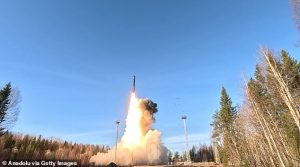
Recent large-scale nuclear readiness tests by Russia and other nations highlight the growing risk. Experts note that during the Cold War, the world avoided nuclear conflict largely through luck rather than design.
Bioweapons: The Democratization of Destruction
Beyond nuclear threats, engineered bioweapons present another grave danger. Advances in AI and biotechnology have made creating deadly pathogens easier than ever.
Otto Barten of the Existential Risk Observatory warns: “The chance that ongoing democratization of biotechnology leads to someone eventually trying and succeeding to create a pandemic that causes complete extinction is non-negligible.”
These man-made pandemics could be engineered for maximum effectiveness in ways that don’t occur in nature, putting sophisticated bioweapons within reach of terrorist groups or rogue states.
Climate Change’s Indirect Threats
While Gates downplays climate change as an existential threat, experts caution against complacency. Dr SJ Beard from Cambridge University explains: “There isn’t a feasible climate scenario in which we all die of heat exhaustion or drown in the rising ocean. However, climate change can still kill us indirectly.”
Climate change acts as a threat multiplier by:
- Destabilizing geopolitical situations and increasing conflict risk
- Motivating dangerous geoengineering experiments
- Triggering pandemics through ecosystem disruption
- Collapsing global supply chains and economic systems
Dr Crilley adds that climate-driven crises “could easily interact with existing geopolitical tensions, making miscalculation or escalation of conflicts more likely” between nuclear-armed states.
The consensus among risk experts is clear: while climate change demands urgent action, humanity faces more immediate existential threats from its own creations. Preventing nuclear conflict remains one of our most urgent responsibilities, with the fate of civilization potentially hanging in the balance.