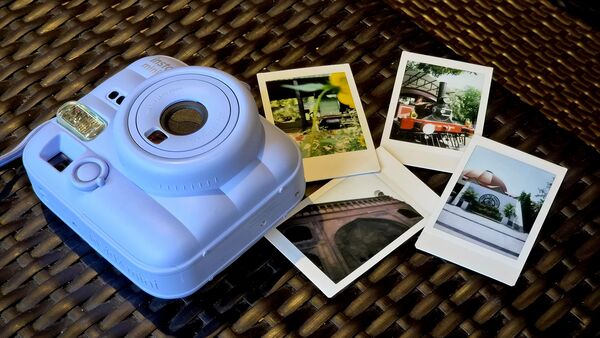
There is a reason instant cameras haven’t faded away completely, even though we are in an era where a smartphone can capture social media-worthy photos in a blink of an eye. And the reason is the feeling of a photo slowly coming to life in your hands. Fujifilm Instax series is built on this idea and the Instax Mini 13 is the latest offering in that series.
Our Picks
Our Picks
| Product | Rating | Price |
|---|---|---|
|
Fujifilm Instax Mini 12 Instant Camera-GreenView Details
|
₹7,499 |
|
|
21% OFF |
|
CHECK DETAILS
|
|
Fujifilm Instax Mini 41View Details
|
₹10,399 |
|
|
26% OFF |
|
CHECK DETAILS
|
|
Fujifilm Instax MINI 99View Details
|
₹21,999 ₹17,999 |
|
|
18% OFF |
|
CHECK DETAILS
|
|
FUJIFILM Instax Mini LiPlay Hybrid Instant Camera (Bronze)View Details
|
₹19,999 ₹18,999 |
|
|
5% OFF |
|
CHECK DETAILS
|
|
Fujifilm Instax Square SQ1 Camera – Glacier BlueView Details
|
₹14,499 ₹11,499 |
|
|
21% OFF |
|
CHECK DETAILS
|




Research-Backed Choices
Every product we recommend is chosen through a combination of Primary Research and Secondary Research.
It is a ₹8,499 camera and comes in five amazing colours and the one I got was Frost Blue colour. I have spent some time with the Instax Mini 13 and at the end I am pretty satisfied with what this camera is trying to deliver.
A playful design
The design of Instax Mini 13 feels like a very subtle upgrade over the previous generation. It is still playful and very much an Instax camera with a new timer lever placed near the shutter button. The plastic construction feels good and is very lightweight, making it easier to carry around. At the back, there’s a small counter window that shows how many shots are left in the film pack.

The camera can stand on its own and there is a small angle adjustment accessory attached to the wrist strap. It can be used to point the camera a bit higher or lower when placed on a flat surface. It is a nice addition since we got a timer this time and I found myself using it more than I thought.
You also get a dedicated timer switch near the shutter button, along with a small indicator light that gives visual feedback when the timer is active. These small touches make the camera feel more thought-out than before.
Setup and usability: Zero learning curve
There’s practically no setup involved here, and that’s exactly the point. Just twist the lens to turn the camera on, frame your shot using the viewfinder, and press the shutter button. That’s it! There’s no screen to review images, no menus to navigate, and no settings to tweak. This is as pure a point-and-shoot experience as it gets.

It runs on two AA batteries, which might sound old-school, but it’s actually quite convenient. You don’t have to worry about charging cables, and Fujifilm even includes the batteries in the box, so you’re ready to start shooting immediately.
Self timer
The addition of a self-timer is the only upgrade on the Mini 13. It sounds like a minor feature but in real-world use, it changes how you use the camera entirely. Instead of stretching your arm to take a selfie shot, you get a 2-second and a 10-second timer. You can now place the camera on a surface, angle it the way you like and capture a group shot or selfies.

A light blinks on the shutter button for visual feedback to know when to pose. The timer can be cancelled as well, which is nice since every shot is worth some money. The angle adjustment accessory plays an important role here, letting you adjust the angle slightly when the camera is placed down.
Image quality: Not for the pixel peepers
In good lighting, photos come out soft and with slightly warm tones, which perfectly nails the instant film aesthetic. When natural light is unavailable, the flash takes over and does a decent job illuminating the subject. You need to take care of the mode when you are taking pictures because photos will get blurry if you get out of the focus range, which I learned the hard way.

Exposure is handled entirely by the camera, and for the most part, it does a good job. Things start to struggle in harsh lighting conditions, where highlights can get blown out and details can be lost. More importantly, these aren’t photos you zoom into or analyse for sharpness. These are images you take, print, and keep as memories.
The limitations you should know
The camera sticks to a simple formula, and that comes with a few compromises. The flash is always on, which works well in low light but can sometimes flatten images in brighter environments. There’s also no manual control over exposure, so you’re relying entirely on the camera’s judgement.
Framing through the viewfinder isn’t perfectly accurate either, especially for close-up shots. It’s something you adapt to over time, but it’s worth keeping in mind. And of course, film cost is an ongoing factor, every shot matters here, which changes how casually you shoot compared to a smartphone.
Verdict
The Instax Mini 13 keeps things simple, but adds just enough to feel more usable than before. The self-timer genuinely improves how you shoot, especially for group photos and selfies. Image quality stays soft and nostalgic, which fits the vibe. Yes, the always-on flash and lack of control can be limiting, but that’s not the point here. It’s fun, easy, and does exactly what an instant camera should.
Disclaimer: Mint has an affiliate marketing partnership, which means we may get some commission on purchases you make through the retailer sites links provided. These partnerships do not influence our editorial content, which is free from any bias or marketing pitch. We strive to provide accurate and unbiased information to help you make informed decisions. We recommend verifying details with the retailer before making a purchase.