
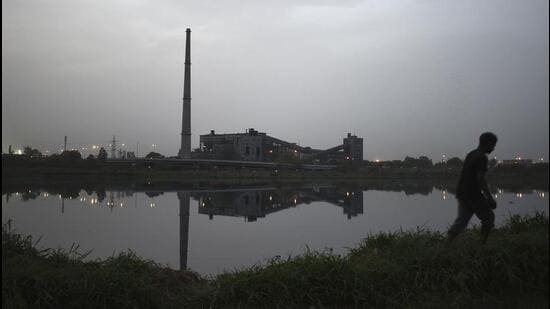
The situation that we were dreading is at our doorstep now: Adding to our renewable capacity and balancing the grid with coal plants may not be feasible or economical any further. Generators have started highlighting that this kind of operation is damaging the machines. The supply of electricity to our grid has to match our demand on a real-time basis.
If there is mismatch beyond a point, the grid will collapse with a cascading effect. In case of excess supply, the path is stark: Reduce supply by cutting coal-based generation and/or renewable generation; else, reduce demand. Since we do not have a mature demand response system, we have no option but to curtail supply.
Usually, during the afternoon, solar generation surges. And if there is good wind velocity (July-September), there is additional wind power generation. Since renewable generation is a “must run”, net generation by fossil fuel plants dips in the daytime.
Coal plants, incidentally, can dip only to a point, beyond which the machines get damaged. If we can’t balance against demand even after lowering coal-based generation, renewable generation has to be cut as well.
The general belief was that we can lower generation from our coal stations by operating at a technical minimum of 40% — a 1,000 MW plant can operate at 400 MW without affecting machine health. Unfortunately, in practice, this is not bearing out, thanks to machine vintage, maintenance, etc. Coal plants, especially the old, poorly maintained ones run by the states, can’t go below 55% of their capacity. Making matters worse, coal plants run by central public sector units are starting to show problems because of frequent reduction-ramp-up cycles. Low capacity units are not amenable to generation cuts and are designed to provide a stable load.
Ideally, the excess power generated should be stored, and drawn during peak hours. There would be, then, no need to cut coal-based generation, thereby keeping the machines healthy. Storage need not necessarily mean battery energy storage systems (BESS), they can also be in the form of hydro pumped storage plants (PSPs). There are pros and cons of using battery storage vis-à-vis PSPs. Building battery storage has a smaller gestation but can provide back-up only for a very short duration. PSPs can provide back up for significantly longer but also have longer gestation periods. PSPs have a lower levelised cost of energy (LCOE) vis-à-vis batteries, but things may change if battery costs go down in the future. Further, BESS has a life of about 10 years whereas PSPs can last for more than 40 years.
To come back to the central theme of this article, how do we balance the grid while adding to our renewable capacity? The fact is that we have very limited storage capacity in the country, be it BESS or PSPs. As on date, we only have about 5,000 MW of PSPs which are operational and about 200 MW of BESS. This is clearly insufficient given the fact that the Optimal Generation Mix report of the Central Electricity Authority has said that we need about 41,650 MW of storage capacity by 2030. Incidentally, we have the potential of PSPs to the extent of about 200,000 MW.
It is reported that more than 30,000 MW of storage capacity has been tendered since 2022. This upsurge has come after the government introduced the concept of energy storage obligation (2022) similar to the concept of renewable purchase obligation (RPO) and hydro power purchase obligation (HPO). Separately, new guidelines for giving approval to PSP projects were introduced (2023). The biggest catalyst, however, was the viability gap funding (VGF) scheme (2023) which brought down the cost of battery storage substantially.
The big question is what do we do in the interregnum, because it will take a while for the storage which has been tendered to become operational?
It seems we have no option but to continue to balance the grid by reducing generation — a rather inefficient way of meeting our objective. We now need to address this concern urgently.
Somit Dasgupta is visiting professor, Icrier, and former member (economic and commercial), CEA. The views expressed are personal


