
The US-Iran war has entered its third week and the 17th day of the clash saw the United States deploying B-2 bombers to attack sites in Tehran while the IRGC launched Sejil missiles against the US and Israel. Amid the ongoing conflict, the blockade of the Strait of Hormuz remains a key concern globally, affecting the oil and gas prices, especially in Asia. With nations raising the issue with America, US President Donald Trump has floated a plan to form a naval coalition, appealing to some countries to deploy warships alongside American naval forces to safeguard shipping through the Strait of Hormuz. However, this appeal has so far received little concrete backing from allies, highlighting the diplomatic and strategic complications of forming a multinational maritime coalition in the middle of a widening regional conflict.
President Trump made the request as tensions escalated after US and Israeli strikes on Iran and the subsequent disruption of maritime traffic through the narrow waterway. Posting on his Truth Social platform, Trump urged major economies to contribute naval vessels to keep the strait ‘open and safe’, naming countries including China, France, Japan, South Korea and the United Kingdom.
Speaking to reporters aboard Air Force One, Trump confirmed that Washington had reached out to around seven governments seeking support. He argued that countries dependent on energy shipments through the Gulf should help secure the route themselves, saying they should ‘protect their own territory’.
Limited international enthusiasm
Despite the appeal, governments have largely refrained from making commitments. No US ally has so far pledged to send ships for escort missions.
Japan and Australia were among the first to signal reluctance, indicating they would not deploy naval vessels to the region in response to Trump’s request. Their responses reflect broader caution among allies about becoming directly involved in a confrontation that could expand into a wider conflict.
European governments have also responded cautiously. German Foreign Minister Johann Wadephul said Berlin was sceptical about the idea of joining such an effort, telling ARD television that Germany did not expect to become an “active part of this conflict.”
Meanwhile, the United Kingdom has focused on diplomatic coordination rather than military commitments. British Prime Minister Keir Starmer discussed the importance of reopening the Strait of Hormuz with Trump and also raised the issue with Canadian Prime Minister Mark Carney, emphasising the need to restore global shipping flows.
France has previously indicated it was considering a possible international maritime escort mission but stressed that any deployment would depend on circumstances improving and fighting subsiding.
China calls for de-escalation
China, one of the largest importers of Gulf energy, also avoided committing to military involvement. Liu Pengyu, a spokesperson for China’s embassy in Washington, said all parties share responsibility for maintaining stable energy supplies and emphasised Beijing’s preference for communication and de-escalation.
The cautious stance reflects a broader concern among governments that participating in an escort operation could be interpreted as taking sides in the conflict.
Strategic importance of the strait
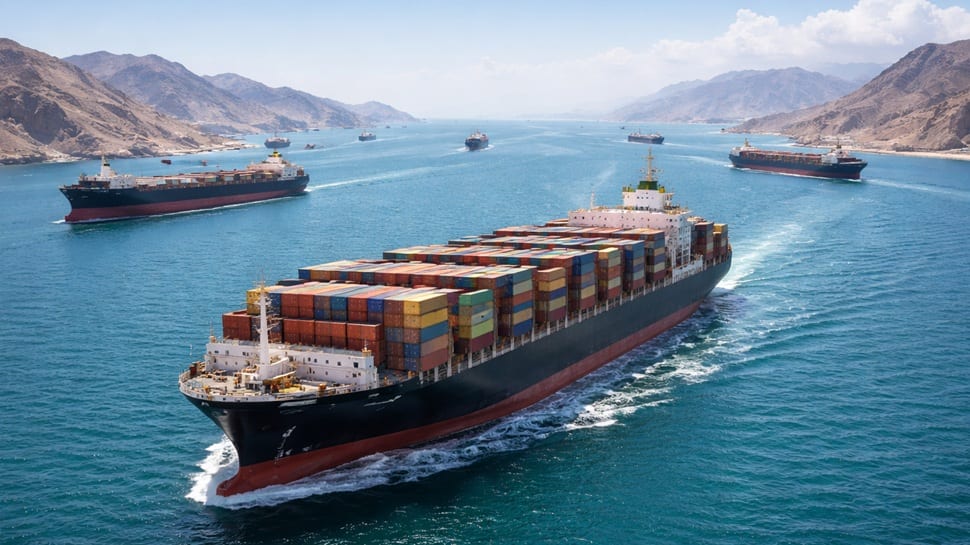
The Strait of Hormuz is vital artery for global energy trade. The Strait of Hormuz is one of the world’s most critical energy chokepoints. Roughly one-fifth of global oil consumption passes through the narrow passage linking the Persian Gulf with the Gulf of Oman and the Arabian Sea. Any disruption can rapidly push up energy prices and rattle global markets.
Iran’s military is currently obstructing the waterway in retaliation for US and Israeli strikes, a move intended to exert economic pressure by threatening global energy flows. India has managed to get its two vessels across the waterways with the help of Iran after negotiations.
Can a naval coalition work?
A naval coalition to patrol and escort the ships through the Strait of Hormuz is unlikely to work because it will lead to a direct conflict with Iran’s IRGC forces obstructing the waterways. This will mean that any nation sending its navy to the sea will mean war with Iran. By forming a naval coalition, Trump is basically hinting at a joint force against Iran, leading to a multi-front war.
Creating a multinational escort coalition in the region would face several practical hurdles.
First, participation requires political consensus among allies, which is difficult when governments want to avoid being drawn into an escalating conflict. Second, naval deployments carry operational risks if Iranian forces target or challenge coalition vessels. Third, countries that depend heavily on Gulf energy imports may prefer diplomatic engagement rather than military escalation.
Past attempts at maritime security coalitions in the Gulf have had mixed participation levels, often relying heavily on US naval assets while other countries provide limited support.


