
The US-Israel-Iran war in the fourth week of the US-Israel-Iran war, the fog around the details of the war continues to create buzz, with the US President’s flips and statements.
In a shocking turn of events, the American President has shifted blames of the Iran war to Secretary of War Pete Hegseth.
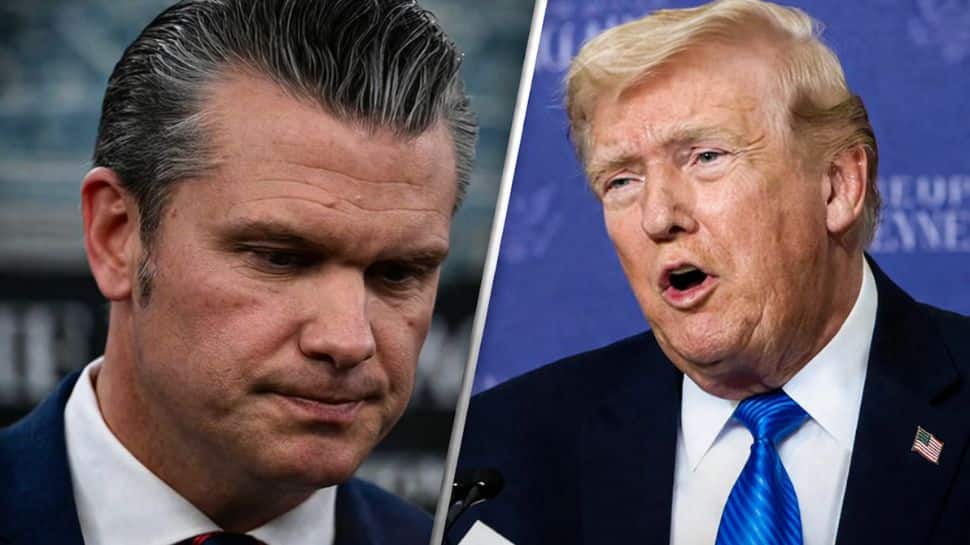
Speaking at the roundtable in Tennessee, President Donald Trump credited Defence Secretary Pete Hegseth as the first to advocate military action, recounting, “Pete, I think you were the first one to speak up, and you said, ‘Let’s do it because you can’t let them have a nuclear weapon,” with Hegseth seated beside him.
President Trump praised Hegseth and touted “very good” ongoing discussions with Tehran, even as Iranian state media flatly denied any negotiations between the two sides.
Earlier, Trump noted Vice President JD Vance, a vocal critic of foreign wars, was less keen on the Iran conflict than himself.
A Bloomberg report revealed Israeli PM Benjamin Netanyahu and media tycoon Rupert Murdoch pushed hard for action against Iran, while Vance, Secretary Marco Rubio, and Chief of Staff Susie Wiles remained skeptical.
In the initial days of war, Secretary of State Marco Rubio justified the US strikes on Iran as a necessary ‘pre-emptive’ action to neutralise an imminent nuclear threat, stating, “Iran was days away from weaponising enriched uranium at Fordow and Natanz. Waiting for a mushroom cloud over Tel Aviv or Diego Garcia wasn’t an option; this was about stopping a nuclear-armed terror state before it could blackmail the world.”
He emphasised intelligence showing Tehran’s 60%+ enriched stockpiles could yield 3-5 bombs within weeks, framing Operation Epic Fury as “defensive foresight, not aggression,” amid Israel’s parallel strikes.
The US stance on why it launched strikes on Iran has differed from one official to another.
Some, like Marco Rubio, argue Israel would have struck Iran regardless, rendering US involvement unavoidable, while others warn Tehran was poised to deploy a nuclear weapon.
Trump vividly recounted his decision-making on Monday, saying, “I called Pete. I called General Kane. I called a lot of our great people. We have a problem in the Middle East, or we can take a step and make a little journey into the Middle East and eliminate a big problem.”
On Monday, Trump postponed a deadline for Iran to reopen the Strait of Hormuz to shipping, or face airstrikes on its power stations, sparking a brief dip in oil prices and a stock market surge.


