
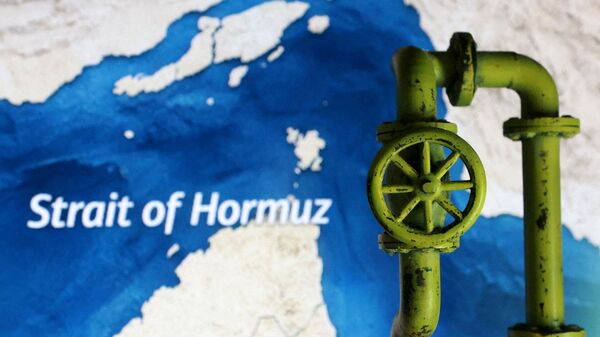
The two-week ceasefire between the US and Iran, struck in exchange for Tehran reopening the Strait of Hormuz, contains a clause that has received far less attention than the diplomatic drama surrounding it. A regional official confirmed to the Associated Press on Tuesday that the agreement allows Iran and Oman to impose fees on ships transiting the strait.
Two senior Iranian officials told The New York Times that the proposal included a fee of roughly ₹18.5 crore ($2 million) per ship, to be split between Iran and Oman, which sits on the opposite shore of the strait.
Proposed $2 million Hormuz transit fee
At the centre of the ceasefire proposal is a reported charge of approximately $2 million per vessel passing through the strait. Iran’s portion of the proceeds would reportedly be used to fund reconstruction efforts rather than seek direct financial compensation from the US or its allies.
In exchange, Tehran would lift its de facto blockade of the Strait of Hormuz, restoring the flow of oil and natural gas through a route that typically carries around one-fifth of global energy shipments.
Is $2 Million Fee on Tankers Crossing Strait of Hormuz Illegal?
Although most nations adhere to the United Nations Convention on the Law of the Sea, which bars interference with ships transiting international waterways like the Strait of Hormuz, neither the US nor Iran has formally ratified it.
Even so, both countries are now signalling an interest in introducing transit fees.
Such a move would run counter to widely accepted maritime principles and challenge the UN-backed legal framework governing shared waters.
Donald Trump said on Monday that Washington could consider imposing tolls in the strait, pointing to Iran’s own efforts to charge vessels and its indication that such fees may continue even after the conflict. US officials have previously characterised Iran’s actions as unlawful.
Donald Trump Claims Victory, Promises US Help With Strait Traffic
US President Donald Trump, who had spent weeks threatening to bomb Iranian civilian infrastructure if the strait was not reopened by his self-imposed Tuesday night deadline, hailed the agreement in characteristically sweeping terms.
“A big day for World Peace! Iran wants it to happen, they’ve had enough! Likewise, so has everyone else! The United States of America will be helping with the traffic buildup in the Strait of Hormuz. There will be lots of positive action! Big money will be made. Iran can start the reconstruction process. We’ll be loading up with supplies of all kinds, and just “hangin’ around” in order to make sure that everything goes well. I feel confident that it will. Just like we are experiencing in the US, this could be the Golden Age of the Middle East!!! [sic],” Trump wrote.
When asked by AFP whether he was claiming victory, Trump did not hesitate. “Total and complete victory. 100%. No question about it,” he said.
He also indicated that the US would play an active role in managing the transition, adding that Iran could start the reconstruction process and that the US would help with traffic buildup in the Strait of Hormuz.
From ‘A Whole Civilization Will Die Tonight’ to Ceasefire — In Hours
The speed of the turnaround was remarkable, even by the standards of the Trump administration. Even earlier on Tuesday, Trump had issued what many observers described as one of the most alarming statements made by a sitting American president in modern times, warning that “a whole civilization will die tonight” if his demands were not met.
At a White House news conference on Monday, Trump doubled down on his threats, warning that if his conditions were not met by 8 pm Eastern Time on Tuesday, he would order devastating new airstrikes across Iran. “It will take them 100 years to rebuild,” he said.
The ceasefire announcement late Tuesday represented an abrupt reversal of that posture.
Pakistan’s Role: The Mediators Who Pulled It Back From the Edge
The ceasefire was brokered in the final hours by Pakistan, with Prime Minister Shehbaz Sharif and Field Marshal Asim Munir, Pakistan’s army chief, playing central roles. Trump confirmed that his decision was based on conversations with both men.
Sharif announced on X that he had invited Iranian and US delegations to meet in Islamabad on Friday to begin formal negotiations. Iran subsequently confirmed that talks would begin on 10 April.
What Iran Agreed To? What Did it Get in Return?
Iranian Foreign Minister Seyed Abbas Araghchi confirmed Tehran’s commitments in a formal statement: “If attacks against Iran are halted, our Powerful Armed Forces will cease their defensive operations,” he said, adding that safe passage through the strait would be guaranteed for two weeks in coordination with Iran’s armed forces.
In return, according to the two senior Iranian officials, Tehran secured a guarantee that it would not be attacked again, an end to Israeli strikes against Hezbollah in Lebanon, and the lifting of all sanctions — at least in principle, as the basis for further negotiation.
The $2 million per ship toll arrangement, if confirmed and operationalised, would give Iran a revenue stream that sidesteps the politically fraught question of direct American compensation — one of Tehran’s ten stated demands — while still achieving the same practical end.
The Human Cost: A War That Has Already Claimed 5,000 Lives
The war, now in its sixth week, has claimed more than 5,000 lives across nearly a dozen countries, including more than 1,600 civilians inside Iran alone, according to tallies compiled from government sources and human rights organisations.
The Strait of Hormuz — through which approximately one-fifth of the world’s oil and natural gas typically flows — had been effectively closed by Tehran in retaliation for the war launched on 28 February. Its reopening, even on a conditional, fee-bearing basis, will likely provide immediate relief to global energy markets still reeling from weeks of supply disruption.


