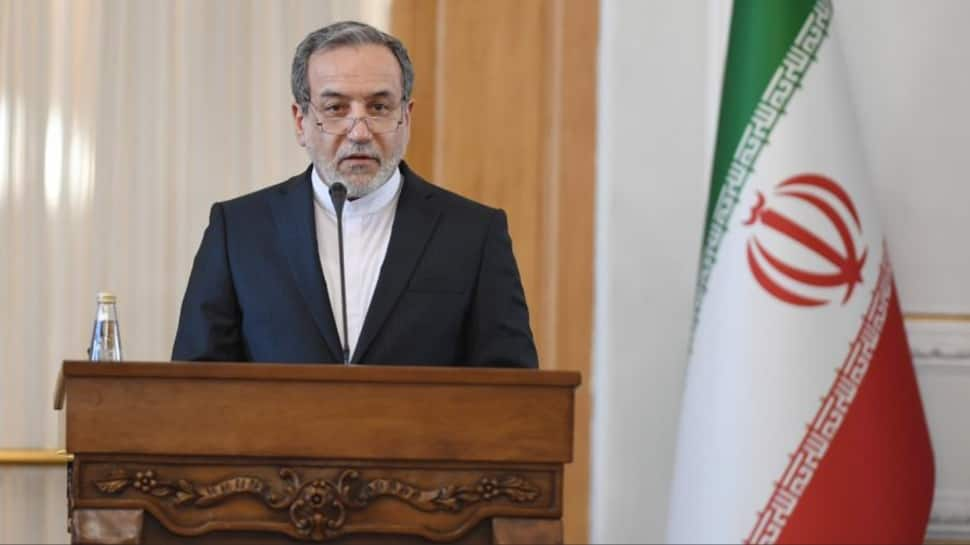
Iran has issued a fresh warning to the United States as tensions across the Middle East continue to intensify, with Foreign Minister Seyed Abbas Araghchi saying Tehran is fully prepared to respond to any attempt to strike its oil or nuclear infrastructure.
In a post on X, Araghchi described US actions against Iran as an “epic mistake” and suggested that Tehran could retaliate if its strategic facilities were targeted.
“9 days into Operation Epic Mistake, oil prices have doubled while all commodities are skyrocketing. We know the U.S. is plotting against our oil and nuclear sites in hopes of containing a huge inflationary shock. Iran is fully prepared. And we, too, have many surprises in store,” Araghchi wrote.
9 days into Operation Epic Mistake, oil prices have doubled while all commodities are skyrocketing. We know the U.S. is plotting against our oil and nuclear sites in hopes of containing huge inflationary shock. Iran is fully prepared.
And we, too, have many surprises in store. pic.twitter.com/UNQu0fVZE2— Seyed Abbas Araghchi (@araghchi) March 9, 2026
His remarks come as the conflict in the region enters its second week, fuelling volatility in global energy markets. Oil prices have surged sharply amid concerns over supply disruptions and the safety of key shipping routes.
Benchmark Brent Crude rose above $100 per barrel on 9 March, briefly touching $120 earlier in the day before settling at around $102 per barrel.
Meanwhile, Iran has named Mojtaba Khamenei as the country’s new Supreme Leader following the death of his father, Ali Khamenei, who was reportedly killed in US–Israeli strikes nine days earlier. The decision was announced by Iran’s 88-member Assembly of Experts on state television, marking the appointment of the third supreme leader since the Iranian Revolution.
Shortly after the announcement, Iran fired missiles at Israel and several Gulf states, further widening the conflict. At the same time, Israel launched a new wave of strikes targeting infrastructure in central Iran.
The escalating hostilities have also affected neighbouring countries. Saudi Arabia intercepted drones headed towards an eastern oil field, while the United Arab Emirates and Kuwait reported missile attacks. Bahrain said air raid sirens had been activated.
The widening conflict has unsettled global markets, with stocks falling sharply as fears of supply disruptions pushed crude prices up by around 30 per cent.
Iran’s president, Masoud Pezeshkian, praised Mojtaba Khamenei’s appointment, describing it as reflecting the will of the Iranian people.
“The valuable choice of Ayatollah Seyyed Mojtaba Hosseini Khamenei is a manifestation of the people’s will in governance. The resolution of the country’s problems can be achieved through his wise leadership and by creating an environment based on trust and public participation. I beseech God for his success in safeguarding the sacred unity and building an advanced and independent Iran,” Pezeshkian said.
However, the appointment has drawn criticism from the United States. Donald Trump dismissed Mojtaba Khamenei as a “lightweight” and insisted Washington should have influence over the selection of Iran’s leader.
“If he doesn’t get approval from us, he’s not going to last long,” Trump told ABC News before the announcement.
Meanwhile, Israel’s defence minister warned last week that Iran’s new supreme leader could become “a target”, with the military indicating it would pursue any successor to the previous leadership.
The conflict has also unfolded against a tense domestic backdrop in Iran, where security forces recently suppressed nationwide protests against the government. Analysts describe Mojtaba Khamenei as a hardliner expected to continue his father’s uncompromising stance against dissent.