
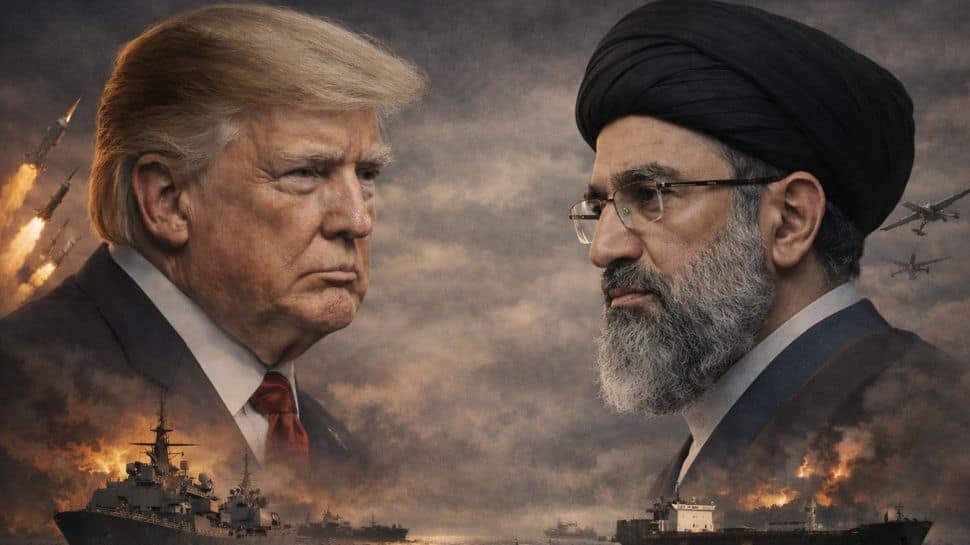
US-Iran tensions: Iran reportedly rejected a proposal from the United States for a 48-hour ceasefire. This comes as tensions in the Middle East continue to simmer, with the US and Iran exchanging fire and carrying out targeted attacks.
The semi-official Fars news agency reported on Friday about Tehran rejecting the ceasefire proposal.
Washington has stepped up its diplomatic efforts to secure a ceasefire, particularly after an Iranian strike targeted a US “military forces depot” on Kuwait’s Bubiyan Island, according to IANS, Xinhua news agency reported, quoting sources.
Meanwhile, Fars quoted an informed source as saying that the proposal was delivered to Iran through a “friendly” country on Thursday. The report further added that Tehran’s response to the offer was not given in writing, but through the continuation of attacks on the battlefield.
According to Fars, assessments suggest that the proposal was put forward following an intensification of the crisis in the region and “serious problems” for US forces resulting from their country’s “miscalculation” of Iran’s military capabilities.
US jets struck
The Iranian army said that its air defence systems shot down a US A-10 “Warthog” attack plane over Iran’s southern waters near the Strait of Hormuz. Its pilot was reportedly rescued safely.
On the other hand, a US Air Force F-15E Strike Eagle was reportedly shot down over Iran. After this, a combat search-and-rescue operation was launched, in which one crew member was rescued while the other is missing.
Later on Friday, Iran’s semi-official Mehr News Agency reported that a US Black Hawk helicopter was also hit by a projectile in Iranian airspace while searching for the pilot of the downed US fighter jet.
Middle East tensions
On February 28, Israel and the United States launched joint attacks on Tehran and several other Iranian cities, killing Iran’s then Supreme Leader Ali Khamenei, along with senior military commanders and civilians.
Iran responded by launching waves of missile and drone strikes targeting Israel and US assets in the Middle East.
(with IANS inputs)


