
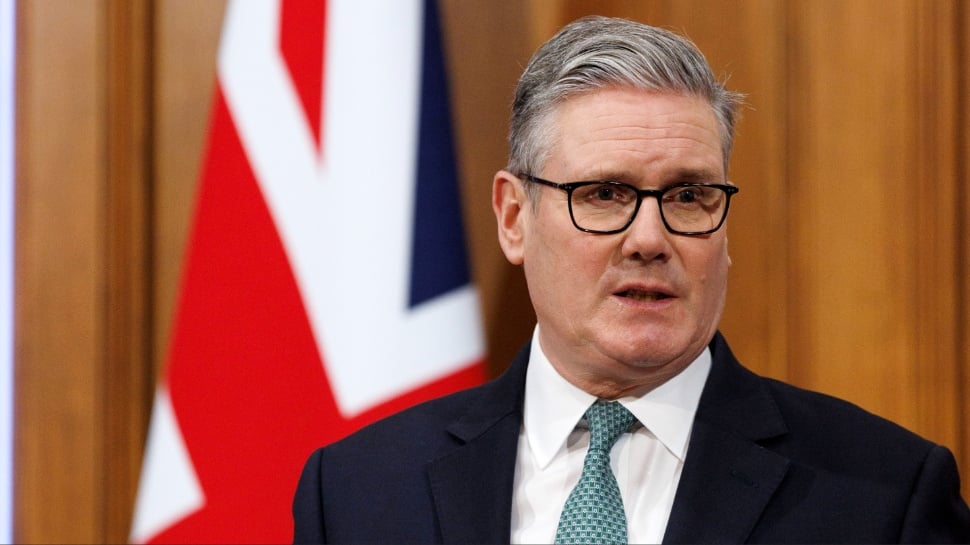
The Prime Minister defended the UK’s neutral stance on the growing conflict in Iran, stating that the UK would not be “dragged into” a war that is not ours to fight. The Prime Minister made this statement during a high-profile press conference at 10 Downing Street on the 1st of April.
Starmer drew a clear distinction between UK national interests and the aggressiveness of the current military position of the US, while confirming that the UK remains fully committed to NATO as the divide continues to grow between the US and the UK.
Through these remarks, the prime minister directly refuted Pres. Trump’s assertion that NATO is a “paper tiger” and his statement suggesting that he would unilaterally withdraw from it.
Starmer stated, “NATO is the most effective military alliance we have ever seen.” “NATO has kept us safe for decades. So no matter what the pressure on myself and other leaders of the world, or how much noise there is around this issue, I will continue to act in the best interest of the UK with regard to my decision-making.”
The Prime Minister stated that even though the US-UK relationship is important, the current instability in the world means the UK must have closer links with Europe for defence and security economics.
The Strait of Hormuz: An international diplomatic initiative
With an increase in global fuel prices as a result of the disruption of the Strait of Hormuz, Starmer announced that there would be an emergency summit of 35 nations in London during the week with a view to creating a working cooperative, diplomatic solution to reopen the Strait of Hormuz without escalating the conflict in the region.
The purpose of the Emergency Summit will be as follows: Identify Diplomatic Solutions – Explore political options to reinstate freedom of navigation throughout the international shipping lanes of the Strait of Hormuz.
Safety of maritime workers: Protect all vessels and their crews currently trapped within the battle zone.
Restore commodities: Facilitate the rapid delivery of oil, gas, and essential foodstuffs to restore stability in the international community.
‘This is not our war’: Dealing with the energy crisis
The Prime Minister reiterated to the British public the importance of rising living costs – which he compared to the energy crisis in the 1970’s – and clarified the UK’s military position.
Starmer contended that the way to keep British families safe from any fallout from the Iran war caused by economic turmoil will best be to work together to de-escalate tensions through international cooperation rather than getting involved in yet another rapidly growing military conflict.
He believed that the United Kingdom could handle any effects of an economic downturn due to conflict with Iran, if it first followed through on its commitment to a long-term strategy of regional stability and working collaboratively with Europe.
The gap between London and Washington continues to grow as President Trump continues to publicly rebuke the European allies for not supporting the recent attacks on the Iranian regime. While his recent call for these countries to “go and get their own oil” could have far-reaching consequences, Starmer’s recent shift away from a transatlantic alliance toward adopting a European-led security model would represent a major historical milestone for the United Kingdom’s foreign policy post-Brexit.
As the April 1st deadline approaches for Iran’s threats made against US technology companies, all eyes will be on the United Kingdom’s 35-nation summit as a possible “third option” between complete withdrawal and full-scale military escalation.


