
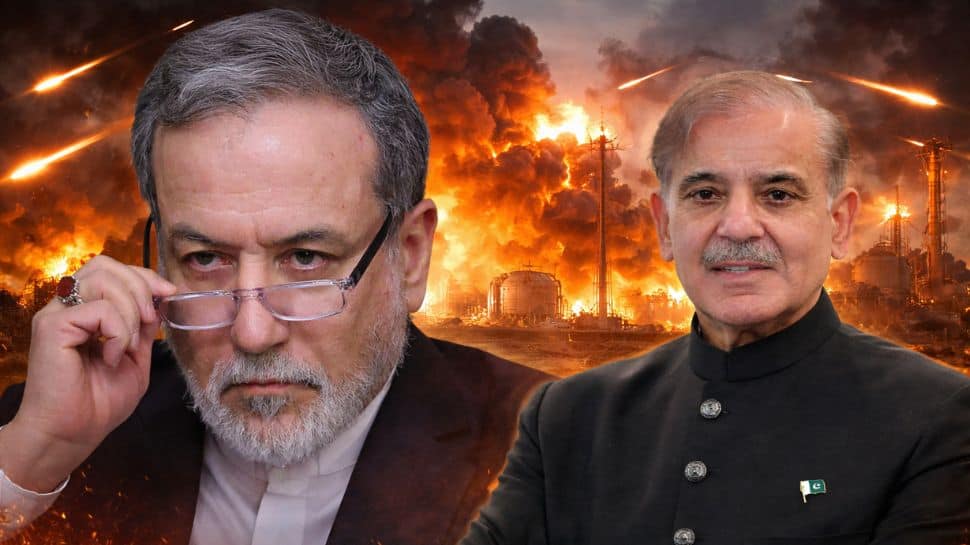
Iran has struck Saudi Arabia, Kuwait, Jordan, the UAE, Bahrain, Iraq, and even Cyprus. It has launched missiles at Israel and targeted American military assets across the West Asia/Middle East. But through every escalation, every retaliation, and every new front in its expanding conflict, Iran has never once fired at Pakistan. Not a missile. Not a drone. Not even a formal warning.
That silence is not mercy. It is mathematics.
Watch the full video:
Tense Pakistan, Iran history
Pakistan recognized Iran post-1979 revolution, but ties soured over Sunni-Shia divides, Pakistan’s Saudi alignment, and proxy fights in Afghanistan, where Pakistan backed Taliban forces that killed Iranian diplomats. Tensions peaked in January 2024 with mutual missile strikes over Jaish ul-Adl militants in Balochistan. Despite this, Iran spares Pakistan today.
That is the real backdrop. Two countries with a troubled past, on opposite sides of every major regional alliance and yet Iran will not touch Pakistan today.
Pakistan is playing both sides
Pakistan currently holds a formal defence agreement with Saudi Arabia, Iran’s most direct regional adversary. American military intelligence operations run out of Pakistani territory. And now a Saudi political analyst has publicly stated that if Riyadh enters full-scale war with Tehran, it will bring Pakistan into the fight and activate Pakistan’s nuclear umbrella against Iran.
That is an extraordinary threat. Yet what makes Pakistan’s position even more precarious is the debt. Saudi Arabia has lent Pakistan over ₹80,000 crore, a sum Islamabad currently has no capacity to repay. Defence pacts can sometimes be renegotiated. Debt cannot be ignored. Pakistan knows this. Iran knows this too.
And yet Tehran says nothing. No threat. No warning. No ultimatum.
Three reasons Iran will not touch Pakistan
The first reason is strategic. The moment Iran strikes Pakistani soil, Islamabad has no choice but to enter the war; debt, defence pacts, and military pride leave no room for restraint. For Iran, already fighting on multiple fronts against Israel and US-backed forces, opening a Pakistan front would be a catastrophic overextension. Pakistan’s neutrality, however hollow, is worth more to Tehran than any missile strike could ever be.
The second reason is China. Beijing has invested over $62 billion in Pakistan through CPEC. An Iranian attack on Pakistani territory directly damages Chinese economic interests. Iran cannot afford that calculation. China purchases more than 90 per cent of Iran’s oil exports, making Beijing Tehran’s single most critical economic lifeline during wartime. Angering China to punish Pakistan is a trade Iran is simply not willing to make.
The third reason is the supply line. According to multiple reports, China is supplying Iran with drones, missiles, and military equipment during the conflict and that supply chain runs overland through Pakistani territory. If Iran attacks Pakistan, it physically severs its own weapons pipeline. In a war where hardware decides outcomes, that is an unacceptable self-inflicted wound.
Iran is not being kind. Iran is being strategic. Every factor, new war front, Chinese investment, supply chain, points to the same conclusion: Pakistan’s neutrality is more valuable than Pakistan’s punishment.
Asim Munir’s gamble and where it is leading
Pakistan has not been passive in all this. General Asim Munir has engineered a calculated workaround. By launching military strikes on Afghanistan, Pakistan has created a new active war front and is now using that conflict as justification to tell Saudi Arabia that it is already overstretched and cannot join an Iran campaign. The Afghanistan war becomes the alibi.
It is clever. It is also backfiring.
Afghanistan’s Supreme Court Grand Mufti, Sheikh Maulvi Abdul Rauf, has now issued a formal fatwa declaring armed resistance against the Pakistani military a religious obligation. Every Afghan citizen has been called to treat Pakistan as an enemy and fight accordingly.
Pakistan entered Afghanistan to escape one war. It may have just started another.
Shahbaz Sharif continues offering symbolic condolences to Tehran. Asim Munir continues playing multiple boards simultaneously. But as Chanakya warned centuries ago, excessive cleverness becomes its own form of destruction.
Pakistan is testing that theorem in real time. And Iran, for now, is content to watch it happen.


