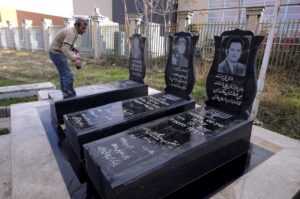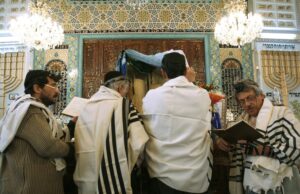
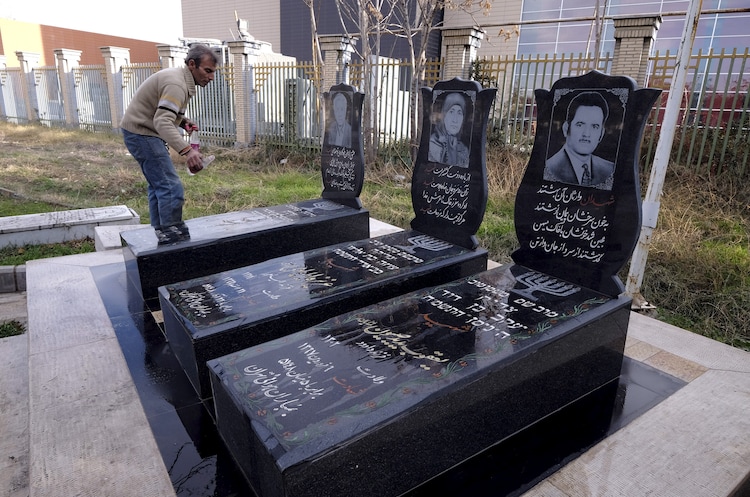
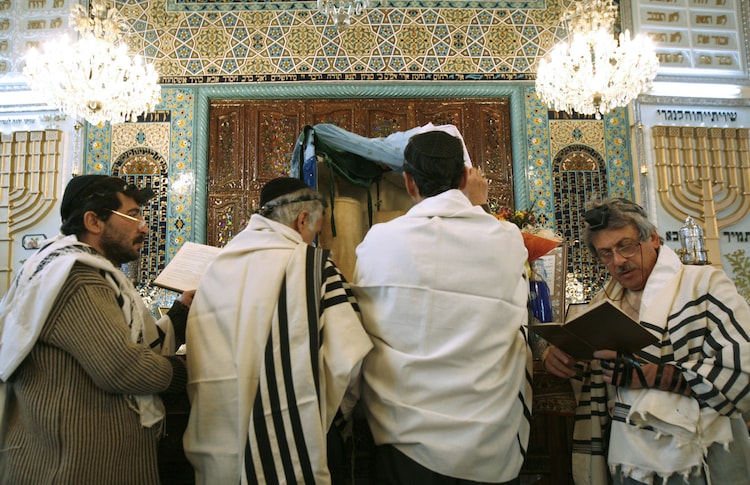
It might sound unbelievable to some, but it is Iran, right after Israel, that has the second-largest population of Jews in the Middle East. In fact, it has one of the oldest continuous Jewish communities in the world, dating back to 2,700 years. On Tuesday, a US-Israeli projectile aimed at a neighbourhood in central Tehran ended up damaging a synagogue. The US-Israel and Iran have been attacking one another with missiles and drones since the beginning of the war on February 28.
While there were said to be 100,000 Jews in Iran in the 20th century, the number is now down to around 10,000, according to reports. That was the result of their exodus to Israel and the US after the 1979 Islamic revolution. It is ironic because a section of Jews played a key role in the 1979 Islamic Revolution that forced out the Shah under whom the community thrived.
But the Jews who fled, carried a bit of Iran with them. Tens of thousands of such Iranian Jews have created a mini Tehran in Tel Aviv with their restaurants and spice shops.
We will get back to the watershed moment of 1979 and the complicated relationship of Iranian Jews with Zionism after having a look at how Jews reached Persia and their lives through the centuries there.
HOW DID JEWS REACH PERSIA? WHY DID SOME JEWS STAY BACK IN IRAN?
Jews were brought into Persia as captives by Assyrian and Babylonian conquerors in the 8th and 6th century BCE, respectively.
Iranian Jews often refer to themselves as Esther’s Children. Esther is a biblical figure from the Book of Esther of the Hebrew Bible. A Jewish orphan, she became the queen and, with the help of her uncle, prevented a massacre of the Jews in Persia, risking her life.
Cyrus the Great, who established the first Zoroastrian empire in Persia, freed Jews from captivity and allowed them to return to Jerusalem in 550 BCE.
“Cyrus created the Achaemenid Empire, conquered Babylon and liberated the captive Jews. Many, however, chose to stay on in Babylon, and became deeply embedded in the life of the Achaemenid Empire,” author William Dalrymple posted on X in 2023. In his Empire Podcast series, Dalrymple explains the history of Jews in Persia.
Jews thrived during the 1,000 years of Zoroastrian rule in Persia through the Achaemenid, Parthian and Sasanian empires. The Islamic conquest saw Persia being ruled by the caliphates, and the imposition of Arabic. However, like the Persians themselves, the Iranian Jews clung on to their culture and heritage.
Though the Persians adopted Islam, the Jews of Iran kept practising their faith and were branded dhimmi (second-class citizens) and had to pay the jiziya tax. They faced the worst times under the Safavid dynasty (1501–1736) and the Qajar dynasty (1794–1925).
WHEN WAS THE BEST TIME FOR JEWS IN MODERN IRAN?
It was the rise of the Pahlavi dynasty under Reza Shah Pahlavi that ultimately led to the abolition of the dhimmi status for Jews. By then, Jews, along with Zoroastrians and Christians, had been granted minority status following the Persian Constitutional Revolution in the early 1900s. The Constitution of Iran reserves a seat for Jews in Parliament.
“Over the centuries the Jews of Iran became physically, culturally, and linguistically indistinguishable from the non-Jewish population. The overwhelming majority of Jews speak Persian as their mother language, and a tiny minority, Kurdish,” according to a 1987 report by the Federal Research Division of the Library of Congress.
The report talks about the change in the lives of the Jews after the turn of the 20th century.
“Until the twentieth century the Jews were confined to their own quarters in the towns. In general the Jews were an impoverished minority, occupationally restricted to small-scale trading, moneylending, and working with precious metals. Since the 1920s, Jews have had greater opportunities for economic and social mobility. They have received assistance from a number of international Jewish organizations,” it says.
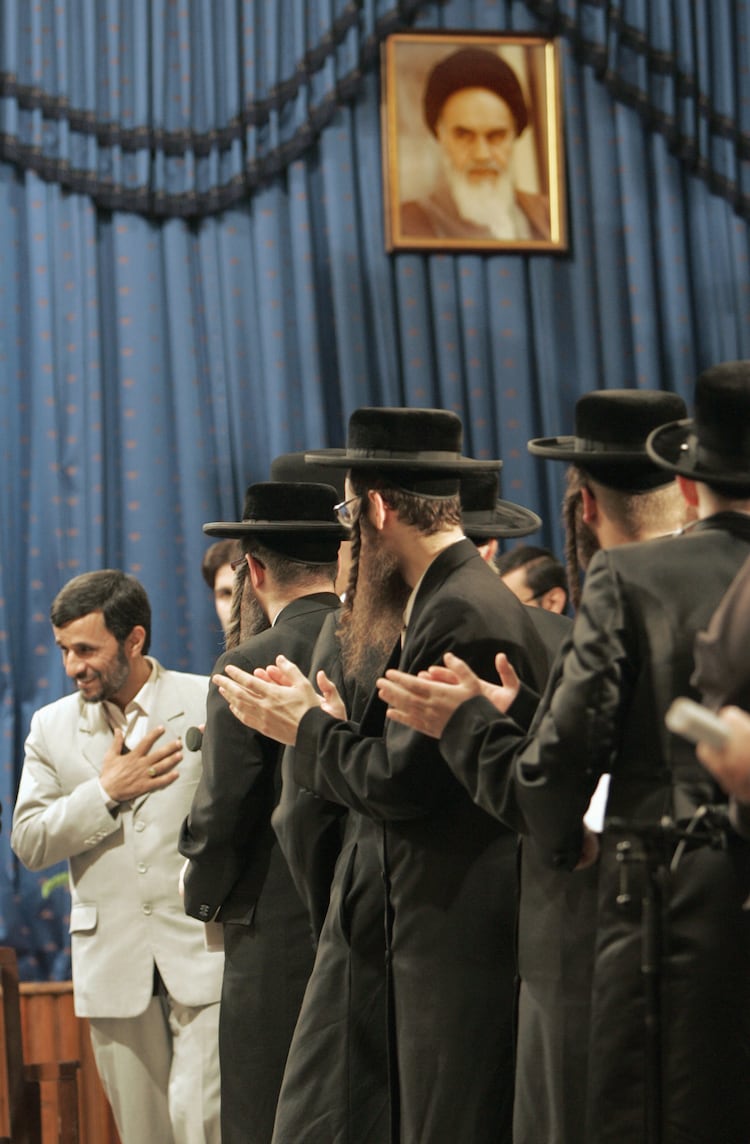
It was during the rule of the Pahlavi dynasty (1925-41) that the Jews saw their best times in modern history. But a section of the Iranian Jews joined anti-Shah activism, student movements, underground leftist groups, and revolutionary organisations. They helped the Communists and Islamists overthrow the Shah regime in 1979.
HOW JEWS HELPED ISLAMISTS END SHAH DYNASTY RULE IN 1979 IRAN REVOLUTION
Jewish historian Lior B Sternfeld, in his book Between Iran and Zion, describes how the Jewish revolutionary body, the Association of Jewish Iranian Intellectuals (AJII), became “the most vocal supporter of the revolution among the Jewish community”.
“For the first time, Jews acted in an organized way to support a national cause that exceeded the narrow goals of the community,” writes Sternfeld, but highlights that “The Jewish community was mostly divided in its support of the revolution”.
As Ruhollah Khomeini captured power after the 1979 Islamic Revolution and voiced a fiery anti-Israel stance, Jews, fearing persecution, fled Iran en masse. The new Islamist regime of Khomenei got prominent Jewish leader Habib Elghanian executed by a firing squad, alleging him to be a “Zionist spy” and a “corrupter on Earth”.
They rushed to the US and Israel, the Jewish nation. But the Jews who stayed back in Iran, had a complicated relationship with Zionism, the political ideology that was the basis of Israel.
IRANIAN JEWS AND THEIR COMPLICATED EQUATION WITH ZIONISM
Many Jews in Iran publicly emphasise that they distinguish between their religious identity and political Zionism. This is probably a stance shaped by both personal belief and the realities of living under a fundamentalist Islamic regime.
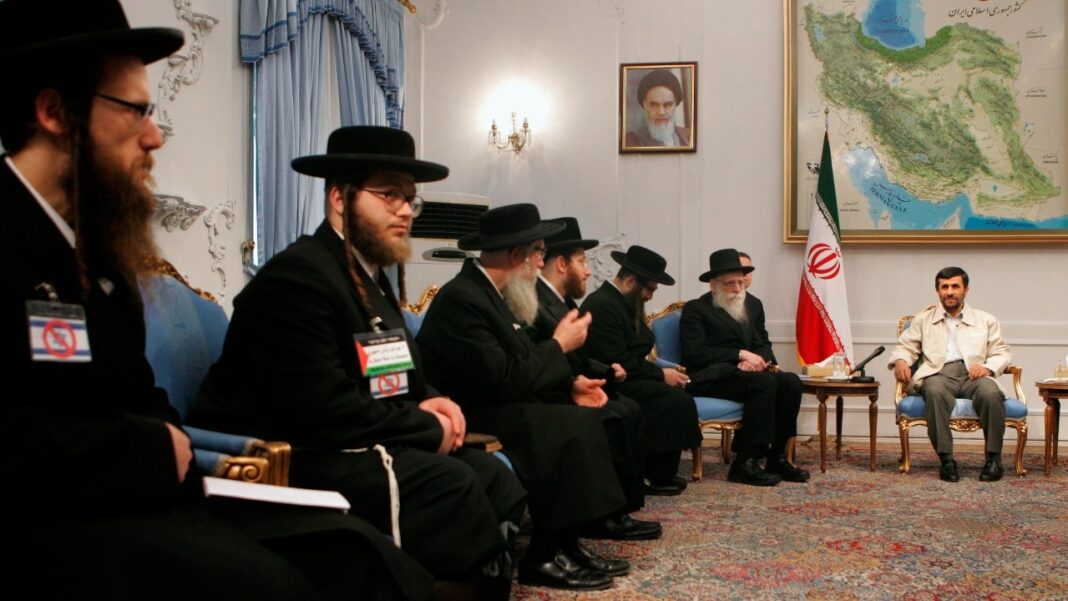
Community leaders have, at times, issued statements condemning Israeli policies, particularly during periods of heightened conflict with Palestinians.
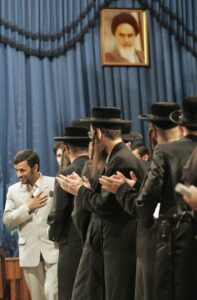
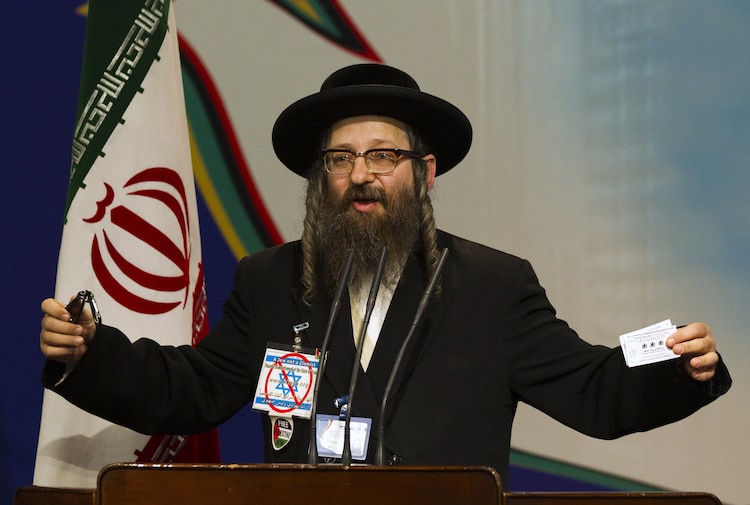
There are images and clips of rabbis or Jewish clerics in Iran displaying symbols critical of Israel. Some of these acts are linked to state-aligned messaging, while others draw from strands of anti-Zionist thought within parts of the global Jewish community.
For many Iranian Jews, public dissent from Israel is also a way to assert loyalty to Iran and avoid suspicion in a politically sensitive environment.
Iranian Jews’ identity, therefore, is layered. Religion, nationality, and geopolitics of Iranian Jews intersect in ways that defy assumptions about a unified Jewish stance on Israel.
A fairer understanding might be possible when we hear the views of Iran-born Jews now living abroad.
WHAT DO IRANIAN JEWS WANT AMID THE WAR IN MIDDLE EAST?
India Today TV’s Pranay Upadhyay reported on Tuesday from the Levinsky Market in southern Tel Aviv and gave a glimpse of a “mini Tehran” there. A good number of shops there are run by Iran-born Jews who migrated to Israel after the 1979 Revolution.
The vendors, who mostly sell saffron, dried herbs and traditional blends reminiscent of Tehran’s bazaars, spoke about how they wanted a change in the “fanatic regime” in Iran.
ABC News Australia reported three weeks ago from an area of Tel Aviv that the journalist said felt like a Persian neighbourhood.
“I have mixed feelings. They destroyed the country. The country is very beautiful,” Avi Hanasav, owner of Shamshiri restaurant, told ABC News Australia, when asked how he felt about the current US-Israel-Iran war.
The journalist said most of the Iranian Jews she spoke to said that they hoped to return to Iran one day if the current regime fell.
In Iran, there are around 10,000 Jews now, mostly in Tehran, Shiraz and Isfahan, who run their synagogues and schools. It is one of those synagogues in Tehran that was damaged by a US-Israeli projectile on Tuesday, reported Iran’s Mehr news agency.
Like with Zoroastrians or Parsis in India, for Iranian Jews too, the Persian culture of thousands of years is inseparable from their lives and identity. From religious persecution to a golden period, they have seen it all in Iran.