

Key Takeaways
- India plans to order 5 additional S-400 squadrons worth Rs 56,000 crore
- Modi-Putin meeting on December 5 expected to finalize the mega defence deal
- S-400 proved combat effectiveness by shooting down Pakistani fighters during Operation Sindoor
- Deal would expand India’s S-400 fleet to 10 squadrons, surpassing China’s 6
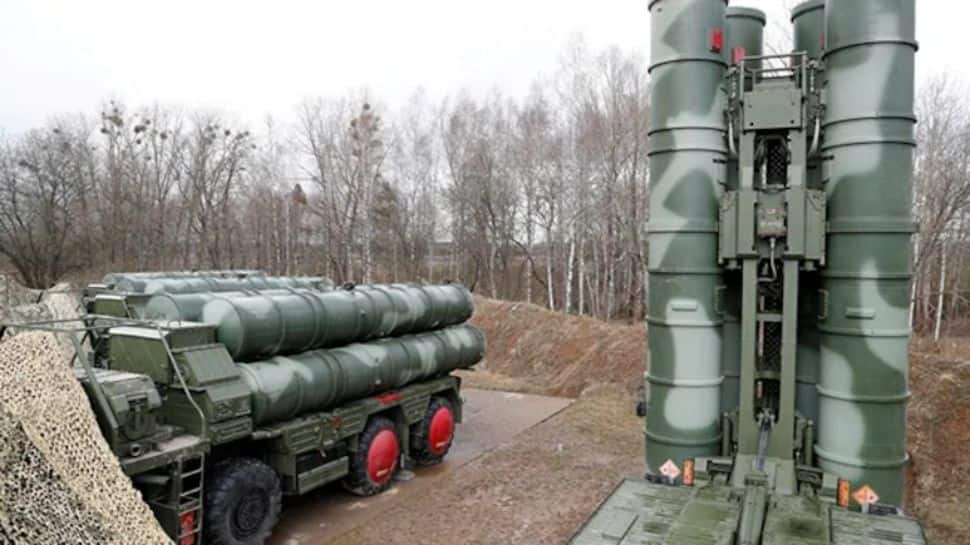
India is set to significantly boost its air defence capabilities with a massive Rs 56,000-crore deal for five additional S-400 missile squadrons. The agreement is expected to be finalized during Prime Minister Narendra Modi’s meeting with Russian President Vladimir Putin in New Delhi on December 5.
Strategic Air Defence Expansion
With aerial threats becoming increasingly complex in modern warfare, India is moving to double its S-400 fleet. The new order would transform India’s ability to detect and neutralize hostile aircraft, missiles, and drones long before they approach Indian airspace.
The original 2018 contract for five S-400 squadrons was valued at over $5 billion. Three squadrons have been delivered, with the remaining two scheduled to arrive by November 2026. The Ukraine war had initially slowed deliveries, but Russia has reaffirmed its commitment to the timeline.
At current exchange rates, each S-400 squadron costs approximately $1.25 billion (Rs 11,149 crore). The five additional units would represent one of India’s largest-ever air defence investments.
Proven Combat Performance
The S-400 systems have already demonstrated their effectiveness in real combat scenarios. During Operation Sindoor, these batteries played a crucial role and earned strong praise from the Indian Air Force.
IAF Chief Air Chief Marshal A. P. Singh confirmed that the S-400 achieved a record strike range of 314 kilometers during the operation, successfully shooting down at least five advanced Pakistani fighters including F-16s and JF-17 variants.
The Defence Ministry has also approved the purchase of nearly Rs 10,000 crore worth of additional S-400 missiles to replenish stockpiles used during tensions with Pakistan.
Regional Defence Balance
Currently, China operates six S-400 squadrons. If India completes the new order, its fleet will expand to ten squadrons, dramatically strengthening the country’s long-range air defence posture and creating a significant strategic advantage.
Russia has agreed to establish an MRO (Maintenance, Repair and Overhaul) hub in India, enabling local servicing and upgrades without relying on foreign facilities.
Diplomatic Balancing Act
The S-400 deal highlights India’s delicate diplomatic position between major powers. While strengthening defence cooperation with Russia, New Delhi must maintain stable relations with the United States, which has sold India over $26 billion worth of defence equipment in the past 15 years.
Recent deals include a Rs 8,900-crore agreement for 113 GE-F404 engines and a Rs 7,000-crore support package for the Navy’s 24 MH-60R helicopters.
Future Defence Upgrades
Beyond the S-400 expansion, India is preparing to upgrade 84 Su-30MKI fighters in a programme worth nearly Rs 63,000 crore. These aircraft will receive new radar systems, advanced avionics, long-range weapons, and multi-sensor suites, extending their operational life by at least three decades.
The upgrade work will be conducted within India with Russian technical support where required.
While Russia has been promoting its Su-57 fifth-generation fighter as an F-35 rival, India has not made a final decision. The Air Force seeks an interim fifth-generation aircraft until the indigenous AMCA fighter enters service around 2035.