
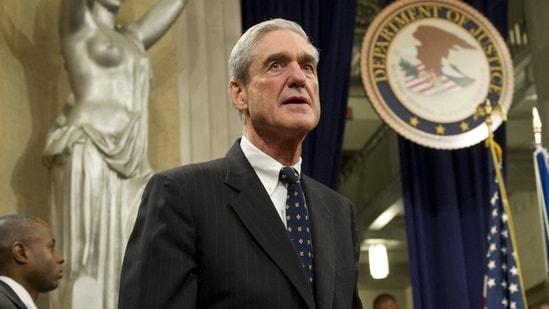
Former FBI Director Robert Mueller has died at the age of 81, prompting a controversial statement from US President Donald Trump, who said he was “glad he’s dead,” in a Truth Social post.
Trump has long criticized Mueller and his investigation into Russian interference in the 2016 US presidential election and possible links to Trump’s campaign. Trump claimed in his post that Mueller could “no longer hurt innocent people,” reflecting years of hostility toward the probe.
Was Robert Mueller a Trump Supporter?
Mueller was appointed as special counsel to independently investigate Trump’s campaign in 2017. This role often placed Mueller in direct opposition to Trump.
Reuters noted that Mueller maintained a nonpartisan, low-profile approach during the investigation. He and his team “spent nearly two years quietly conducting one of the most consequential, yet divisive, investigations in Justice Department history.”
Mueller avoided any public commentary and limited his statements to official findings.
In 2019, Mueller released his findings in a 448-page report. He found significant interactions between the Trump campaign and Russia, but he made no accusations of a criminal conspiracy.
He refrained from ruling on whether Trump had violated the law, in part because of departmental policy that prohibits indicting a sitting president. He also presented devastating evidence about Trump’s attempts to take over the investigation and potentially shut it down.
Throughout the probe, Trump repeatedly criticized Mueller and his team, calling the investigation a “witch hunt,” while allies questioned its legitimacy.
Mueller’s judgment on Trump’s campaign
The nearly two-year probe resulted in criminal charges against several Trump associates and documented extensive contacts between campaign figures and Russian officials.
However, it did not establish a criminal conspiracy between the Trump campaign and Russia, and it stopped short of reaching a definitive conclusion on obstruction of justice.
In the report, Mueller concluded, “If we had confidence after a thorough investigation of the facts that the president clearly did not commit obstruction of justice, we would so state. Based on the facts and the applicable legal standards, we are unable to reach that judgment.”
Although Trump was eventually tried and found not guilty on other charges pertaining to Ukraine, the ambiguous verdict did not provide the knockout blow to the government that some Trump opponents had hoped for, nor did it spark a persistent effort by House Democrats to impeach the president.
However, Trump’s reaction to his death reflects that Mueller and Trump had a rather turbulent relationship and positions Mueller as a polarizing figure in the political sphere.


