
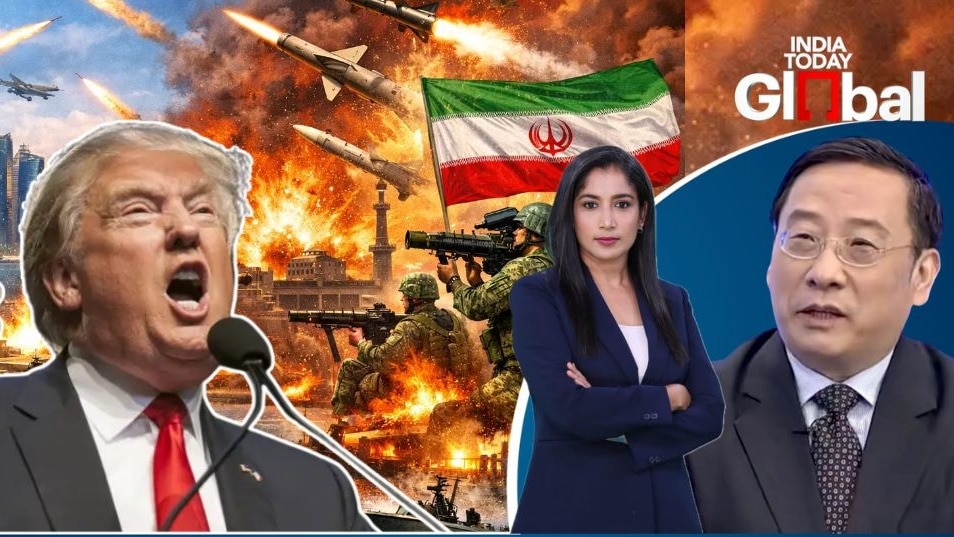
In an exclusive conversation with India Today Global, Beijing-based academic and commentator Victor Gao outlined China’s position on the evolving West Asia conflict, describing recent ceasefire efforts as fragile but significant, and warning of wider global economic consequences if the situation escalates further.
The interview, conducted by Senior Executive Editor Geeta Mohan, focused on the reported two-week ceasefire arrangement mediated with Pakistan’s involvement, the role of regional actors, and the competing strategic interests of the United States, Iran, and Israel.
‘Fragile but important’ ceasefire breakthrough
According to Victor Gao, the reported ceasefire agreement, facilitated through Pakistan’s mediation, represents a “major diplomatic breakthrough”, though he cautioned that its durability remains uncertain.
He warned that the truce is “on the brink of collapsing”, but argued it still offers a critical window for diplomacy.
He added that continued conflict risks triggering what he described as a “combined global crisis” involving energy instability, economic disruption, and potential financial shocks.
China, he said, is urging all parties, including Donald Trump’s administration and Iran, to pursue restraint and return to negotiations before escalation becomes irreversible.
Israel’s role and accusations of destabilisation
A significant portion of the interview focused on Israel’s role in the wider conflict. Victor Gao argued that Israeli leadership, particularly Prime Minister Benjamin Netanyahu, could have an incentive to undermine ceasefire efforts.
He claimed Israel might prefer continued confrontation over a negotiated settlement, suggesting that the objective could be the weakening or “obliteration” of Iran’s state capacity, an assessment presented as his interpretation of strategic intent.
He further criticised Israeli military actions in Gaza and Lebanon, calling for international pressure to halt operations and urging a broader settlement involving all regional actors.
These claims reflect his personal assessment and were not independently verified within the interview context.
US domestic politics shaping foreign policy
Turning to the United States, Victor Gao argued that domestic political considerations are heavily influencing Washington’s approach to the conflict.
He suggested that electoral pressures, including upcoming congressional elections, could constrain escalation and ultimately push the US toward de-escalation.
He also predicted that sustained military involvement could have political consequences for Donald Trump and the Republican Party, potentially weakening their position in Congress.
China’s position: diplomacy over military intervention
Asked about China’s response to the crisis, Victor Gao reiterated Beijing’s long-standing position of opposing military escalation.
He said China has consistently called for an immediate end to hostilities and described the conflict as a violation of international law and the UN Charter.
He referenced China’s historical diplomatic philosophy, attributing it to long-term strategic thinking that prioritises negotiation over military intervention.
He also noted the role of Chinese Foreign Minister Wang Yi in engaging with counterparts across more than 20 countries to promote de-escalation efforts.
While critics have questioned why China has not taken a more direct military role, he rejected such suggestions, arguing that armed intervention would only worsen instability.
Pakistan as a diplomatic bridge
A central theme of the interview was Pakistan’s role as a mediator between Washington and Tehran.
Victor Gao described Pakistan as uniquely positioned due to its historical ties with Iran, improving relations with the US, and longstanding strategic partnership with China.
He highlighted what he called the “ironclad” relationship between China and Pakistan, while noting Islamabad’s potential to act as a “bridge” between rival powers.
He also referenced historical precedent, citing Pakistan’s role in facilitating US-China diplomatic engagement in the early 1970s involving Henry Kissinger’s secret visit to Beijing during the era of Deng Xiaoping’s rise in influence.
China-Iran relations and regional stability
On China’s relationship with Iran, Victor Gao emphasised support for Iran’s sovereignty and territorial integrity.
He said China has opposed what it views as unilateral military action and reiterated that Beijing supports Iran’s right to defend itself under international law.
However, he stopped short of endorsing military assistance, arguing that additional arms transfers would not meaningfully alter the trajectory of the conflict.
Broader regional implications
The interview also touched on broader regional dynamics, including sectarian tensions and the potential for escalation across West Asia.
Victor Gao argued that sustained conflict risks deepening divisions in the Muslim world, particularly between Sunni and Shia populations.
He also claimed that recent diplomatic shifts, including improved relations between Iran and Saudi Arabia, demonstrate the potential for China-led diplomacy to reduce regional tensions.
Outlook: uncertainty ahead
Despite repeated calls for restraint, Victor Gao warned that the situation remains highly unpredictable.
He cautioned that further escalation could occur even after any temporary ceasefire period, depending on decisions taken in Washington and regional capitals.
At the same time, he expressed cautious optimism that sustained diplomatic engagement, particularly involving Pakistan and other intermediaries, could still prevent a wider regional war.
Conclusion
The interview with Victor Gao underscores China’s public messaging on the West Asia crisis: a consistent emphasis on de-escalation, opposition to military escalation, and support for multilateral diplomacy.
However, his remarks also highlight deep geopolitical fault lines, between Washington and Tehran, between regional powers, and within global alliances, where competing narratives continue to shape one of the most volatile crises in recent years.
As Beijing signals preference for diplomacy and intermediaries like Pakistan, the trajectory of the conflict remains uncertain, with global economic and security implications still unfolding.


