
The US-Israel war on Iran is still far from slowing down, with both sides continuing strikes even after weeks of escalation. At the same time, a parallel track of diplomacy has begun as countries scramble to contain a conflict that has already spilled across the Middle East and unsettled the global energy market.
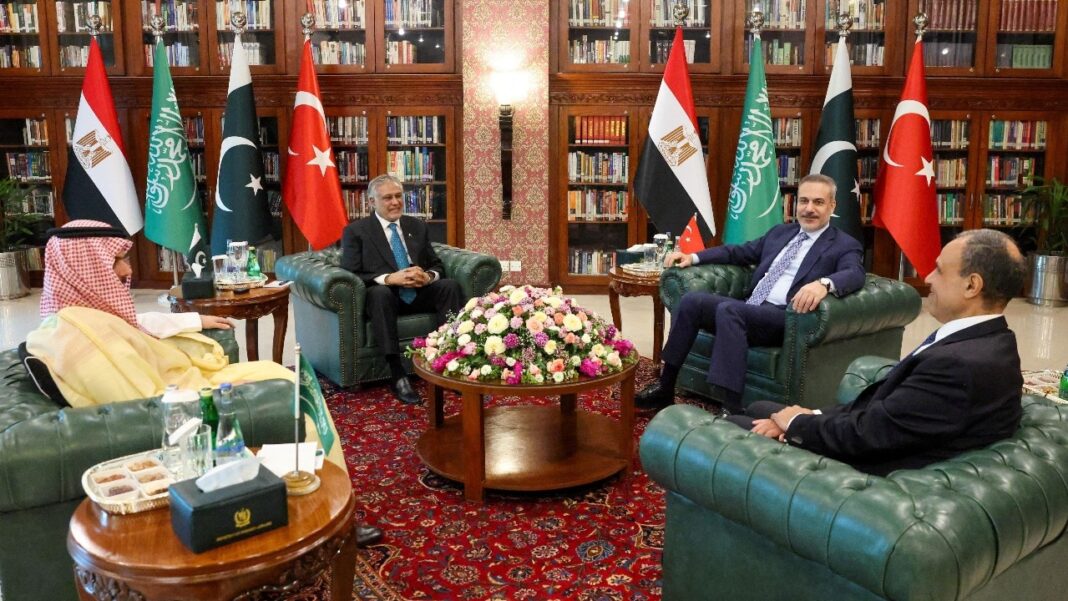
Foreign ministers from Turkey, Saudi Arabia, Egypt and Pakistan have come together in Islamabad for two days of talks, in one of the most serious regional attempts yet to bring Washington and Tehran closer to the negotiating table.
Pakistan’s Foreign Minister Ishaq Dar welcomed his counterparts and stressed the importance of collective engagement at a critical moment. In a post on X, Dar wrote: “Pleased to welcome my dear brothers, the Foreign Ministers of Saudi Arabia, Turkey, and Egypt, to Islamabad for the second round of our Consultations. Grateful for their presence at this critical moment, reflecting our strong fraternal ties.”
FOCUS ON HORMUZ AND GLOBAL ENERGY FLOW
Much of the urgency around the talks comes from concerns over the Strait of Hormuz, a critical route for global oil and gas shipments. The waterway, which once carried about a fifth of the world’s oil and liquefied natural gas, has been choked after Iran effectively halted shipping in response to US and Israeli air strikes.
According to news agency Reuters, the countries meeting in Islamabad have put forward proposals aimed at reopening the strait and stabilising maritime traffic. These ideas have reportedly already been shared with Washington ahead of the talks.
Among the suggestions under discussion are mechanisms similar to the Suez Canal model, including structured transit fees, as well as a possible arrangement to ensure the safe movement of oil shipments through the region.
REGIONAL PLAYERS FLOAT JOINT PLAN
According to sources cited by Reuters, Turkey, Egypt and Saudi Arabia have explored the idea of forming a consortium to manage oil flows through the Strait of Hormuz. Pakistan, given its ties with both Tehran and Washington, has been seen as a natural participant in such efforts, although Islamabad has not formally committed to joining any such arrangement.
At the same time, Pakistan has been leveraging its position to act as a communication bridge. Officials said proposals from multiple countries, including Egypt, were conveyed to the White House before the Islamabad meeting.
There have also been ongoing high-level contacts behind the scenes. Pakistan’s army chief Asim Munir has reportedly remained in regular touch with US Vice President JD Vance as part of these efforts.
With inputs from agecny


