
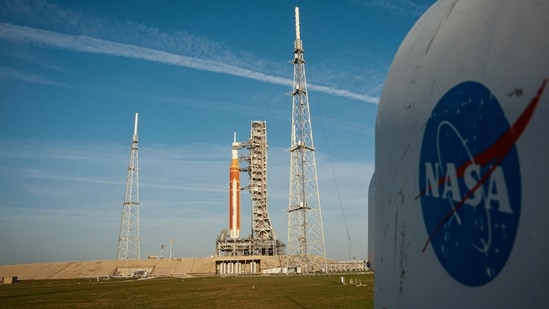
More than 50 years after the Apollo missions, NASA is finally preparing to send astronauts around the Moon again with Artemis 2. While technology has improved dramatically over the years, returning humans to deep space has proven far more complex than it may seem.
Why space travel is still difficult
According to The Conversation, The first thing to understand is that sending humans safely into space has never gotten easier, it has only gotten more complex. New technologies require years of research, development and testing before they can ever be trusted with human lives. And even then the things go wrong in ways that surprise even the most experienced engineers.
Two recent examples make this clear. Boeing’s Starliner spacecraft developed thruster issues so serious that NASA decided to return it from the International Space Station without its crew on board. And the heat shield on the Orion capsule, the same vehicle that will carry the Artemis II crew chipped in unexpected ways during the uncrewed Artemis I mission which triggered years of additional research and forcing NASA to change its atmospheric re-entry plans entirely.
These are not failures of imagination. They are reminders of just how unforgiving space travel remains.
NASA’s missions also depend on long-term political and financial support. After the Apollo era, budget cuts in the 1970s led to the cancellation of planned Moon missions, shifting focus to projects like Skylab and later the space shuttle program. For decades, NASA concentrated on low Earth orbit, including building and maintaining the International Space Station.
Artemis journey so far
Artemis 1 was launched in 2022 and it was the first mission to test the Space Launch System and Orion together during a 25-day uncrewed flight. Artemis 2 will be the first crewed mission in which four astronauts will be sent around the Moon on a 10-day journey and it will help prepare for future landings. Although it has taken over 50 years to return, experts say the wait is just a small part of NASA’s long journey back to the Moon.
Artemis 2 weather forecast: NASA gives latest update on moon mission hours before Florida launch
Every President comes with a different direction
One of the biggest reasons it has taken so long to return to the Moon is the lack of steady political support over the years. NASA’s plans have often changed with different US administrations.
In the late 1990s, the Clinton administration asked NASA to look beyond the space station. This became more urgent after the Space Shuttle Columbia disaster in 2003 which raised serious concerns about the future of human spaceflight.
In 2004, President George W Bush introduced the Vision for Space Exploration, asking NASA to retire the space shuttle and focus on returning humans to the Moon and eventually going to Mars. This led to the Constellation program which included the Orion capsule and new rockets called Ares I and Ares V.
However, in 2009, a review found that NASA’s plans were too expensive for its budget. The Obama administration cancelled the Constellation program but the Orion spacecraft continued. In 2010, NASA was also directed to build a new heavy rocket, which later became the Space Launch System.
Later, in 2017, the Trump administration shifted focus back to the Moon again and set a goal for a lunar landing. And finally in 2019, this effort was officially named the Artemis program.
Artemis 2 cost explained: How much did NASA spend on latest Moon mission? Who is paying for it?
A mission worth billions
Artemis II is part of NASA’s larger Artemis program which has already cost over $90 billion and could cross $100 billion. Each launch, including Artemis II is estimated to cost more than $4 billion due to advanced systems needed for deep space travel. The mission is mainly funded by the US government, with support from international partners and private companies, making it one of the most expensive space programs since Apollo.


