
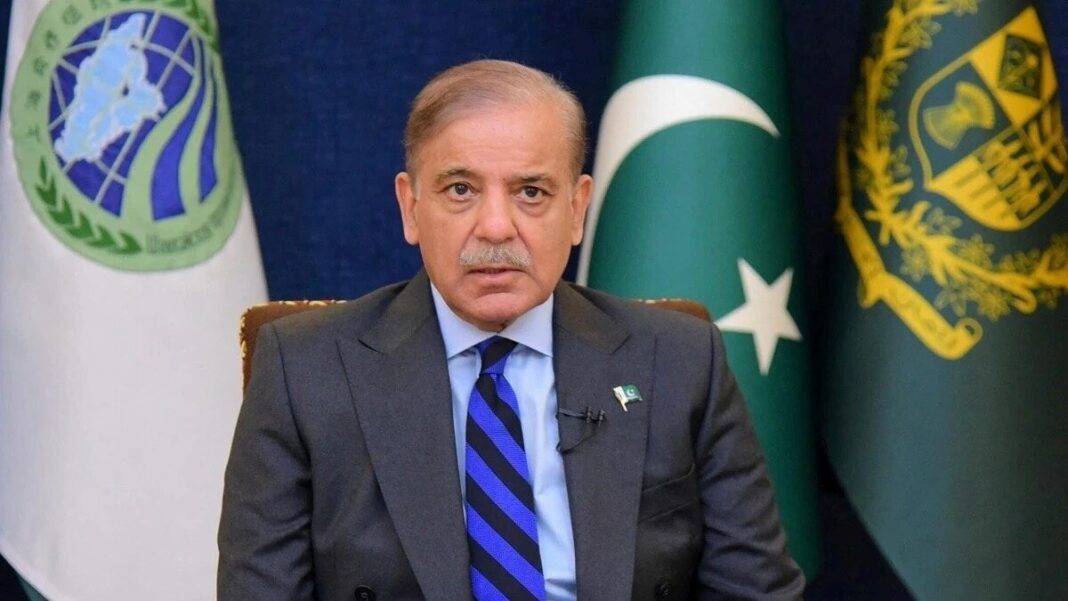
Pakistan Prime Minister Shehbaz Sharif on Friday described upcoming US-Iran negotiations in Islamabad as a decisive moment, saying the talks represent a “make or break” phase in efforts to secure a permanent ceasefire.
Addressing the nation, Sharif said the leadership of both countries would begin discussions in the Pakistani capital on Saturday, positioning Islamabad at the center of a high-stakes diplomatic push.
“This phase of talks is a make or break to seek a permanent ceasefire,” he said, adding that hosting the negotiations was “not just a proud moment for Pakistan but for the entire Muslim world.”
He thanked the leadership of Iran and the United States for agreeing to a ceasefire and holding peace talks at his request. He said his government would do its best to ensure the success of the peace process and urged citizens to pray for the talks to succeed.
The talks are expected to bring together senior officials from Washington and Tehran at a time of heightened tensions, with Pakistan playing a key mediating role.
Alongside the foreign policy developments, Sharif also announced a major cut in fuel prices, seeking to ease economic pressure on citizens. Diesel prices have been reduced by 135 rupees per litre, falling from 520 rupees to 385 rupees per liter, while petrol prices have been cut by 12 rupees, from 378 rupees to 366 rupees per litre.
The price reductions come amid broader efforts by the government to stabilize the economy and provide relief to households facing rising costs.
PAKISTAN’S DIPLOMACY COMES INTO FOCUS
Pakistan’s role as a go-between in US-Iran negotiations has been building for weeks, according to the Associated Press, even as details of the backchannel efforts remain closely held.
Media reports first pointed to Islamabad’s involvement, which officials later acknowledged, confirming that a US proposal had been conveyed to Tehran. It remains unclear who has acted as Iran’s primary point of contact in the indirect exchanges.
Pakistani officials said messages from Washington were passed on to Iran, with responses relayed back, though they did not specify how the process was structured or who was directly communicating. They added that Turkey and Egypt have also been working behind the scenes to bring both sides to the table.
Since Washington and Tehran agreed to an initial 14-day ceasefire earlier this week, Prime Minister Shehbaz Sharif, Foreign Minister Ishaq Dar and army chief Asim Munir have publicly highlighted their contacts with global leaders, underscoring Pakistan’s emerging role as a mediator.
While Islamabad is not typically at the center of high-stakes diplomacy, it has stepped into the role this time due to its working ties with both Washington and Tehran, as well as its own strategic interest in a resolution to the conflict, the Associated Press reported.
The talks are expected to take place in Islamabad on Saturday, with security tightened across the capital, including the deployment of additional troops and police.


