
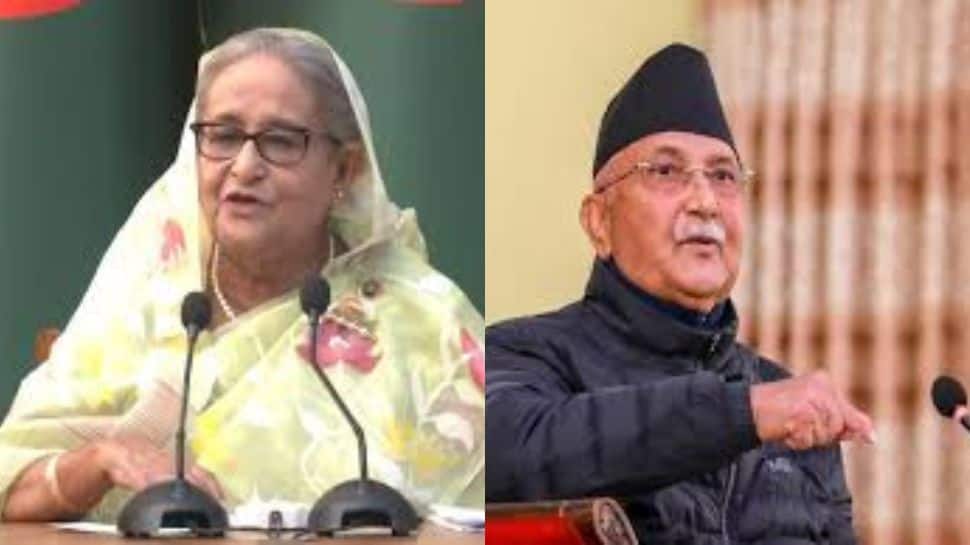
As Nepal prepares for its general election on March 5, former Prime Minister KP Sharma Oli is actively contesting the polls, seeking a political comeback months after resigning amid widespread youth-led protests. His return to the electoral arena contrasts sharply with developments in neighboring Bangladesh, where former Prime Minister Sheikh Hasina remains in exile following her government’s fall.
Both South Asian nations experienced major political upheavals triggered by youth unrest, leading to interim administrations and fresh elections. However, the trajectories of their former leaders have diverged significantly.
Nepal: From protest to political
The unrest in Nepal began last year after the government imposed a ban on 26 social media platforms, including Facebook, Instagram, WhatsApp, YouTube, and Snapchat, citing their failure to register with authorities. The decision sparked outrage among students and youth groups, who accused the government of attempting to curb dissent and silence criticism.
Protests that initially erupted in Kathmandu quickly spread nationwide. According to reports at the time, at least 19 people were killed and more than 300 injured in clashes between demonstrators and police.
Although the government eventually lifted the ban, public anger persisted. Political order and security were severely shaken, and amid escalating turmoil, Oli resigned on September 9.
Speculation circulated that he had left the country during the height of the September 2025 protests. It was later reported that Oli and several colleagues had taken shelter at an army barracks in Shivapuri during the unrest.
Now 73, Oli, leader of the Communist Party of Nepal (Unified Marxist–Leninist)—has re-emerged on the campaign trail. According to reports, he is conducting extensive door-to-door outreach, listening to public grievances and appealing directly to voters ahead of the March 5 vote.
The upcoming election in Nepal is widely viewed as a test of political accountability and an effort to restore a fully functioning legislature capable of addressing demands for reform. The youth movement has taken on a distinctly electoral character, bolstering new parties and independent candidates positioning themselves as alternatives to established political elites.
Bangladesh: Election without Hasina
In contrast, Bangladesh recently held a parliamentary election in the aftermath of a 2024 student-led uprising, but without Sheikh Hasina on the ballot. The 78-year-old leader’s party, the Awami League, was banned from political activities.
Hasina, who left Bangladesh in August 2024 following intense street protests and a constitutional reform push, is currently living in exile and facing a death sentence.
The election held under heightened security, amid polarised debates over legitimacy and extensive media scrutiny. Reports indicated widespread intimidation and attacks on political opponents in the run-up to the vote, particularly targeting Awami League supporters. Members of minority communities were also reported to be living in fear following incidents of violence.
The interim government in Bangladesh framed the election not only as a parliamentary contest but also as a de facto referendum on the July National Charter, a sweeping package of constitutional reforms aimed, according to its proponents, at restructuring institutional checks and balances.
The outcome is expected to have significant implications for party realignment, implementation of constitutional changes, and Bangladesh’s diplomatic posture. Issues of domestic reconciliation and the legal status of exiled leaders are likely to remain central political flashpoints.
Diverging political paths
While both Nepal and Bangladesh experienced youth-driven movements that led to governmental change, parliamentary dissolution, and reform agendas, the political stakes and outcomes have differed markedly.
In Nepal, the vote centers on restoring democratic institutions and holding leaders accountable at the ballot box—with Oli seeking a renewed mandate. The youth movement in Nepal was especially electoral oriented, creating newer options for the people of Nepal.
In Bangladesh, the political landscape remains reshaped by the absence of a dominant former leader and the legal and constitutional uncertainties that followed her departure.
Both countries are navigating post-protest transitions, their elections underscores the varied path South Asian democracies taking in the wake of public unrest.


