
Iran and the United States held a fresh round of indirect nuclear talks in Geneva on Tuesday, with Tehran signalling limited progress even as it conducted live-fire missile drills in the Strait of Hormuz and issued fresh warnings over its nuclear rights.
Iranian Foreign Minister Abbas Araqchi, who is leading Tehran’s delegation, said Iran and the US reached an understanding on the main “guiding principles”, but work still needed to be done.
Speaking to Iranian media, he said, “Different ideas have been presented, these ideas have been seriously discussed, ultimately we’ve been able to reach a general agreement on some guiding principles, from now on we will move based on those principles and enter the text of a potential agreement.”
The talks — mediated by Oman and held under tight security at the residence of the Omani ambassador to the United Nations — mark the latest attempt to resolve the tensions.
Meanwhile, Supreme Leader Ayatollah Ali Khamenei reiterated Iran’s position on nuclear rights in posts on X, saying nuclear energy and enrichment capabilities were an undeniable national right recognised under international frameworks and should not be subject to US interference.
In an earlier message, he said Iran’s peaceful nuclear industry was intended for civilian needs such as agriculture, healthcare and energy supply, and questioned Washington’s role in challenging those rights.
The missiles launched from within Iran and along its coast struck targets in the Strait of Hormuz while Iran’s elite Revolutionary Guards conducted drills. Authorities also announced temporary closure of parts of the waterway for safety during live-fire exercises. Tehran has repeatedly threatened to shut the strait to commercial shipping if the US launches an attack.
TALKS RESUME AMID HEAVY MILITARY BUILDUP
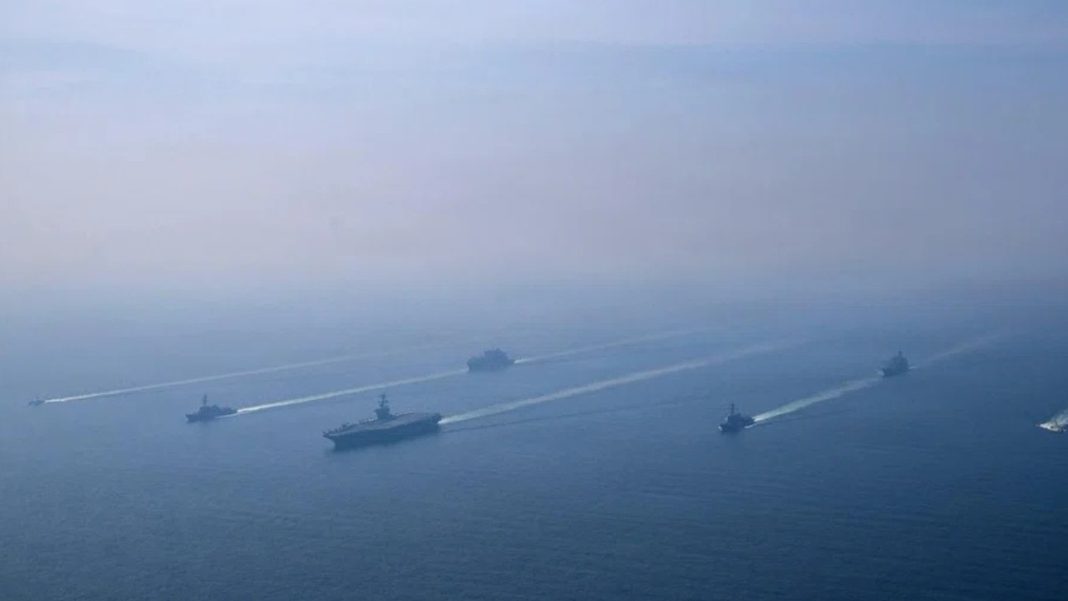
The negotiations follow earlier rounds in Oman and take place as both sides signal readiness for escalation. Washington has increased its regional military deployments, while Tehran has carried out missile and maritime exercises in waters through which about a fifth of global oil supplies pass.
Ahead of the talks, US President Donald Trump said he would be involved “indirectly” in the negotiations and expressed confidence that Tehran wanted an agreement. “I think they want to make a deal. I don’t think they want the consequences of not making a deal,” he told reporters aboard Air Force One.
US officials have warned that military options remain available if diplomacy collapses. Trump has repeatedly threatened force to compel limits on Iran’s nuclear programme and has said “regime change” could be the best outcome for Iran.
Tehran also pushed back, with Supreme Leader Ayatollah Ali Khamenei saying Washington could not impose its will through threats and warning against coercive pressure.
In separate remarks carried by Iranian state television, he added: “Of course, a warship is a dangerous apparatus, but more dangerous than the warship is the weapon that can sink the warship into the depths of the sea,” and warned that “forcing the result of talks in advance is a wrong and foolish job.”
TALKS STALL ON NUCLEAR ENRICHMENT DEMANDS
The United States wants an agreement to curb Iran’s nuclear work and prevent it from developing atomic weapons. Washington has also pressed to widen the talks to include Iran’s missile stockpile and its role across the region.
Tehran has rejected that scope, insisting negotiations must centre only on nuclear limits and the lifting of sanctions. Iranian officials say they will neither end uranium enrichment outright nor put their missile programme on the table.
Iran says its nuclear programme is peaceful and allowed under the Nuclear Non-Proliferation Treaty, which it has signed. The United States and Israel argue Tehran is pursuing nuclear weapons capability. Israel, which is not a party to the treaty, has long followed a policy of neither confirming nor denying that it possesses nuclear arms.
With inputs from agencies


