
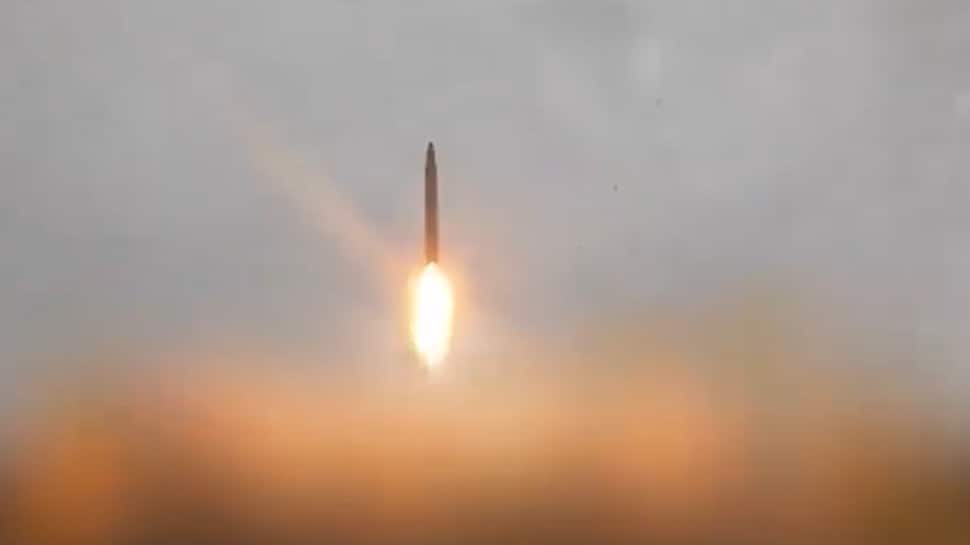
The conflict involving the United States, Israel, and Iran is escalating with each passing day. Iran has launched one of its most formidable ground weapons, the Sejjil missile, marking the first time the advanced missile has been used since the war began on February 28, Hindustan Times reported.
Sejjil-2 is an ultra-heavy and long-range ballistic missile capable of striking targets within minutes. Powered by solid fuel, the missile is also known by alternative names such as Sajjil, Ashoura, and the Ashura missile.
It remains unclear which Sejjil missile variant was used in Sunday’s attack on Israel.
Although this may mark the first time the Sejjil has been used in the current Iran war that began on February 28, Tehran has previously employed the Sejjil missile, including during last year’s 12‑day conflict with Israel.
Key facts about Sejjil missile, the ‘Dancing Missile’
The Sejjil-2 is a medium-range ballistic missile (MRBM) developed by Iran. It features a two-stage solid-fuel design, enabling it to strike targets up to approximately 2,000 km away while carrying a payload of around 700 kg.
According to the Center for Strategic and International Studies (CSIS), the missile measures roughly 18 meters in length, has a diameter of about 1.25 meters, and weighs around 23,600 kilograms.
A major advantage of the Sejjil-2 is its solid-fuel propulsion, which allows for quicker preparation and launch than older liquid-fuel missiles, such as those in the Shahab series.
The missile was developed to replace the Shahab series, which had been in service since the late 1980s.
According to CSIS, Iran began work on the Sejjil missile in the late 1990s, drawing on development experience from its earlier missile programs, especially the Zelzal short‑range ballistic missile series.
The missile was first tested in 2008, reportedly traveling about 800 km, and a second test was carried out in May 2009 to assess enhancements to its guidance and navigation systems.
Four more flight tests have been conducted, with the sixth test reportedly reaching a distance of about 1,900 km over the Indian Ocean.
The Israel-US-Iran war has entered its 17th day, with no immediate signs of de-escalation. The conflict began on February 28 when the US and Israel launched attacks on Iran. It intensified further after Iran’s supreme leader, Ayatollah Ali Khamenei, was killed. Since then, Iran has been targeting Israel as well as US military bases across Gulf countries.
Reports indicate that over 2,000 people have been killed in the conflict so far, and it has significantly affected the global economy, especially energy markets—after Iran stopped oil tankers from passing through the Strait of Hormuz, forcing many countries to seek alternative routes for supplies.


