
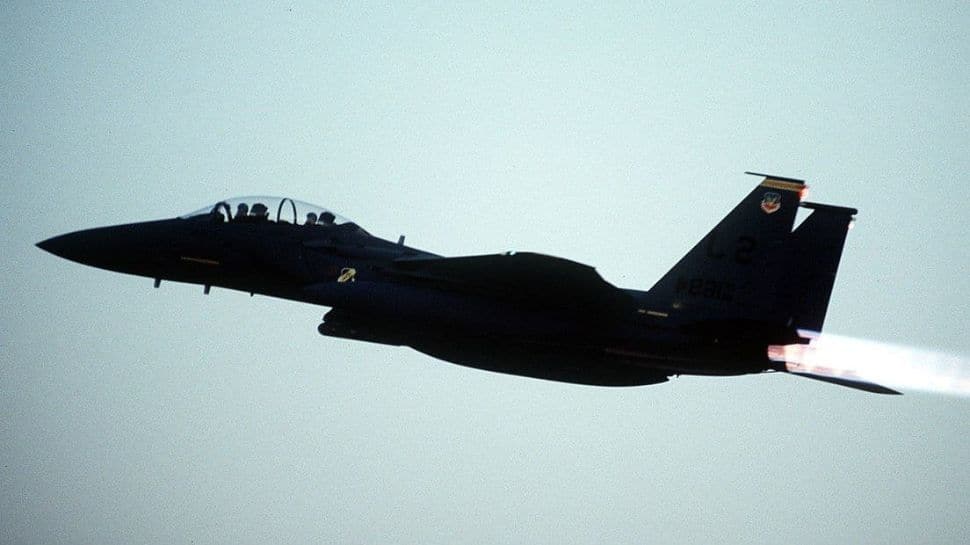
During the ongoing US-Iran conflict, a dramatic Combat Search and Rescue (CSAR) operation successfully rescued the second crew member, a weapons system officer (WSO), of a US F-15E Strike Eagle that was shot down over southeast Iran on Friday, April 3.
The first pilot was rescued shortly after the crash on the same day, while the second crew member was located and retrieved on Saturday night following a massive, high-risk, deep-territory operation.
Highlights of the rescue operation
An F-15E Strike Eagle, part of the US-Israel coalition, was shot down by an Iranian surface-to-air missile on April 3, deep inside Iran. This marked the first US jet loss in the conflict.
In a daring rescue, US Special Forces, supported by dozens of aircraft and helicopters, engaged in a heavy firefight inside Iranian territory to retrieve the missing WSO. The crew member had been evading capture in mountainous terrain for over a day.
The operation, dubbed “Epic Fury,” involved dozens of aircraft, helicopters, and hundreds of special operations troops. President Trump described it as one of the most daring rescues in US history.
Iran had allegedly placed a bounty of over $87,000 on the pilot, urging civilians to capture the crew members.
During the operation, Iranian forces reportedly fired on US Black Hawk helicopters. A US A-10 Thunderbolt was also damaged while supporting the search.
Implications
The shooting down of a US manned fighter jet by Iran, followed by a boots-on-the-ground rescue operation deep inside Iranian territory, marks a significant escalation in the war, which has now entered its sixth week.
The successful high-risk rescue underscores the U.S. military’s “No One Left Behind” policy and its commitment to recovering personnel at any cost. The operation is expected to boost morale among US forces significantly.
The CIA reportedly used unique intelligence capabilities to track the WSO while spreading false reports of his capture as part of a sophisticated deception campaign to protect him.
The swift rescue of both crew members denied Iran potential high-value prisoners of war, which could have been used as strategic leverage in the conflict.
(The writer is a retired Army General.)


