
Iran has strongly denied claims by US President Donald Trump that Tehran had approached Washington seeking a ceasefire.
According to Iran’s Foreign Ministry, the statement is “false and baseless.”
“Trump’s statements about Iran’s request for a ceasefire are false and baseless,” spokesperson Esmaeil Baqaei said, as cited by Press TV.
Trump links ceasefire to Strait of Hormuz
The denial came hours after Trump claimed on Truth Social that Iran had sought a ceasefire, adding that the US would only consider it if the Strait of Hormuz is reopened.
“Iran’s New Regime President… has just asked the United States of America for a CEASEFIRE! We will consider when Hormuz Strait is open, free, and clear. Until then, we are blasting Iran into oblivion,” Trump wrote.
He warned that US military action would continue if the strategic waterway remains blocked.
Hormuz tensions deepen
Earlier, Ebrahim Azizi, head of Iran’s parliamentary national security commission, signalled restrictions on the Strait of Hormuz.
The waterway remains a critical global oil transit route, and any disruption has heightened geopolitical and economic concerns.
Diplomatic breakdown: ‘Trust level is zero’
Earlier, Iran’s Foreign Minister Abbas Araghchi ruled out any immediate diplomatic breakthrough with Washington.
“The trust level is at zero,” Araghchi told Al Jazeera, adding that Tehran sees no “honesty” in US actions and has “never had a good experience from negotiations” with the American government.
Trump signals war wind-down, NATO exit threat
Even as tensions escalate, Trump suggested the conflict could end soon.
“We’re going to be out pretty quickly,” he told Reuters, adding that the US could return for “spot hits” if needed.
Trump also indicated he is “absolutely” considering withdrawing the United States from the NATO, citing dissatisfaction with allied support.
US claims military objectives achieved
Trump asserted that US-Israeli strikes have severely weakened Iran’s capabilities.
“They won’t have a nuclear weapon because they are incapable of that now… That goal has been attained,” he said, claiming Iran could take “15 to 20 years” to recover.
Rising global concerns over oil supply
The International Energy Agency warned that global oil supply disruptions could intensify, potentially doubling the impact seen in March.
The agency underscored the urgency of de-escalation as the conflict threatens energy markets.
Escalation and civilian toll
The conflict continues to widen across the region:
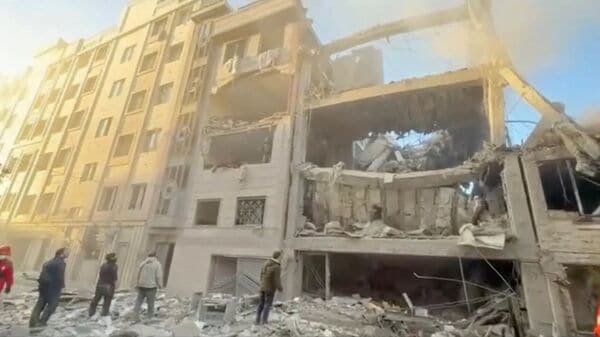
-Iran reported casualties and damage in Tabriz, including residential areas and historical sites
-Israeli territories have been hit by missile debris, accounting for multiple fatalities
-Lebanon saw fresh strikes, with casualties reported in Beirut
-Yemen’s Houthi forces claimed coordinated missile attacks alongside Iran and Hezbollah
US-based rights group HRANA estimates 3,492 deaths in Iran so far, including civilians and children, while Iranian officials reported casualties among healthcare workers.


