
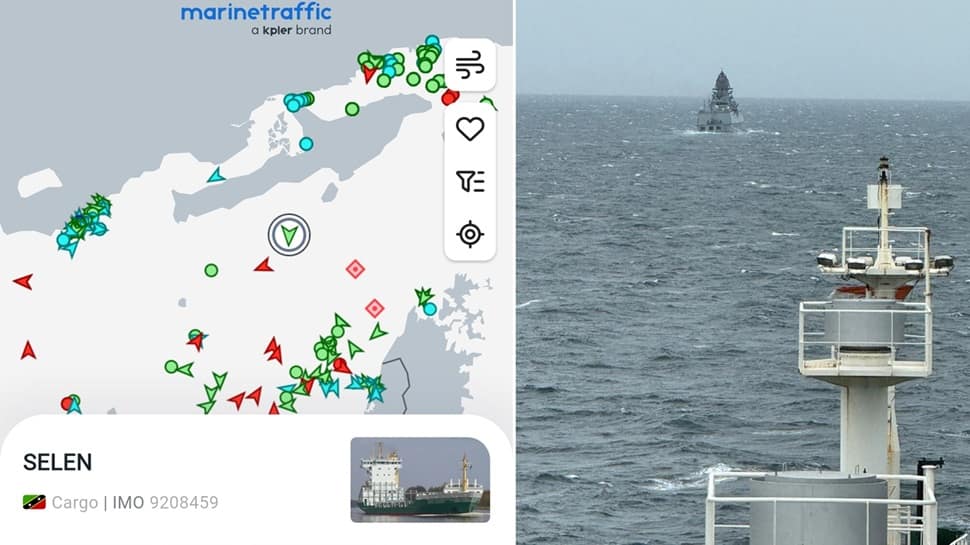
Iran has maintained its chokehold on the Strait of Hormuz and has made it clear that only ships with a valid permission are allowed to pass through the channel. Iran stated that the ships belonging to aggressors, including Israel, the United States and any other assisting them in the war, won’t be allowed. Countries like India are negotiating the safe passage for their ships with Iran. Amid this, the Iranian Navy has reportedly turned back a Pakistan-bound ship, citing no legal clearance.
Iranian authorities have confirmed that they have turned back a vessel named Selen bound for Karachi, Pakistan, since it did not have approval to pass Hormuz. Iran has clarified that the passage of any vessel through the Strait of Hormuz requires full coordination with its maritime authority.
Notably, at a time when Pakistan bound ship has been withheld, three more India-bound ships have cross the Strait of Hormuz, taking the total of five. So far, only one Pakistani ship has managed to cross the Strait of Hormuz.
While Pakistan Navy has escorted a couple of oil tankers from the UAE to Karachi, but those escorts were mainly along Pakistan’s own sea routes—not through the Strait itself.
India has also deployed its navy in the Gulf of Oman. According to reports, the Indian Navy has deployed more than half a dozen warships to the Gulf of Oman and Arabian Sea to escort Indian oil tankers through the world’s most dangerous waters at present.
The Indian Navy has been given the responsibility of ensuring the safe return of the oil tankers. But this is not a conventional escort mission. Naval personnel are not merely accompanying tankers; they are guiding them, step by step, through one of the world’s most sensitive maritime passages.
The Indian Navy has launched ‘Operation Urja Suraksha’. This operation entails the positioning of over five advanced warships in the vital maritime chokepoint of the Strait of Hormuz.
According to government officials, the Navy remains in constant contact with vessels preparing to exit the Persian Gulf. Each ship is guided individually through the Strait, with precise instructions on routes and procedures designed to ensure safe passage.
Once the vessels clear the Strait, Indian Navy destroyers and frigates take over, escorting them through the initial stretch of their onward journey. It is a layered security arrangement, combining guidance with protection.


