
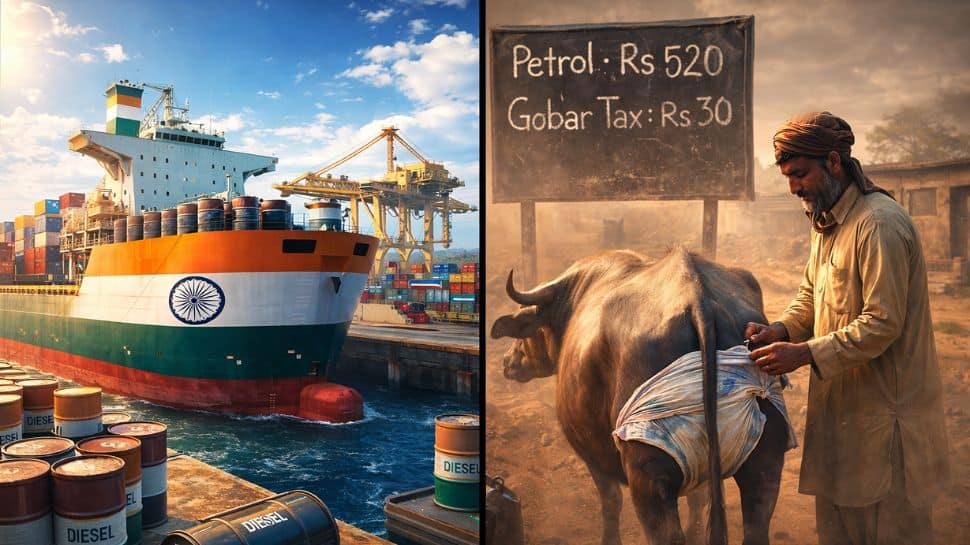
While India is helping its neighbours survive an oil crisis, Pakistan is taxing its citizens for something they cannot control, their buffaloes going to the bathroom.
This is not satire. This is Pakistan in 2026.
Rs 520 a Litre. Rs 3,588 a cylinder.
The Strait of Hormuz crisis has sent fuel prices spiralling across the region. But no country has handled it quite like Pakistan. In one swift move, Islamabad hiked petroleum prices to levels its own people can barely believe:
– Petrol: jumped by Rs 137 Pakistani rupees – now at Rs 321 per litre
– Diesel: up Rs 184 – now at Rs 520 per litre
– Kerosene: up Rs 34 – now at Rs 457 per litre
– LPG cylinder: hiked from Rs 2,664 to Rs 3,588
With gas cylinders unaffordable, Pakistanis had already started cooking on dung cakes. People were riding donkey carts to save fuel. And then the government found its next revenue source the dung itself.
The gobar tax
Punjab Chief Minister Maryam Nawaz has introduced a fee of Rs 30 per buffalo per day, officially framed as a charge under the “Suthra Punjab” clean energy initiative, to fund a biogas programme.
Pakistanis have given it a simpler name: the Gobar Tax.
168 cattle colonies across Punjab have been identified. Roughly 50 lakh cattle could fall under this levy. The math is straightforward and staggering. Maryam Nawaz stands to collect Rs 450 crore every month from buffalo dung alone.
Pakistani citizens are already finding ways around it. Some are drawing up special “zero-waste” diet plans for their buffaloes. Others, in Punjab, have reportedly started putting diapers on their animals.
And then there’s this warning, now going viral on Pakistani social media: “The day they taxed animal dung, the next tax on human dung became only a matter of time.”
Laugh if you must. But the people saying it aren’t laughing.
Meanwhile, India
On the other side of the border, India is doing something very different with the same crisis.
Since the conflict near Iran began, India has exported 75 lakh barrels of diesel, a seven-year record. Bangladesh, Nepal, Bhutan, Sri Lanka, and Singapore are all receiving Indian diesel supply. Even the Maldives, which not long ago was openly hostile toward New Delhi, has reached out to India for petroleum products. The Ministry of External Affairs confirmed the request is under active consideration.
While Pakistan bleeds its own people with tax after tax, India is keeping its domestic prices stable and its neighbours supplied.
Two countries. One crisis. Two very different choices
Pakistan’s government has turned an energy crisis into an extraction exercise, squeezing money from fuel, cooking gas, and now cattle dung. India has turned the same crisis into an opportunity to deepen regional trust and demonstrate energy leadership.
One country is putting diapers on buffalo to dodge a tax. The other just broke a seven-year diesel export record. The contrast could not be starker.


