

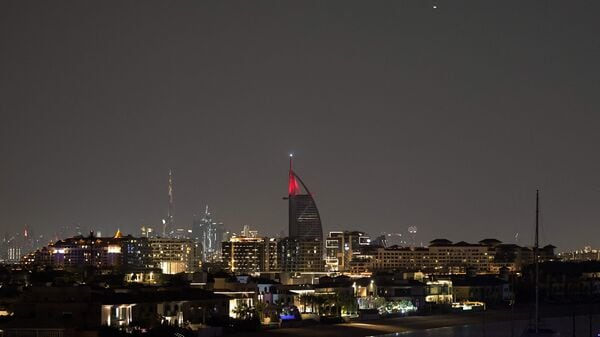
As the conflict between Iran, the US and Israel enters its seventh day, Dubai residents received an alert from the Emirati interior ministry on Friday, urging them to seek shelter amid potential missile threats, as Iran continued its retaliatory campaign across the Gulf.
“Due to the current situation, potential missile threats, seek immediate shelter in the closest secure building and steer away from windows, doors and open areas,” the alert stated, according to AFP.
This comes after the United Arab Emirates’ defence ministry on Thursday stated that one ballistic missile and six drones struck the country’s territory. It added that its forces intercepted six missiles and 131 drones the same day, and hundreds more since the conflict began. Earlier this week, shrapnel from intercepted cruise missiles killed three residents, while falling debris in recent days has injured 94 others, the ministry said.
The UAE mentioned that three civilians, foreign workers from Nepal, Bangladesh, and Pakistan, have been killed. At least 68 others have been injured, according to AP.
Meanwhile, Indian airlines on Friday stepped up support for travellers affected by the situation as tensions in West Asia escalated.
While IndiGo has offered a month-long window for free cancellations and rescheduling until 31 March, SpiceJet has arranged 14 special flights from Fujairah and Dubai to help stranded Indian nationals return home.
Of these, 13 flights will depart from Fujairah and one from Dubai. The airline will operate nine special flights from Fujairah to Mumbai, four from Fujairah to Delhi, and one from Dubai to Pune, increasing capacity to bring stranded passengers back to India as quickly as possible.
Indigo took to X and said, “Full waiver on cancellations are being extended for travel to and from the Middle East, and Istanbul, until 31 March 2026. If you are scheduled to travel, please stay updated on your flight status here http://bit.ly/31paVKQ.”
The war in the Middle East has also compelled the World Health Organisation to halt operations at its global emergency logistics hub in Dubai, the agency’s chief said on Thursday. Tedros Adhanom Ghebreyesus expressed concern over the conflict, which began on Saturday with US-Israeli strikes on Iran, warning that the “impact goes beyond the immediately affected countries”.
“Operations at WHO’s logistics hub for global health emergencies in Dubai are currently on hold due to insecurity,” AFP quoted him as saying.
The conflict in the Middle East escalated after the killing of Supreme Leader Ayatollah Khamenei, along with other key figures in the Persian Gulf country, on 28 February during US-Israel strikes on Iran. Tehran has retaliated with counter-strikes hitting American military bases and other Israeli assets across the region.


