
Cyberspace was abuzz with memories of the ‘lockdown’ on Tuesday, as people searched for terms like ‘India lockdown again’ and ‘lockdown news’ amid the escalating conflict in West Asia, which has disrupted key maritime routes and energy supplies to countries, including India.
The announcement of an all-party meeting by the Narendra Modi-led government scheduled for Wednesday further fuelled speculation, with people searching online for queries such as ‘Is lockdown coming back in India?’ and “What is an energy lockdown?”
Outside Apeejay School in South Delhi’s Saket, parents waiting for their nursery kids were curious to know about an imminent lockdown. In cities like Hyderabad, people were seen queuing up to refuel their vehicles. All this amid the conflict in West Asia, entering its fourth week and disrupting trade routes through the Strait of Hormuz.
Where did the speculation originate?
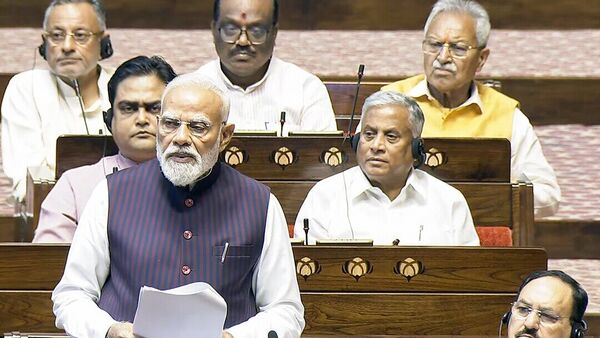
But what triggered the speculation? Basically, in his speeches in Lok Sabha and Rajya Sabha on Monday and Tuesday about the West Asia conflict, Prime Minister Narendra Modi recalled how India faced the COVID-19 pandemic and associated global supply chain disruptions.
“In the past too, our government did not allow the burden of global crises to fall on the farmers,“ Modi said in his address in Lok Sabha on the West Asia crisis on Monday.
On Tuesday, speaking in the Rajya Sabha, PM Modi almost repeated what he had said the day before in the Lok Sabha. Modi called upon the nation to “remain prepared and united, just as it had stood together during the COVID-19 pandemic.”
Nowhere in his speeches, however, did PM Modi use the lockdown on both days, though he referred to the COVID-19 times. That’s precisely why he said, ‘we must remain prepared and united.
“We faced similar challenges during the COVID crisis with unity,” PM Modi said.
Memories of restrictions
People appear to be speculating amid reports of restrictions on LPG supply due to the ongoing war in the Middle East, affecting India and elsewhere. The conflict also had an immediate impact on aviation, with several airports—particularly in the Gulf—witnessing disruptions to airline operations.
Amid the global oil crisis, Sri Lanka recently announced a four-day working week and introduced a working-from-home mandate to preserve its dwindling fuel and gas reserves amid major supply disruptions caused by the US-Israeli war with Iran. Some restaurants in India have cut down their menus due to the LPG crisis.
All these developments sparked memories of COVID-19-era online restrictions, even though the situation on the ground was nowhere near that level.
To recall, India, like many other countries, implemented a lockdown during the COVID-19 pandemic. In March 2020, the World Health Organization (WHO) declared it a global health emergency, which was officially ended in May 2023.
Did PM Modi mention lockdown?
Prime Minister Modi was, in his Parliament speeches, was referring to severe conditions that have emerged globally as a result of this war and the fear of a lasting impact. That is what he said towards the end of his speech in Rajya Sabha on Wednesday.
“The difficult global conditions caused by this war are likely to persist for a long time and called upon the nation to remain prepared and united, just as it had stood together during the COVID-19 pandemic,” he said.
The conflict in West Asia has entered its fourth week, disrupting trade routes through the Strait of Hormuz. Tensions escalated following the killing of 86-year-old Iran’s Supreme Leader, Ayatollah Ali Khamenei, in joint military strikes by the US and Israel on 28 February.
In retaliation, Iran targeted Israeli and US assets across several Gulf countries, causing further disruptions to the waterway and impacting international energy markets as well as global economic stability.
PM Modi speaks with Donald Trump
Prime Minister Narendra Modi said on Tuesday that he received a call from President Trump and had a useful exchange of views on the situation in West Asia.
“India supports de-escalation and restoration of peace at the earliest. Ensuring that the Strait of Hormuz remains open, secure and accessible is essential for the whole world. We agreed to stay in touch regarding efforts towards peace and stability,” Modi said.


