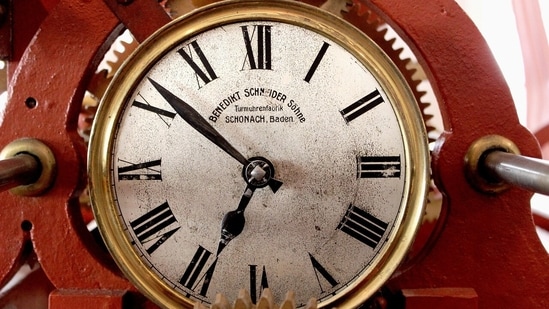
Daylight saving time 2026: Many people are eager to know if the time changed or we lost an hour last night due to daylight saving time that occurred early on Sunday in 2026. The time adjustment today took place as daylight saving time commenced in most regions of the US.
At 2 a.m. local time on March 8, the clocks advanced to 3 a.m. This alteration in time signifies that individuals lost one hour of sleep. Queries such as ‘did time change,’ ‘did the clocks change today,’ ‘when did time change in 2026,’ and ‘was daylight savings today’ surged as people sought to confirm the precise time and sunrise schedule following the initiation of the daylight savings transition.
The yearly tradition of advancing the clocks by one hour occurs on the second Sunday in March.
What is daylight saving time?
By advancing clocks by one hour, daylight saving time effectively transfers an hour of daylight from the morning to the evening.
For instance, on Saturday, the day prior to the implementation of the time change, sunrise in Boston occurred at 6:09 a.m. and sunset at 5:41 p.m., as reported by the National Weather Service. On Sunday, following the clock adjustment, the sun rises at 7:08 a.m. and sets at 6:42 p.m.
Which states do not observe daylight saving time?
Only two states do not participate in daylight saving time: Hawaii and Arizona, except for the Navajo Nation located in the northeastern region of the Grand Canyon State.
Additionally, the territories of American Samoa, Guam, the Northern Mariana Islands, Puerto Rico, and the U.S. Virgin Islands also do not adjust their clocks.
When did daylight saving time commence in March 2026?
This year, daylight saving time commenced on Sunday, March 8, at 2 a.m. local time.
The initiation date has been established on the second Sunday of March since 2007, according to the U.S. Naval Observatory, which serves as the official time source for the Defense Department.
In the two decades leading up to 2007, daylight saving time began on the first Sunday of April. Prior to 1987, the Uniform Time Act of 1966 designated the start date as the last Sunday of April.
Amid the energy crisis of the 1970s, Congress opted to experiment with year-round daylight saving time, starting on the first Sunday of January in 1974, as noted by the Congressional Research Service.
The experiment did not continue for the entire year, as the country reverted to standard time in October and subsequently resumed daylight saving time on the last Sunday of February in 1975. Following 1975, the commencement date returned to April.
Did we experience a loss or gain of an hour during daylight saving time in March?
Most of the US experienced a loss of one hour on Sunday due to the clock change — at 2 a.m., the time advanced to 3 a.m.
We “spring forward” prior to the actual onset of spring, which occurs with the vernal equinox on March 20.
When will daylight saving time conclude in 2026?
The majority of Americans will “fall back” to standard time at 2 a.m. local time on the first Sunday of November, which this year falls on Nov.ember 1. By that time, the country will have been in fall for nearly six weeks following the autumnal equinox on September 22.
According to the National Institute of Standards and Technology, a government agency responsible for providing the official time for the U.S., daylight saving time will be observed for 238 days.