
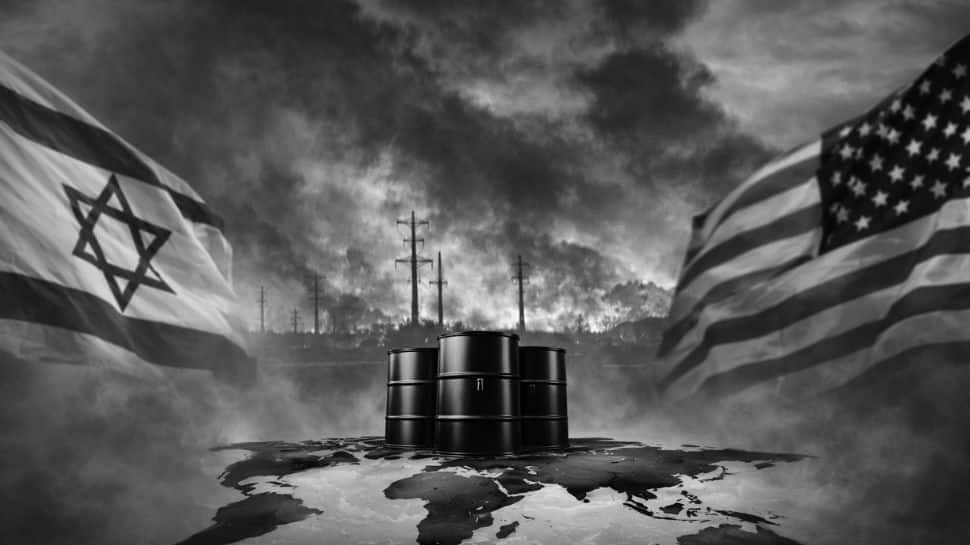
Could strikes on energy facilities force a ceasefire? Israel’s ‘alone acts’, US red lines and shared global pain fuel speculation

Twenty days into the widening Iran-Israel-US conflict, the global energy market is reeling. As oil prices soar past $108 per barrel, visible rifts between Washington and Jerusalem over “red lines” regarding energy infrastructure have sparked intense speculation: will this shared economic pain force a ceasefire, or a total collapse?

The ‘Alone Act’ vs. The US Red Line

The strategic discord centers on Israel’s strike on South Pars, the world’s largest natural gas field. While Prime Minister Benjamin Netanyahu insisted Jerusalem “acted alone,” the hit triggered a massive Iranian retaliation on Qatar’s energy complexes and other Gulf targets.

US President Donald Trump has drawn a firm line against targeting oil infrastructure. On March 19, Trump claimed he told Netanyahu to refrain from such strikes. “I told him, don’t do that,” Trump stated. Yet, in a typical display of strategic ambiguity, he later added, “We’re independent… it’s coordinated, but on occasion, he’ll do something. If I don’t like it, we’re not doing that anymore.”

The Qatar factor: A 17% blow to global gas

The consequences of the “energy for energy” doctrine are now a reality. Following Iran’s strike on Ras Laffan, QatarEnergy reported a staggering 17% loss in export capacity.

Qatar’s PM Mohammed bin Abdurrahman Al-Thani condemned the move as a “very dangerous escalation” with “significant repercussions for global supplies”—a direct threat to nations like India, which relies heavily on Qatari LNG.

Strait of Hormuz: The $100 billion chokepoint

The conflict has moved from land to the “de facto closure” of the Strait of Hormuz. With 20% of the world’s daily oil supply (20 million barrels) at risk, the US is reportedly urging allies—including China, France, Japan, and the UK—to deploy warships immediately to break the blockade.

Ceasefire catalyst or prelude to recession?

The “shared pain” of the energy crisis presents two possible paths:

Forced mediation: Crippling Iran’s economy may expose regime fragility, pressuring Tehran to the table. Simultaneously, Gulf blowback and the fear of a global recession are nudging Washington toward urgent mediation.

Uncontrolled escalation: Iran’s FM Abbas Araghchi has vowed “zero restraint” against further infrastructure strikes. Analysts fear that if recovery becomes impossible due to permanent damage to sites like Ras Laffan or South Pars, the incentive for a ceasefire vanishes.

Global condemnation

The recent condemnation from Canada, France, Germany, Italy, the Netherlands, Japan, and the UK has fiercely condemned Iran’s assaults on civilian infrastructure and commercial shipping. This mounting global urgency suggests that the “energy card” might be the only one left to play to halt the spiral before a worldwide “blackout” becomes inevitable.


Latest

Decapitation strike: Top Iran Guard spokesman Ali Mohammad Naini killed hours after issuing ‘big’ warning to US and Israel

Top Iran Guard spokesman Ali Mohammad Naini death comes just hours after he publicly challenged the United States, warning that the ongoing conflict with the US

US approves $7 billion more in weapons for UAE- Reports

The State Department is supposedly not required to announce publicly under U.S arms export rules, the Wall Street Journal reported Thursday. This comes on top o

Iran downs US F-35: First combat hit on most advanced ‘Invisible’ stealth jet mid-air

This marks the first time Iran has struck a US aircraft in the late February war. Both the US and Israel deploy F-35s in the conflict; each jet costs over $100

Canadian Police commissioner says no threat to Canadians from agents of India’s government

The commission of the Royal Canadian Mounted Police (RCMP) has said that there is no threat to Canadian from any agent linked to India.

SHOCKING $4 billion security breach: How a 36-minute Strava run exposed France’s secret aircraft carrier

A French naval officer’s 7km jog just became a national security crisis. Discover how a public Strava profile accidentally leaked the real-time coordinates of

Topics

Arunachal minister calls for fostering reading habits among students

Itanagar, Arunachal Pradesh Education Minister Pasang Dorjee Sona on...

Centre forms expert panel to rewrite NCERT Class 8 judiciary chapter after row

The Centre has told the Supreme Court it has set up a three-member panel to rewrite the NCERT Class 8 judiciary chapter after a controversy over references to c

Decapitation strike: Top Iran Guard spokesman Ali Mohammad Naini killed hours after issuing ‘big’ warning to US and Israel

Top Iran Guard spokesman Ali Mohammad Naini death comes just hours after he publicly challenged the United States, warning that the ongoing conflict with the US

Sanitation security and kidney stones in women

When fluid intake drops, urine becomes more concentrated, increasing the supersaturation of calcium oxalate and uric acid crystals that form stones. In simple t

US approves $7 billion more in weapons for UAE- Reports

The State Department is supposedly not required to announce publicly under U.S arms export rules, the Wall Street Journal reported Thursday. This comes on top o

Iran downs US F-35: First combat hit on most advanced ‘Invisible’ stealth jet mid-air

This marks the first time Iran has struck a US aircraft in the late February war. Both the US and Israel deploy F-35s in the conflict; each jet costs over $100

Canadian Police commissioner says no threat to Canadians from agents of India’s government

The commission of the Royal Canadian Mounted Police (RCMP) has said that there is no threat to Canadian from any agent linked to India.

SHOCKING $4 billion security breach: How a 36-minute Strava run exposed France’s secret aircraft carrier

A French naval officer’s 7km jog just became a national security crisis. Discover how a public Strava profile accidentally leaked the real-time coordinates of
spot_img

Related Articles

Popular Categories

spot_imgspot_img