

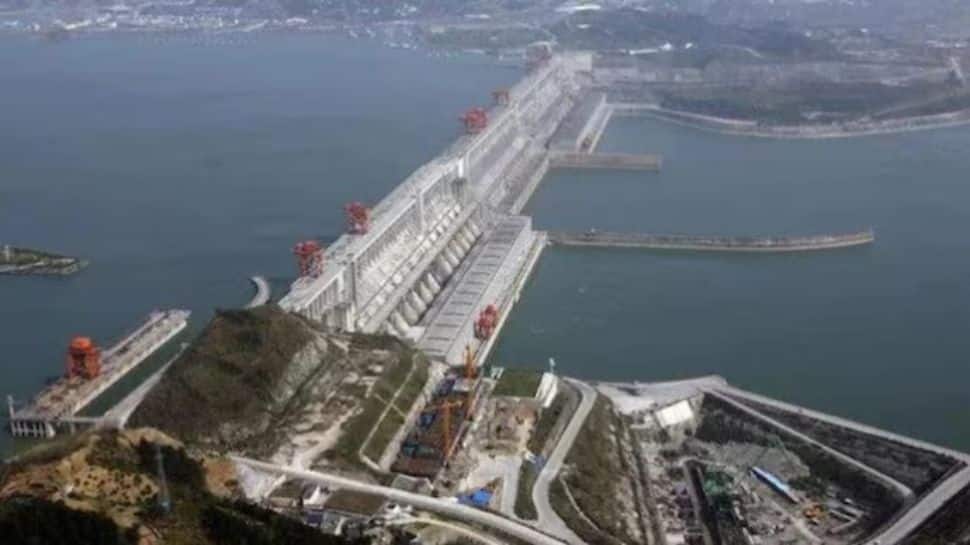
China has commenced construction of a massive “mega dam” on the Yarlung Zangbo River near the Line of Actual Control (LAC), raising significant concerns about water security for downstream nations India and Bangladesh.
Key Takeaways
- The dam project aims to generate 300 billion kWh of electricity annually by the 2030s
- Approximately 1.3 billion people in India and Bangladesh depend on this river system
- The $1.2 trillion project faces environmental and seismic risks in the fragile Himalayan region
Project Overview and Scale
The Yarlung Zangbo mega dam will consist of five interconnected power stations along a 31-mile canyon stretch. Managed by China Yajiang Group, the ambitious project is estimated to cost 1.2 trillion yuan. Most generated electricity will power coastal Chinese cities and factories, with limited local consumption in Tibet.
Chinese Premier Li Qiang has described it as a “project of the century” while emphasizing ecological safety measures.
Downstream Impact on South Asia
The Yarlung Zangbo transforms into the Brahmaputra River upon entering India’s Arunachal Pradesh, eventually flowing into Bangladesh. This river system sustains:
- Drinking water supplies for millions
- Agricultural irrigation systems
- Fisheries and river transport networks
- Dense population centers along its banks
Indian and Bangladeshi authorities are closely monitoring the situation, concerned about potential water diversions, sudden releases, or disruptions to seasonal flows that could affect their water security.
Environmental and Geological Risks
The Tibetan Plateau, known as the Third Pole, feeds Asia’s major river systems. The dam project faces multiple challenges:
- Accelerated glacier melt due to warming temperatures
- Increasing frequency of glacial lake outburst floods
- Location in a seismically active zone with unstable slopes
- Displacement of local communities possessing crucial terrain knowledge
Hydropower development in Tibet has already displaced 144,468 people, with studies suggesting up to 1.2 million could be affected by future projects.
Climate Trade-offs and Alternatives
While China promotes the dam as a renewable energy initiative to replace coal power, environmental critics highlight significant drawbacks. Hydropower reservoirs flood forests and wetlands, releasing methane—a greenhouse gas far more potent than carbon dioxide in early decades—through decomposition of submerged vegetation.
Experts suggest solar and wind farms could provide cleaner energy with substantially less social and environmental disruption.
Regional Security Implications
The mega dam revokes longstanding concerns about upstream nations using shared rivers as political leverage. China maintains the project will respect ecosystem needs and regional water interests.
However, past disputes over flood data sharing on transboundary rivers, including the Brahmaputra, have made India and Bangladesh cautious. Indian authorities have committed to continuous monitoring, while Bangladesh focuses on maintaining safe river flows during both dry and flood seasons.
The Yarlung Zangbo dam represents a critical intersection of energy strategy, climate policy, and regional security. Its development will not only shape China’s power infrastructure but also test trust among South Asian neighbors who depend on this vital river system for survival, agriculture, and economic stability.