
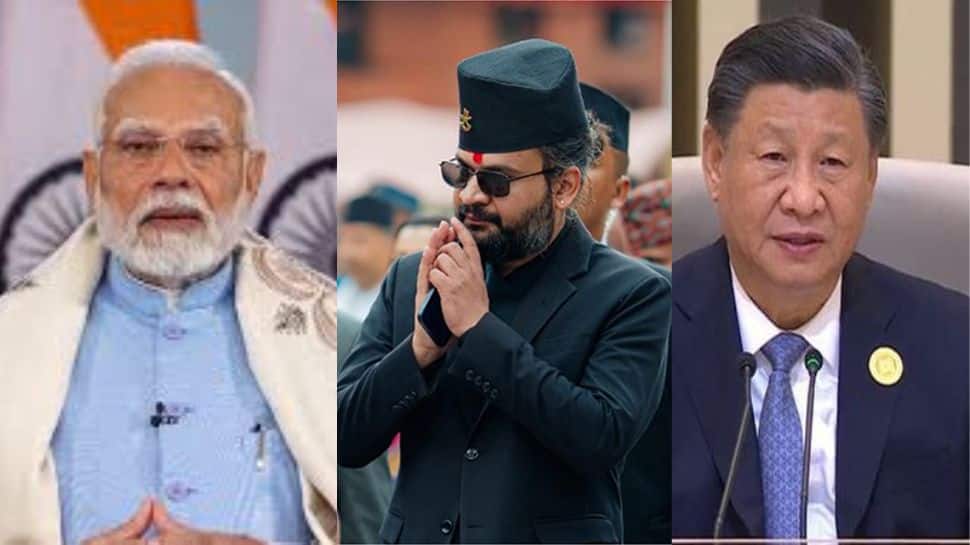
In a landmark shift in Nepali politics, 35-year-old Balendra Shah, popularly known as Balen Shah, is poised to become Nepal’s next prime minister following his Rastriya Swatantra Party’s (RSP) sweeping victory in the 2026 general elections.
Shah, a former rapper, structural engineer, and mayor of Kathmandu, defeated veteran politician and former Prime Minister KP Sharma Oli in Oli’s own constituency of Jhapa-5, securing 68,348 votes against Oli’s 18,734.
This election was the first since youth-led Gen-Z protests toppled the previous government in September 2025, marks a generational change, with Shah set to be the youngest leader in Nepal’s parliamentary history.
His rise reflects widespread frustration among people of Nepal with traditional parties and a demand for anti-corruption reforms, economic opportunities, and youth empowerment.
Nepal’s geopolitical position-landlocked between India and China make any leadership change significant for its powerful neighbours. Shah’s foreign policy views remain somewhat opaque, influenced by his nationalist stance and past statements, but analysts anticipate a more independent approach that prioritises Nepal’s sovereignty over deep alignments with either giant.
Implications for India
India has historically been Nepal’s closest partner, sharing an open border, deep cultural ties, and significant economic interdependence. However, relations have been strained by border disputes, such as those over Kalapani, Lipulekh, and Limpiyadhura, which escalated under Oli’s tenure with a controversial new map in 2020.
Nationalist stance on borders: Shah has demonstrated a firm nationalist position. In 2023, as Kathmandu’s mayor, he displayed a “Greater Nepal” map in his office, claiming territories now part of India that were historically Nepali. This was in response to India’s “Akhand Bharat” mural, signaling potential friction over unresolved boundary issues. Experts suggest this could lead to renewed diplomatic challenges for New Delhi, as Shah may push for resolutions on Nepal’s terms.
“I never said anything for which I should apologise. India called its parliamentary map a cultural one, so we put up a historical map of Greater Nepal. No one should object, Balen said while speaking in the matter, Dainik Bhaskar reported.
Balanced but transactional relations: Despite past controversies, including a 2025 Facebook post where Shah expressed frustration with foreign powers (“F**k America, India, China”), which he later deleted, his approach may not be overtly anti-India. Shah studied for his master’s in structural engineering in Karnataka, India, which could foster personal connections.
Analysts predict a shift toward “transactional and dignified” bilateral ties, focusing on economic diplomacy and regional markets rather than traditional pro-India leanings.
Opportunities for engagement: Shah’s focus on youth migration and economic pressures could align with India’s interests in skilled labour and remittances. A stable, youth-oriented government might enhance cross-border cooperation, but India will likely monitor how Shah balances domestic nationalism with pragmatic diplomacy.
Overall, Balen Shah’s leadership could introduce uncertainty for India, moving away from the predictable dynamic of past regimes toward a more assertive Nepal.
Implications for China
China has expanded its influence in Nepal through the Belt and Road Initiative (BRI), investments in infrastructure, and political ties, particularly under KP Sharma Oli, who signed key agreements and maintained close relations with Beijing.
Cautious approach to influence: Shah has voiced concerns about sovereignty and China’s growing role in Nepal’s politics and economy, contrasting sharply with Oli’s pro-China orientation. While not explicitly anti-China, he has been wary of BRI projects, emphasising Nepal’s independence. This could slow or scrutinise Chinese investments, such as hydropower and road projects, potentially reducing Beijing’s leverage.
Potential setback for Beijing: Shah’s pro-Nepal positioning and the 2025 post criticising China (among others) indicate a less accommodating stance. If RSP forms the government, it may represent “bad news” for China, as it lacks the ideological affinity of communist-leaning parties like Oli’s CPN-UML. Analysts note that Shah’s administration might prioritise transparency in foreign deals, challenging opaque Chinese loans and influence.
Balancing act: Nepal’s economic needs could still drive engagement with China, but under Shah, relations might become more conditional, focusing on benefits for Nepali youth and development without compromising autonomy. This unpredictability could force China to recalibrate its South Asia strategy, especially amid competition with India.
Given Balen Shah’s nationalist stance and resistance to foreign interference in internal matter, his premiership signals a pivot toward neutral, sovereignty-focused foreign policy, potentially disrupting the status quo for both India and China.



