
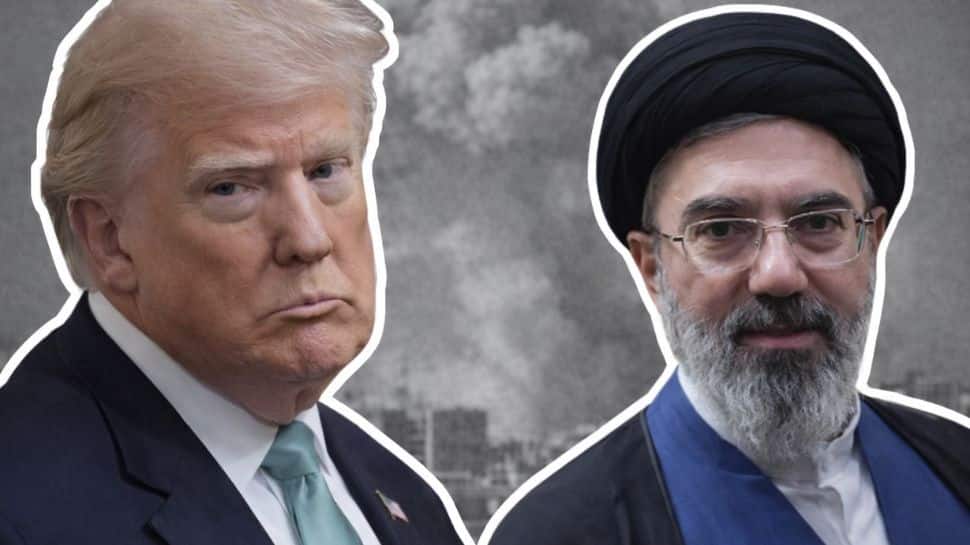
US President Donald Trump has revealed that Washington and Tehran are engaging in “very good and productive conversations” to resolve the escalating West Asia tensions.
He announced a five-day halt of planned U.S strikes on Iranian power plants and energy infrastructure to give the talks a chance to progress.
A message from the United States through third-party channels was received by Iran, signaling an opportunity for dialogue between both countries, according to CBS News.
The Iranian Foreign Ministry official noted it could pave the way for substantive discussions.
“We received proposals from the US via intermediaries, and Tehran is currently reviewing them,” the official stated, signaling Iran’s careful evaluation of Washington’s overtures, as per India Today report.
Trump also claimed that U.S envoy Steve Witkoff and Jared Kushner, Trump’s son-in-law, held discussions with an unnamed Iranian leader, but clarified no direct engagement with new Supreme Leader Ayatollah Mojtaba Khamenei.
In a de-escalation signal, Trump extended Iran’s Strait of Hormuz reopening deadline by five days, postponing potential strikes on power plants “subject to ongoing talks’ success.”
This shift from his prior ultimatum steadied markets, driving sharp oil price drops and stock rallies after recent turbulence.
Further stressing developments between the two nations, the US President said, “We are now having really good discussions. They started last night, a little bit the night before that. I think they’re very good. They want peace. They’ve agreed they will not have a nuclear weapon, et cetera. But we’ll see…Hopefully, we can make a deal that’s good for all of us, including the Middle Eastern allies that have been very good to us, including Israel, which has been a great partner in this fight. But we’ll see what happens. I think there’s a very good chance we’re going to end up in a deal…”
Backchannel diplomacy or bluff?
After American President Donald Trump’s claim, Iran categorically rejected reports of talks with the US. Iran’s Parliament Speaker Mohammad Bagher Ghalibaf declared, “No negotiations have taken place,” dismissing them as deliberate misinformation to sway energy and stock markets.
The United States and Iran lack formal diplomatic ties, with communications historically routed through intermediaries. Regional players like Oman, Turkey, Egypt, and Pakistan are actively facilitating message exchanges, per CBS News.
Egypt and Turkey have intensified diplomatic efforts, with officials confirming message exchanges over the weekend to prevent strikes on energy infrastructure. “For now, it appears they managed to avert an energy catastrophe,” reported India Today, citing a Gulf diplomat.
Is peace elusive?
After the US announced halting strikes for 5 days, Israeli Prime Minister Benjamin Netanyahu in a video message on his X handle, said he had a call with President Trump, highlighting U.S military achievements as leverage to secure war objectives and protect vital interests.
“Earlier today, I spoke with our friend President Trump. President Trump believes there is an opportunity to leverage the tremendous achievements we have attained with the U.S. military to realize the war objectives in the agreement—an agreement that will safeguard our vital interests.
At the same time, we continue to strike both in Iran and in Lebanon. We are crushing the missile program and the nuclear program, and continuing to inflict severe blows on Hezbollah. Just days ago, we eliminated two more nuclear scientists—and the hand is still outstretched. We will safeguard our vital interests in any scenario,” said Netanyahu.
The four-week conflict has claimed over 2,000 lives and displaced millions in Iran and Lebanon, while disrupting global markets and vital shipping lanes.
As Trump dials back strike threats amid claims of productive US-Iran backchannel talks, Tehran’s firm denials and Israel’s ongoing assaults signal fragile diplomacy at best, or calculated market bluff at worst.
With over 2,000 dead and millions displaced after four weeks of war, regional mediators like Egypt and Turkey have narrowly averted an energy catastrophe, but Netanyahu’s vow of more strikes underscores that peace remains elusive.


