
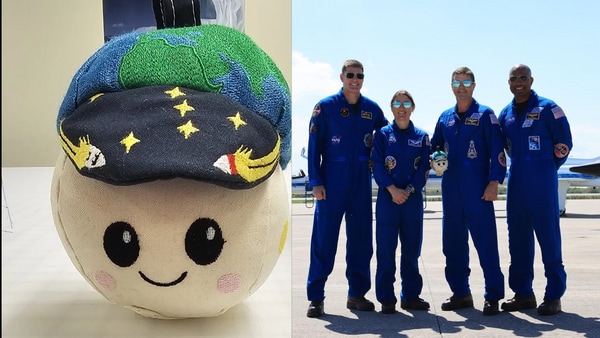
As anticipation builds worldwide for the Artemis II mission – set to mark humanity’s first crewed journey to the Moon in more than 50 years – focus isn’t just on the astronauts. Alongside the crew aboard NASA’s Orion spacecraft will be an unusual companion: a soft toy named “Rise,” tasked with a crucial role in the mission.
Beyond the four-member crew, “Rise,” a small white plush figure, will travel inside the spacecraft. Its purpose is functional – it will float once the spacecraft enters microgravity, signalling to astronauts that they have moved beyond Earth’s gravitational pull.
Who created ‘Rise’?
What is the tradition behind zero gravity indicators?
The concept dates back to 1961, when Yuri Gagarin carried a small doll aboard the Vostok 1 mission. Since then, various mascots – including characters like Baby Yoda and Snoopy – have been used in space missions to visually indicate weightlessness.
To choose a mascot for the lunar flyby, NASA partnered with Freelancer.com to host a global design competition. The challenge drew more than 2,600 submissions from participants across 50 countries. The Artemis II crew, led by Commander Reid Wiseman, ultimately selected Lucas’s design.
What inspired the design of ‘Rise’?
The plush toy carries symbolic meaning. Its design pays homage to the historic “Earthrise” photograph captured during the Apollo 8 mission. “Rise” features a white body with a hat depicting Earth, while the brim is decorated with imagery of galaxies and rockets.
Mission specialist Christina Koch said the mascot reflects the spirit of the mission. “It is a mission that sort of mirrors our own,” she remarked during its unveiling at the Kennedy Space Center.
Hidden inside the plush is a microSD card containing the names of everyone who signed up for the design challenge, symbolically carrying thousands of people along on the journey.
Although the competition required only a concept, Lucas went a step further and crafted the toy himself. The young space enthusiast from Mountain View has long been fascinated by space — and now, something he created will travel around the Moon.
Reflecting on the initiative, Trisha Epp from Freelancer emphasised its impact: “Your design is literally going to space, which is not a sentence most people get to say. It’s a beautiful example of crowdsourcing solutions to NASA’s trickiest problems.”


