
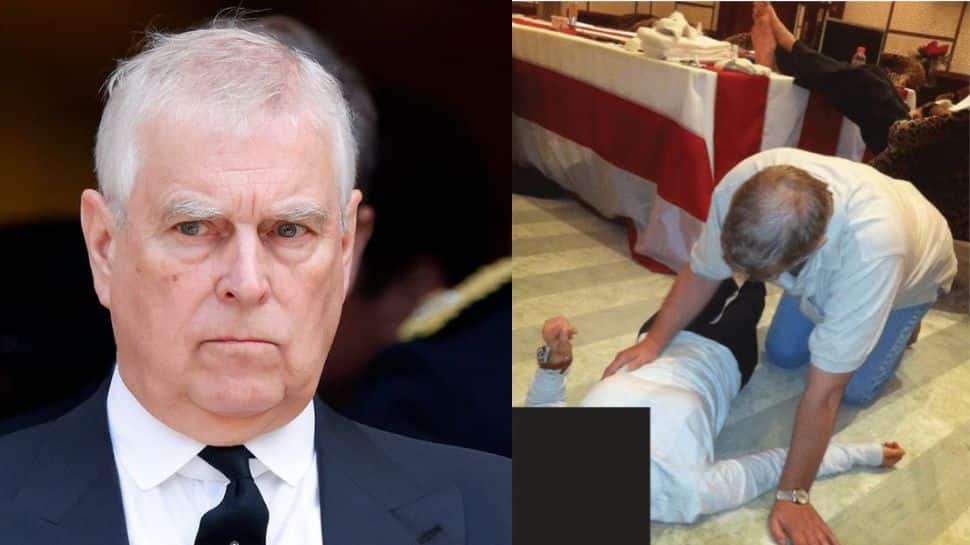
In a historic moment for the British Monarchy, Andrew Mountbatten-Windsor was arrested on Thursday morning, February 19, on suspicion of misconduct in public office. The arrest occurred at Wood Farm on the Sandringham Estate, just as the former prince celebrated his 66th birthday.
Photographs shared by the BBC and other outlets showed six unmarked police vehicles and around eight plain-clothed officers arriving at the estate shortly after 8:00 AM. Thames Valley Police confirmed that searches are also taking place at addresses in Berkshire and Norfolk.
The Epstein files: ‘Sensitive document’ leaks
While specific details remain sealed, the investigation is directly linked to a batch of documents recently released by the U.S. Department of Justice, commonly known as the “Epstein Files.”
The allegation: Investigators are looking into claims that during his time as the UK’s Special Representative for International Trade and Investment (2010–2011), Andrew shared confidential government reports and commercial itineraries with the late sex offender Jeffrey Epstein.
Direct evidence: Emails released earlier this month seem to show the former prince forwarding sensitive trade briefs to Epstein just minutes after receiving them from his advisors.
Ongoing denial: Andrew has consistently denied any wrongdoing and previously called his relationship with Epstein a “mistake” he deeply regrets.
What is ‘misconduct in public office’?
Under English common law, misconduct in public office is a serious offense that can lead to a maximum sentence of life imprisonment. According to the Crown Prosecution Service (CPS), the charge applies when a public officer:
- Acts as a public officer.
- Wilfully neglects their duty or misbehaves.
- Acts in a way that abuses the public’s trust.
- Has no reasonable excuse or justification for their actions.
Expert note: Legal analyst Joshua Rozenberg mentioned that this charge is unique because it comes from “judge-made” law rather than a statute passed by Parliament, allowing judges considerable discretion in sentencing.
A changing legal landscape: The Hillsborough law
The arrest comes as the British government aims to replace this centuries-old common law offense with the Public Office (Accountability) Bill, currently moving through Parliament.
Duty of candour: Often called the “Hillsborough Law,” this bill requires public officials to act with “candour, transparency, and honesty.”
New offences: If passed, the bill will create two specific statutory offenses to replace the current charge:
- Using public office for personal gain or to cause harm.
- Failing to prevent death or serious injury.
Penalty Shift: While the existing charge carries a potential life sentence, the new statutory offenses are expected to result in a maximum of 10 to 14 years’ imprisonment.
Buckingham Palace and Political Response
Buckingham Palace has not issued a formal statement today, but King Charles III has shown support for police inquiries in the past. The King took the unprecedented step of stripping his brother of all royal titles and the “HRH” designation in October 2025.
Prime Minister Sir Keir Starmer echoed the call for accountability on Thursday, stating on BBC Breakfast, “Nobody is above the law.”


