
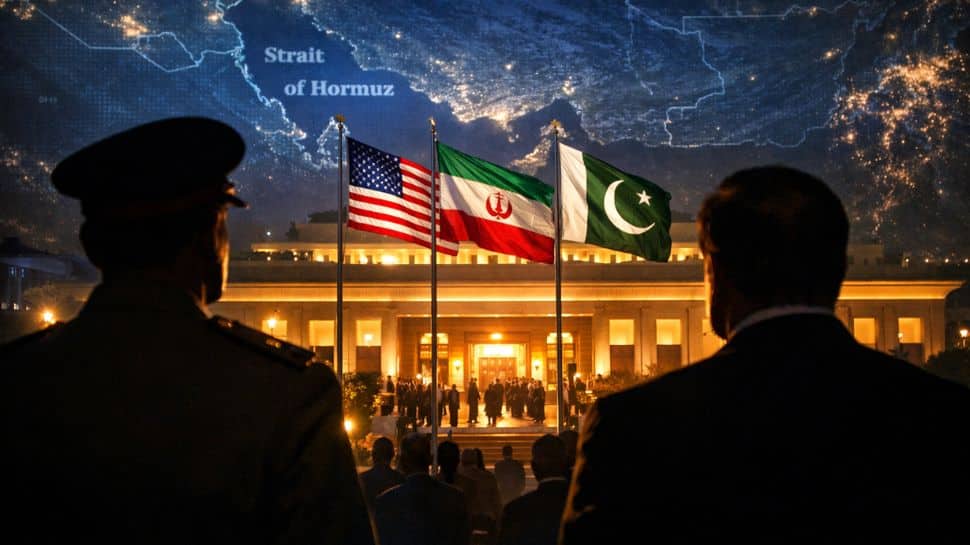
Pakistan has offered to host peace talks between the US and Iran, with Prime Minister Shehbaz Sharif publicly inviting both sides to use Islamabad as a meeting place.
The offer got a major boost when US President Donald Trump shared a screenshot of Sharif’s invitation on his Truth Social account. Many saw this as a sign of approval. The move is also a change in tone for Trump, who had previously claimed the US had already won the war.
PM Sharif posted on X on Tuesday evening: “Subject to concurrence by the US and Iran, Pakistan stands ready and honoured to be the host to facilitate meaningful and conclusive talks for a comprehensive settlement of the ongoing conflict.”
Behind the scenes, Pakistan had already been working on this for hours before Trump’s post. Sharif spoke directly with Iranian President Masoud Pezeshkian. Pakistan’s foreign minister also reached out to his Iranian counterpart. Army chief Field Marshal Asim Munir, who holds real power in Pakistan, is said to be deeply involved as well.
Iranian officials dismissed Trump’s claim that talks were already happening. But Tehran later admitted it had received messages from friendly countries passing along a US request to negotiate.
It is still not clear who Iran would send to the talks. Parliament Speaker Mohammad Bagher Ghalibaf is being talked about as the likely pick, though he has been publicly aggressive in his statements.
For the US, Trump’s close aides Steve Witkoff and Jared Kushner are expected to lead the American side. Vice President JD Vance may also attend, according to Axios. Islamabad is the likely venue, and talks could happen within days.
Fighting has not stopped in the meantime. Israel and Iran struck each other again. Israel said it would keep hitting at full force. Iran warned its response would far exceed what it had received.
The war began on February 28, when a US-Israeli strike killed Supreme Leader Ayatollah Ali Khamenei and other top Iranian officials. Iran hit back with missiles and drones targeting US military bases across the region, including in Iraq, Qatar, the UAE, Bahrain, Kuwait, and Saudi Arabia.
More than 2,300 people have been killed inside Iran so far, including over 1,300 civilians and nearly 200 children. Iran has hinted it may stop attacking neighbouring countries, but only if those countries stop being used as bases to attack Iran.
The war has badly shaken global markets. Iran’s threat to shut the Strait of Hormuz, a key oil route to countries backing the US-Israel side has caused wild swings in oil prices.


