
The ongoing war between Iran and the United States has sent the entire world into disarray by triggering a global energy crisis. While the missiles and drones may be flying in the skies over West Asia, the booms of them are being felt across the world, particularly in Asian countries, in the form of surging energy prices and lack of adequate supply.
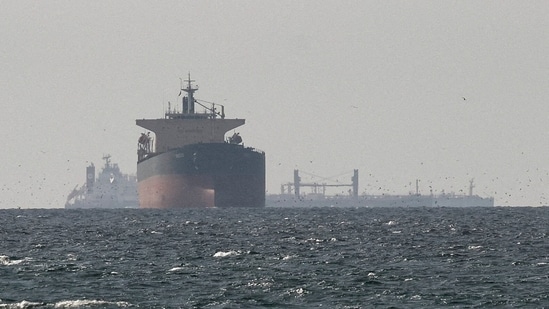
Iran has currently kept the Strait of Hormuz effectively closed. The key waterway hosts a fifth of the world’s energy shipping and is not letting any ships pass through, particularly those linked to the US and Israel.
The chokehold in the Strait of Hormuz has sent several countries panting for energy supplies, causing panic among their populations and even triggering a state of emergency in places such as the Philippines.
Here’s a deep dive into which countries remain worst hit due to the global energy crisis –
Philippines
The Southeast Asian nation declared a national energy emergency on Tuesday as the fuel supply of the country runs low due the war going on in West Asia. Philippine President Ferdinand Marcos Jr. said in an executive order that there is an “imminent danger of a critically low energy supply” and that “urgent measures are necessary” to deal with the prevailing situation and ensure that energy supplies remain steady and essential services are not hit.
The Philippines currently has a stockpile of oil for around 45 days as of March 20 and Marcos expressed confidence that the flow of oil would remain steady even after that. The Philippines depends entirely on West Asia for its oil supply.
This is the first time the Philippines has declared a state of national emergency after the Covid-19 pandemic in 2020.
Marcos also told Bloomberg Television on Tuesday that Philippine Airlines Inc. currently has enough fuel to sustain till the end of July but beyond that “we don’t have visibility”, which means that planes could get grounded if the fuel supply does not resume.
In addition, officials in the Philippines have been asked to work four days a week to save fuel and officials have been asked to switch off computers during lunch breaks, reported Associated Press. The government even put a cap on air conditioning temperature at 24°C and said that it should not go down further.
Pakistan
Pakistan has emerged as a central figure in the ongoing war by presenting itself as a mediator between the United States and Iran, however, it is also faced the brunt of the conflict as the prices of jet fuels and kerosene have surged sharply without any formal announcement, according to local reports.
The petrol and high-speed diesel prices in Pakistan have remained steady in recent weeks due to the freeze the government put an initial surge of Rs55 per litre each. However, local newspaper Dawn cited some local officials as saying that such a freeze may be not sustained for long as the review of two IMF programmes remain in abeyance for over two weeks.
“You cannot postpone inflation artificially for long; the more you delay price adjustments, the greater pain you build for the future,” an official said.
Vietnam
In Vietnam, people have been urged to work from home in order to save fuel. Vietnam is one of the worst-hit countries by the fuel shortage in the ongoing war. A statement released earlier this month by the Vietnamese government said that businesses need to “encourage work-from-home when possible to reduce the need for travel and transportation”.
However, according to local reports, the country is actively engaged in managing its oil supply and keeping energy prices steady.
Sri Lanka
In a bid to save fuel, Sri Lanka may go dark as the country on Tuesday announced that street lights, neon signs and billboard lights will be switched off. Additionally, all the state institutions have been asked to reduce their dependency on air conditioning, said government spokesman Nalinda Jayatissa, as the country is already facing a hike in fuel prices.
“We need to reduce consumption by at least 25 percent,” news agency AFP quoted Jayatissa as saying in Colombo. “We hope the private sector too will abide by the guidelines drafted by a panel of experts.”
It also joined the band of countries which have switched to a four-day work week and encouraged work-from-home in order to reduce stress on an already grim fuel supply.
Bangladesh
In response to the global energy crisis, during the second week of the war, Bangladesh closed its universities, both private and public, and also enforced fuel rationing. According to a report by local newspaper the Daily Star, the annual fossil fuel import bill of Bangladesh is projected to soar by $4.8 billion due to the ongoing conflict in West Asia. This would be a 40 percent hike from 2025 levels, as per a new analysis by Zero Carbon Analytics (ZCA), said the report.
(With inputs from wires)


