
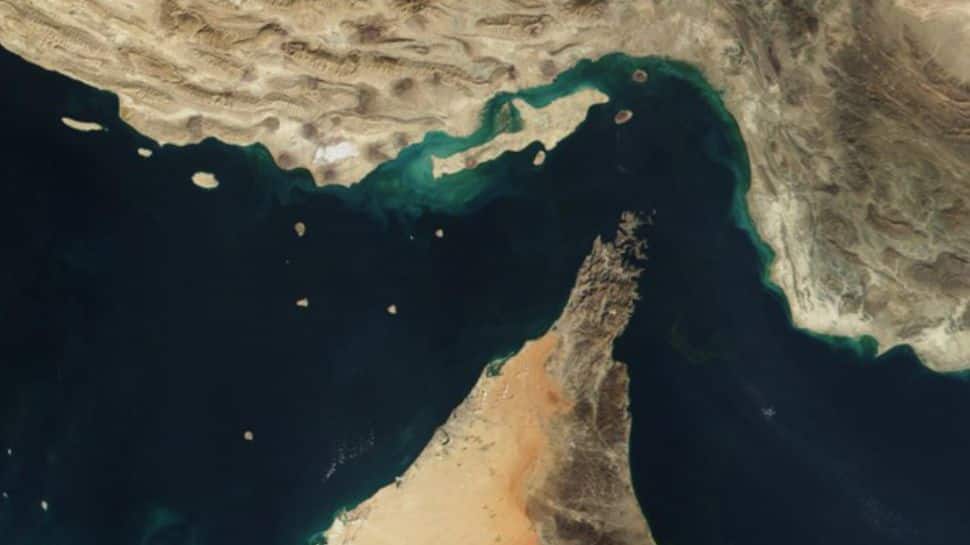
Two U.S Navy guided-missile destroyers have transited the Strait of Hormuz without incident, marking the first such passage by American warships since the conflict with Iran began on February 28th.
According to a report by the Wall Street Journal, citing U.S. officials, US Navy’s guided-missile destroyers moved through the strait without incident.
The operation was not coordinated with Iranian authorities, Axios reported.
Although the claims remain unverified, as Iran has not commented on the development yet.
President Donald Trump announced the development on Truth Social, stating that the U.S. has begun “clearing out” the strategically vital waterway.“We’re now starting the process of clearing out the Strait of Hormuz as a favor to countries all over the world, including China, Japan, South Korea, France, Germany, and many others,” Trump wrote. He added that these nations “don’t have the courage or will to do this work themselves.”
The Strait of Hormuz is a critical chokepoint for global oil shipments, and its security has been a major point of tension during the U.S.-Iran conflict. Trump’s comments frame the U.S. action as benefiting international shipping interests while highlighting what he sees as insufficient support from allies and trade partners.
Meanwhile, trilateral ceasefire talks between the United States, Iran, and Pakistan have begun in Islamabad, marking the highest-level discussions between Washington and Tehran since the 1979 Islamic Revolution.
Ahead of the US engagement, the Iranian delegation held a strategic meeting in the Pakistani capital to refine its agenda for these high-stakes “peace talks.”
US Vice President JD Vance met separately with Pakistani Prime Minister Shehbaz Sharif, as per a White House statement, while Iranian Parliament Speaker Mohammad Bagher Ghalibaf and Foreign Minister Abbas Araghchi also conferred with Sharif.
Sharif described the talks as “make or break” negotiations aimed at stabilising a fragile ceasefire announced on April 8 and shaping regional security.
Iran’s Vice-President Mohammad Reza Aref cautioned on X that success hinges on the US approach: a deal is likely with “America First” representatives, but facing “Israel First” advocates would lead to no agreement, prompting Iran to intensify its defence and impose greater global costs.


