
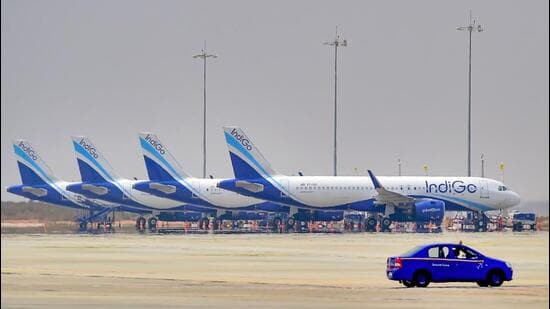
The Air India crash and the Indigo mass cancellations and delays that shook India’s aviation space last year have caused churn in the country’s two leading airlines. While market leader IndiGo has bid farewell to its Dutch chief executive officer (CEO) Pieter Elbers, there are reports that Air India is looking to replace CEO Campbell Wilson. Such changes at the top may likely spur exits of other senior management executives — quite a few were brought in by the two expatriates, a common practice in other businesses also.
As the hunt for their replacements begins, civil aviation analysts and experts say they believe the carriers might be better off looking domestically, and not for expats, a trend that has marked leadership in the country’s aviation landscape for long. Many of the experts feel this doesn’t align with the current realities of the space.
Let me elaborate. In the 1980s and 1990s, talent at home was limited, used to a public-sector work ethic and environment, and unexposed to global realities. It was primarily expat CEOs — with experience of working in a market-forces-led environment — who set the tone for many of the early players in such a milieu.
Jet Airways mostly operated with a dual control centre — an expat CEO who had cut their teeth in business overseas and acted as the face of the company, and an Indian counterpart who kept a lower profile but was equally crucial to the running of the airline in the Indian environment, dealing with the government (always a task that calls for specific skills, tact and contacts).
Similarly, airlines such as IndiGo, Spicejet, and Go First also went with imported talent. In fact, almost since the time that the Indian skies were opened up for private players, top management positions across carriers have been occupied by overseas professionals. Consequently, India failed to create a pool of its own CEOs, COOs, and leaders — the most expensive resource in running an airline.
This model may have worked quite well in the past, but now, things are changing quite rapidly.
One, India’s confidence in the aviation space, especially among the top talent, has grown. Many senior executives have contributed significantly to the country’s expanding airline business, making up with hard work and determination for what they perhaps lacked in credentials or overseas experience. Between Jet Airways, SpiceJet, and IndiGo, many non-Air-India/Indian Airlines executives have now understood the business and honed their airline-running skills. For them to take orders from those who are “novices” to the Indian environment, culture, and work — despite their rich experience elsewhere — has led to growing discontent, leading to an “us” and “them” divide. This has dogged many of the carriers, barring Jet Airways, where expat CEOs tended to work well and in conjunction with a primarily Indian top team.
Further, whenever a new top-level appointee assumed charge, the appointment impacted all levels and rocked several steady boats. A senior IndiGo management personnel told this writer (in a lighter vein) soon after Elbers took charge, “We’re going Dutch”. He was referring to the airline’s many external contracts and vendors. Almost everything is reinvented each time a new chief takes over, as they tend to lean on those they have worked with in the past and trust. While this is a natural outcome, it upsets many established equations that have worked well for an airline.
An extension of this is the resentment that builds up in the senior and middle management, who now feel they don’t want to take orders from those who have not contributed to where the business finds itself today. This is particularly true in crises.
In December’s IndiGo fiasco, those left holding the can — both in terms of operations control and on the ground at airports — were home-grown, junior staff. “This practice of handing over authority without virtually any accountability creates a lot of bad blood within the company,” says a senior commander who has been with the airline since its inception. He says that after this episode — more so because it became a national outrage — there was plenty of resentment among the rank and file on behalf of those left to face passengers’ and the regulator’s ire.
Two, industry insiders argue that the Indian environment is often not conducive for imported C-suite appointees, who take time to adapt to a sector where you need to be on the job 24×7, all year round. So, even those who excelled in their work environments overseas struggle with Indian ways, culture, ethics and environment.
A key requirement is the ability to deal with and stay calm amidst the chaos, something many Europeans and even those who have cut their teeth in markets such as Singapore and Dubai can’t even begin to fathom. Many are baffled by crises snowballing, thanks to intense social media and media scrutiny on the one hand and the never-ending government demands and interference on the other. Even before they fully absorb the facts behind an incident, all hell breaks loose. Then, they find it difficult to swallow the inquiries and actions they have to face. In fact, top SIA officials who had done a fairly decent job in the Singapore aviation space struggled at the helm of Vistara.
India is simply not everyone’s cup of tea. “In this scenario, those who are supposed to do the hand-holding do not or are not able to guide them fully. This is something I have seen play out time and time again,” says an industry stalwart who has worked in at least three private airlines in India in the top team.
With the top positions at India’s two biggest airlines needing to be filled, the industry seems to be signalling that the best bet is to hire Indian talent. Whether this is heeded or not will soon be known.
Anjuli Bhargava writes about governance, infrastructure, and the social sector. The views expressed are personal


