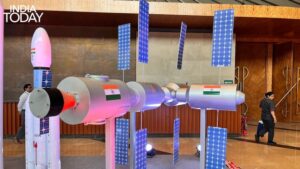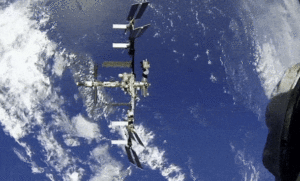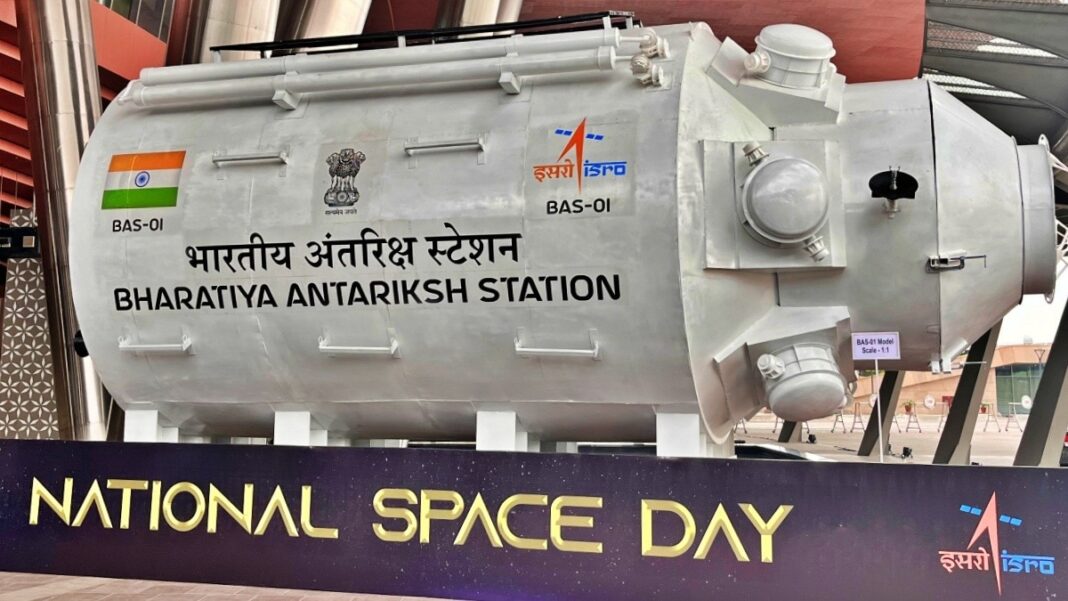
India has taken a major step toward establishing its own space station, with Indian Space Research Organisation (Isro) confirming that the first module of the Bharatiya Antariksh Station is under development.
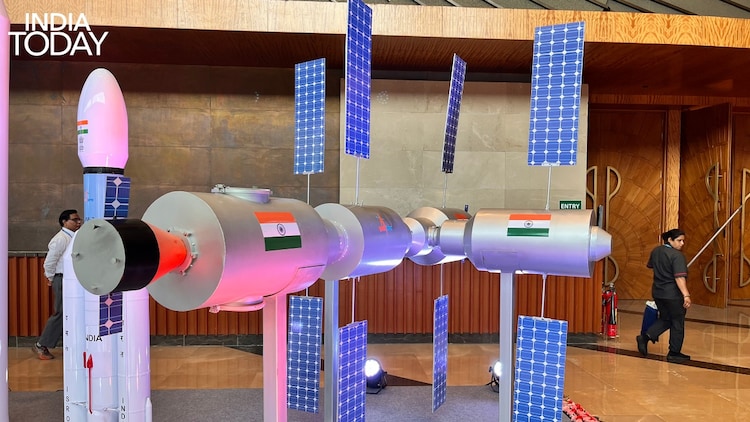
The announcement, made in Parliament by Minister of State Dr. Jitendra Singh, outlines India’s roadmap to build a modular space station comprising five interconnected units.
The overall configuration of the Bharatiya Antariksh Station (BAS) has already been reviewed by a national-level committee, marking a key milestone in the country’s human spaceflight ambitions.
WHAT IS ISRO DOING?
The Union Cabinet had approved the development and launch of the first module, known as BAS-01, in September 2024 as part of an expanded scope of the Gaganyaan programme. Work on system engineering and subsystem technologies is currently underway across various Isro centres.
To accelerate development, Isro’s Vikram Sarabhai Space Centre has issued an Expression of Interest inviting Indian industries to participate in building the structural components of the first module.
This signals a growing push toward public-private collaboration in India’s space sector.
HOW MUCH WILL THE FIRST MODULE COST INDIA?
The first module of the Antariksh Station will cost an estimated Rs 1,763 crore and is targeted for launch by 2028.
The Rs 1,763 crore allocation covers the development and launch of BAS-01 over a four-year period from 2025 to 2028.
While the current approval is limited to the first module, Isro aims to assemble the complete five-module station by 2035, creating a long-term orbital platform for scientific research and technological demonstration.
The Bharatiya Antariksh Station is expected to support a wide range of advanced capabilities, including rendezvous and docking technologies, robotic operations, in-orbit refuelling, and dedicated crew quarters. It will also house specialised racks for conducting microgravity experiments.
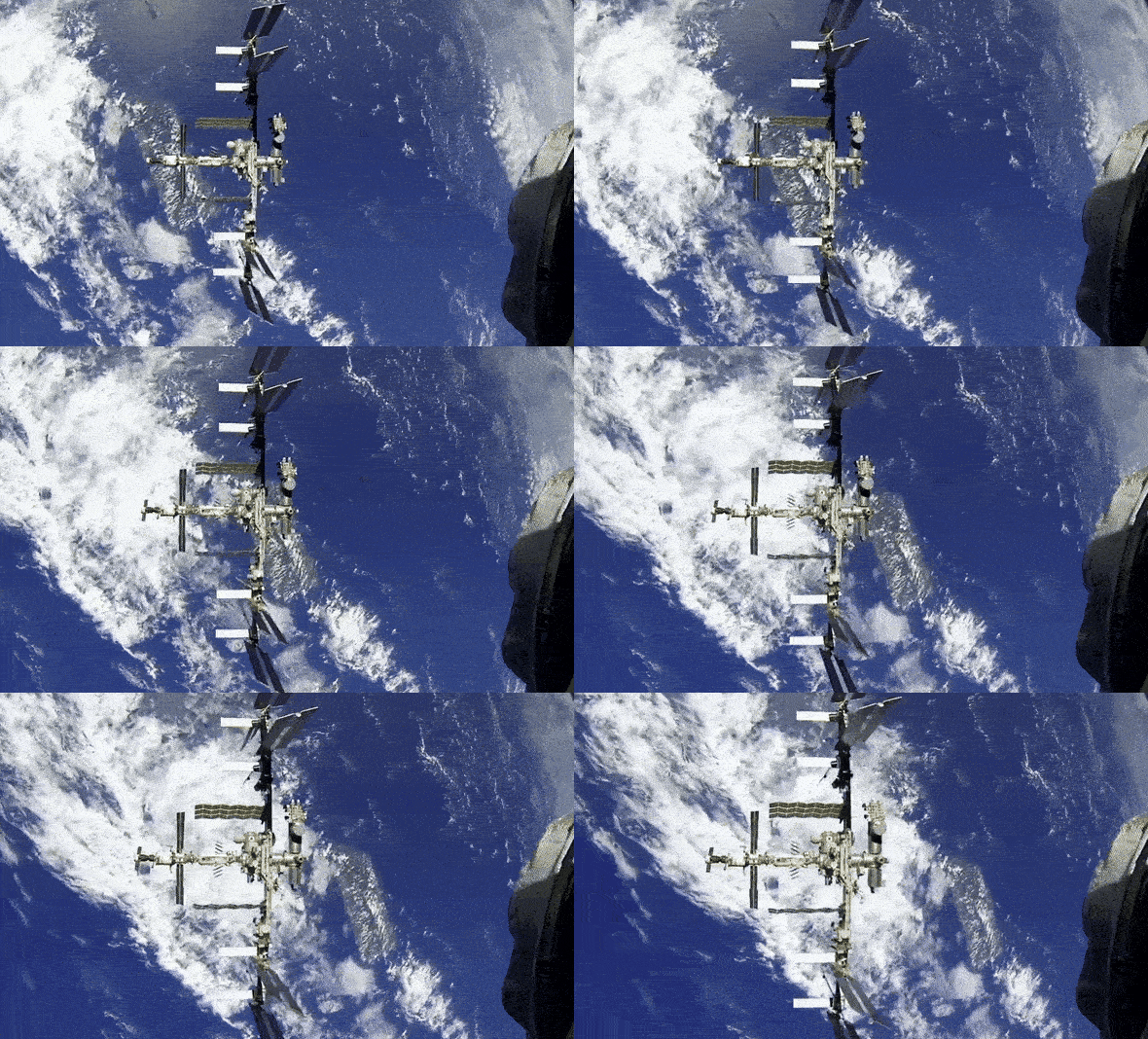
Key research areas planned for BAS include life sciences, pharmaceuticals, material sciences and advanced manufacturing technologies, fields that benefit significantly from the unique conditions of space.
Once operational, BAS will place India among a select group of nations with independent space station capabilities, reducing reliance on international platforms and opening new avenues for scientific exploration and commercial opportunities.
The project represents the next phase of India’s space journey after Gaganyaan, as Isro moves from short-duration human missions to sustained human presence in low Earth orbit.