
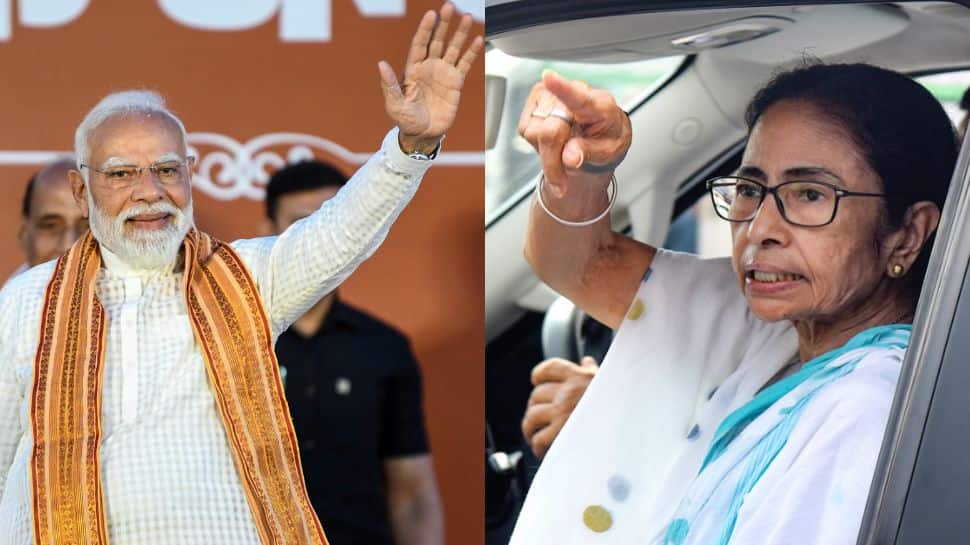
West Bengal has changed hands three times in modern history. In 1977, the Left ended Congress’s rule. In 2011, Mamata Banerjee ended the Left’s 34-year grip. In 2026, the BJP ended Mamata. Each transition took decades to build. This one took 44 months. The numbers tell the story plainly. Of 293 seats counted, the BJP won or led in 208. TMC was reduced to 79. BJP’s vote share stood at 46 percent. TMC’s at 41. Of Bengal’s 6.82 crore registered voters, 6.31 crore cast ballots. That 31-lakh vote gap between the two parties translated into a seat difference of over 100.
Watch: #DNAमित्रों | #DNA #DNAWithRahulSinha #WestBengal #TMC #BJP #AssemblyElection2026 #ResultOnZee@RahulSinhaTV pic.twitter.com/qd1gpkqhwK — Zee News (@ZeeNews) May 4, 2026
DNA decodes: The TMC collapse
TMC had held 119 seats unbroken for 15 years. BJP took 69 of them. TMC had held 162 seats for 10 consecutive years. BJP took 95. In the previous election, TMC retained 37 percent of its seats. BJP retained 98 percent of its own. TMC lost 127 seats it had won last time. BJP lost one. The fortress did not fall in a day. It cracked ward by ward, booth by booth, over four years.
The sanatan factor
BJP built its Bengal campaign on one thread and never let go. The thread was Sanatan. Every rally, every temple visit, every counter-narrative circled back to Hindu consolidation.
On April 23, the day Phase 1 voting began, PM Modi visited Belur Math at 5 PM and spent 30 minutes meditating in Swami Vivekananda’s chamber. The message: we are not outsiders. On April 26, he visited the Matua Thakurbari temple in Thakurnagar. Same day, he went to the three-century-old Thanthania Kalibari in Kolkata, a direct answer to TMC’s Jai Shri Ram versus Jai Maa Kali campaign framing. BJP told voters both Rama and Kali belonged to the same tradition. Bengali identity was Sanatan identity. All Sanatanis would vote as one.
They did.
The Muslim vote shift
West Bengal has 27 percent Muslim voters. For fifteen years, that vote went almost entirely to TMC. In 2021, TMC won 43 of 44 Muslim-majority seats. This time, it won only 30.
The split happened along multiple lines. In Murshidabad and Nadia, roughly 7 percent of Muslim votes shifted to Humayun Kabir’s party. About 4 percent went to Owaisi’s AIMIM. Congress and Left absorbed 3 percent more. Around 3 percent of Muslim voters, urban, middle class, frustrated with TMC’s governance, voted BJP.
In Murshidabad, where 67 percent of voters are Muslim, TMC fell from 20 seats to 9. BJP rose from 2 to 8. The pattern repeated in Malda, Birbhum, and North Dinajpur.
The machine behind the win
Sunil Bansal was appointed BJP general secretary in 2022 and assigned Bengal. He began ground-level work immediately. The strategy was not built for one election. It was built for a state.
Bengal was divided into six zones. Leaders were flown in from Chhattisgarh, Haryana, Karnataka, Andhra Pradesh, Himachal, and Uttarakhand to run each zone. Booth committees were formed at all 80,000 polling booths. Ward presidents were appointed for all 144 wards of the Kolkata municipal area, the first time ever. In the four years before polling, 1.65 lakh small gatherings were held across the state. BJP membership in Bengal doubled from 25 lakh to 50 lakh.
The election that wasn’t violent
In 2021, over 50 people died during polling. In the 2023 panchayat elections, 50 were killed in a single day. This time, violence was near zero. The Election Commission deployed 2.4 lakh paramilitary personnel. NIA was deployed in a state election for the first time. Over 165 additional counting observers were stationed. Voter turnout crossed 92 percent, a new state record.
Mamata Banerjee was trailing in her own seat, Bhavanipur, by 15,000 votes after 19 rounds of counting. The woman who built modern Bengal politics, who stopped the Left, who made Bhavanipur her stronghold, was losing to the same opponent who defeated her in Nandigram five years ago. Fifteen years is a long time to hold a fortress. It took 44 months to take it apart.


