
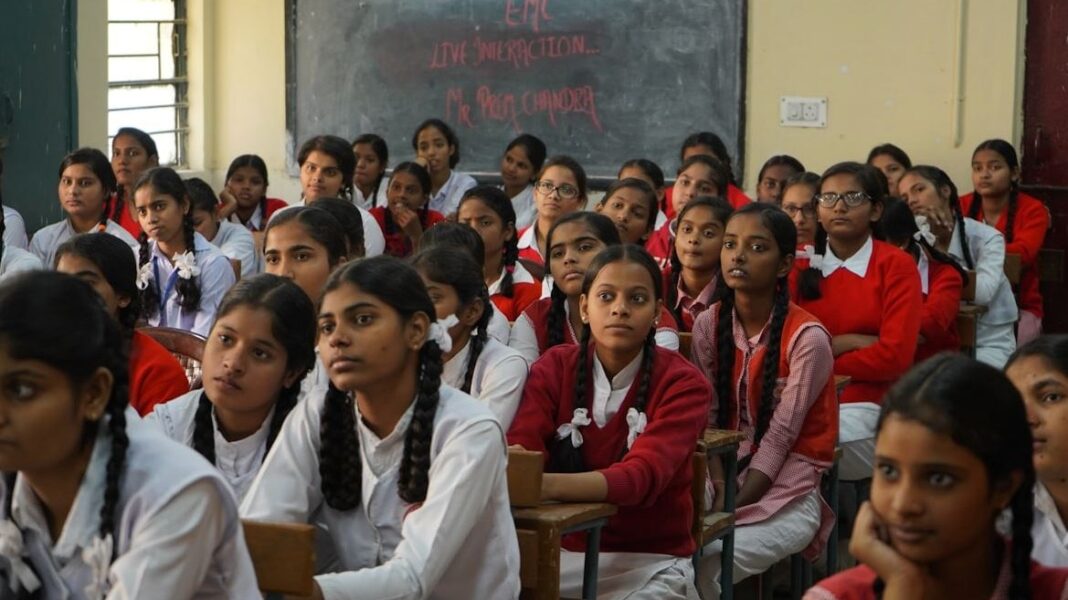
Delhi Chief Minister Rekha Gupta on March 24 presented the 2026–27 Budget, placing strong emphasis on education through higher allocations, infrastructure expansion, and student-focused welfare schemes.
The education sector has been allocated Rs 19,148 crore, marking a significant commitment to strengthening public education in the capital.
The Budget outlined a mix of incentives and structural reforms aimed at improving both access and quality.
From free bicycles for schoolgirls to digital upgrades in classrooms, the government signalled a shift towards inclusive and technology-driven education.
Alongside direct student benefits, the plan also included long-term investments such as new schools and an integrated education hub, reflecting a broader vision for the city’s academic ecosystem.
EXPANDING ACCESS AND STUDENT SUPPORT
One of the key announcements focused on improving access to education for girls.
Around 1.30 lakh Class 9 girl students in Delhi government schools will receive free bicycles, with Rs 90 crore allocated for the scheme. The move is expected to reduce dropouts and make commuting to schools easier.
The government also announced incentives for academic performance. Meritorious students of Class 10 will be given laptops, aiming to bridge the digital divide and support continued learning in a technology-driven environment.
DIGITAL PUSH AND CLASSROOM UPGRADES
A major portion of the Budget has been directed towards modernising classrooms. As many as 8,777 classrooms will be equipped with smart boards, backed by an allocation of Rs 150 crore for smart classes.
This digital push is expected to enhance teaching methods, enable interactive learning, and align government schools with contemporary education standards.
NEW SCHOOLS AND HIGHER EDUCATION EXPANSION
In a significant infrastructure boost, the government announced the establishment of 10 new Kendriya Vidyalayas in Delhi. These centrally run schools are expected to expand access to quality education across different parts of the city.
The Budget also highlighted plans to increase the number of medical colleges and seats, addressing the growing demand for healthcare education and strengthening the pipeline of medical professionals.
Additionally, an integrated education city is set to come up in Narela. The project aims to bring together institutions, innovation hubs, and research facilities, creating a comprehensive academic ecosystem.
The government also spoke about developing a startup policy, incubation framework, and innovation-driven culture within the education sector.
BROADER SOCIAL AND EDUCATIONAL LINKAGES
While the primary focus remained on education, the Budget also included allocations that indirectly support students and families.
Welfare measures such as financial assistance schemes and targeted funding for SC, ST, and OBC communities are expected to improve overall educational participation.
With a combination of direct benefits, infrastructure expansion, and digital upgrades, the Delhi Budget 2026–27 presents a multi-layered approach to strengthening education in the capital.


