

Have you ever been to Egypt? If not, remember travelling to Egypt feels less like a holiday and more like stepping into a civilisation that never really left. Standing next to the pyramids that have watched empires rise and fall, or seeing the Nile, all those you must have only read, but can now see, is something every kind of traveller swears by. Egypt surprises in many ways, and also tests your patience and awareness. It’s a place where ancient grandeur meets modern hustle, and that’s precisely what makes it unforgettable.
And any destination that is layered with history, tourism and so much more, understanding how things work on the ground can shape the entire experience. Read on to find out more.
Here’s why practical advice often matters as much as sightseeing plans.
One
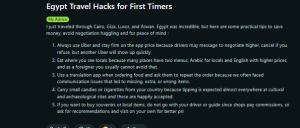
user who recently travelled through Cairo, Giza, Luxor and Aswan shared a detailed list, which were built from lived moments of confusion, small financial losses, and lessons learned quickly. Here’s what stood out.
Getting around
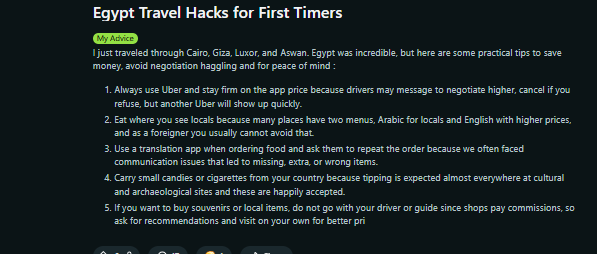
The traveller strongly recommended using Uber in Cairo and staying firm on the app price. According to the post, drivers sometimes message passengers asking to negotiate a higher fare. If you refuse, they may cancel, but another car usually appears quickly.
So, the key is to treat the app price as final. Don’t get pulled into side negotiations. In a city where informal bargaining is common, the app offers price transparency.
Eating smart
Food, he noted, comes with its own quiet dynamics. “Eat where you see locals,” he advised, explaining that some restaurants operate with two menus, one in Arabic for locals and another in English with higher prices.
As a foreigner, he admitted, avoiding this entirely can be difficult.
But choosing crowded, local-heavy spots reduces the markup effect and often results in better food.
In tourist zones near major sites, prices rise quickly. A short walk away can make a noticeable difference.
Communication: Double-check your order
Even when menus are available in English, communication gaps can happen. The traveller suggested using a translation app while ordering and asking staff to repeat the order back.
He described situations where dishes arrived missing items, with unexpected additions, or slightly different from what was requested.
It wasn’t malicious, he implied, just miscommunication.
In high-turnover tourist areas, slowing down the ordering process by a minute can prevent frustration later.
Tipping culture: Be prepared
Tipping or is embedded in daily interactions at many cultural and archaeological sites. From restroom attendants to guards to informal helpers offering directions, small gratuities are often expected.
One unusual tip he shared: carry small candies or cigarettes from your home country.
These are reportedly appreciated and sometimes accepted in place of cash tips. Many agreed to this point.
Whether travellers choose cash or small items, the broader message was simple, anticipate frequent tipping moments and carry small denominations to avoid awkwardness.
Souvenir shopping: Go independently
“If you want to buy souvenirs or local items, do not go with your driver or guide,” he wrote, explaining that shops often pay commissions. That commission gets built into the price. Instead, he suggested asking for general recommendations, then visiting independently. Prices are more flexible and discussions are typically easier when there is no middle commission.
In destinations like Luxor and Aswan, where tourism supports a significant portion of the economy, understanding commission structures can make a noticeable financial difference.