
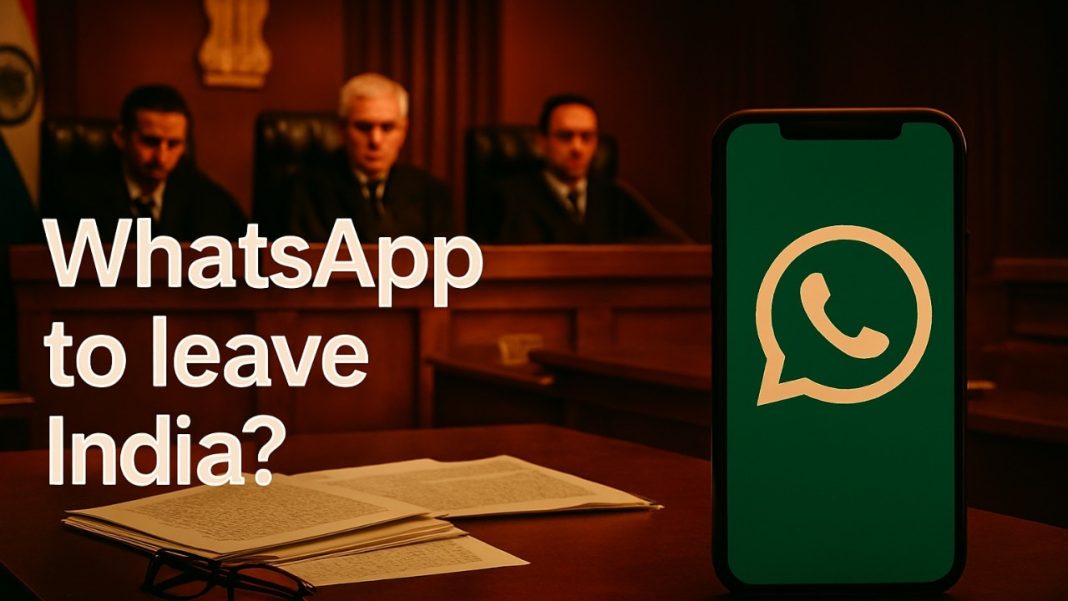
WhatsApp Threatens India Exit Over Encryption Fight
WhatsApp has told the Delhi High Court it will shut down operations in India if forced to break its end-to-end encryption. The ultimatum, issued on May 2, puts the future of the app for its 400 million Indian users at stake.
Key Takeaways
- WhatsApp says it will leave India if made to break message encryption.
- The legal fight centers on a 2021 IT rule requiring message traceability.
- The Delhi High Court criticized WhatsApp for resisting Indian law.
- The next hearing in this landmark privacy vs. security case is on August 14.
The Core Legal Conflict
The dispute stems from Rule 4(2) of India’s 2021 IT Rules. It mandates that social media platforms identify the “first originator” of a message when ordered by a court. The government says this is crucial for investigating serious crimes like terrorism and fraud.
WhatsApp argues that tracing a single message is technically impossible without breaking encryption for all users. Its lawyer, Tejas Karia, stated clearly: “As a platform, we are saying, if we are told to break encryption, then WhatsApp goes.”
Court’s Sharp Rebuke
The Delhi High Court bench, comprising Acting Chief Justice Manmohan and Justice Manmeet PS Arora, expressed strong disapproval. The judges noted WhatsApp’s 400-million-strong user base and questioned its commitment to Indian law.
“You are not willing to comply with Indian law. You have been in the country since 2011. You have a user base of 400 million. You have made a business out of it. You are obligated to follow the law,” the bench remarked.
The court also pointed out that WhatsApp follows similar laws in other countries, including Brazil.
Government’s Stance on National Security
Representing the government, Additional Solicitor General Chetan Sharma argued that privacy is not an absolute right. He stated the traceability rule is a “narrowly tailored” and “proportionate response” needed for national security and public order.
Privacy rights cannot protect someone “spreading disinformation, committing fraud, or inciting violence,” Sharma argued.
WhatsApp’s Privacy Warning
WhatsApp contends that compliance would force it to store a unique “fingerprint” for every message sent in India. This, it says, would destroy privacy for all Indian users and set a dangerous global precedent. The platform and its parent company Meta have challenged the rule’s constitutionality, calling it a violation of fundamental privacy rights.
What Happens Next?
This case is a defining battle for in the world’s largest democracy. The outcome will influence how encrypted platforms operate globally. The Delhi High Court will hear the matter next on August 14.


