
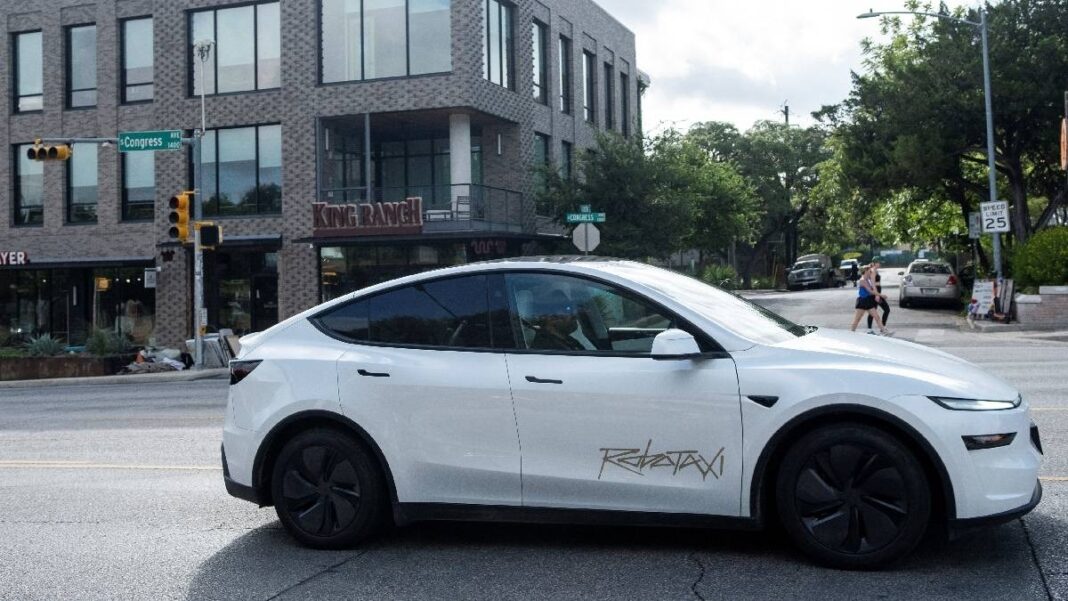
Tesla has revealed that its robotaxis are sometimes driven by humans. The automaker made the revelation as part of an investigation into self-driving vehicle technology. In addition to Tesla, seven other companies, including Amazon-owned Zoox and Uber- and Nvidia-funded Nuro, released new details about their “remote assistance” programs.
According to a Wired report, all the companies said they use remote assistance when their autonomous vehicles get confused, stuck, or face emergencies. Tesla admitted that in rare cases its remote assistance operators assume direct control of the vehicle when all available intervention actions have been exhausted. Other companies insisted that these operators never actually drive the vehicles directly.
However, all the companies, including Tesla, refused to disclose how often their autonomous vehicles require assistance from remote operators.
Tesla currently operates around 50 robotaxis. Most of them have human safety operators sitting in the front passenger seat, ready to take over or intervene if something goes wrong. A handful of the vehicles reportedly operate without safety operators. These vehicles instead rely on remote assistants based in Austin and Palo Alto, California.
Tesla said remote assistance workers can “take temporary control of the vehicle” at speeds up to or less than 2 mph (around 3.21868 km/h). They can also remotely drive a Tesla robotaxi at up to 10 mph (around 16.09 km/h) if the vehicle’s software allows it.
Remote assistance raises safety concerns
Remote assistants are considered an important part of safety systems for autonomous vehicle companies, as vehicles continue to encounter new situations on the road.
However, this system also has risks. Small delays between what a remote assistant sees and what is happening on the road, even by a few hundred milliseconds due to network latency, can slow reaction times and increase the risk of accidents. Operators also require immediate and complete situational awareness.
While other companies rely on a mix of radar and other sensors to navigate, Tesla has focused exclusively on using cameras for its Full Self Driving (FSD) system. The company has also faced several high-profile crashes related to FSD, which prompted a probe by the US National Highway Traffic Safety Administration in October 2025.


