
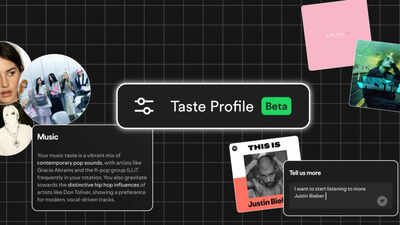
Spotify is finally letting users look under the hood. The company announced a new feature called Taste Profile at SXSW on Friday, giving Premium subscribers a direct way to view and edit the algorithmic model that drives their music recommendations. Co-CEO Gustav Söderström made the announcement, and the feature is rolling out in beta to Premium users in New Zealand first.
Taste Profile surfaces everything Spotify has inferred about you—genres you’ve been gravitating toward, artists you play most, and habits that define your listening day. The app might tell you that you’re “beginning to explore ’90s alternative rock,” for instance. From there, you can flag what feels off and steer things in a different direction using plain language.
Want more high-energy tracks because you’re training for a marathon? Tell it that. Sick of a genre bleeding into every playlist? Ask it to dial that back.
Shared accounts and Sleep sounds have been quietly wrecking recommendations
The problem is one most Spotify users know well. Accounts bleed into each other—kids commandeering CarPlay on long drives, a partner streaming something completely different through the living room speaker. Even solo listeners aren’t safe: sleep sounds and ambient tracks played at night have a way of confusing an algorithm that treats every play as a signal. The old fix was manually removing tracks and playlists one by one. Most people never did.
This Is where Spotify’s AI personalisation push is headed
Taste Profile isn’t a standalone feature—it’s the next piece of a larger puzzle. Prompted Playlists, which lets users generate playlists from a text description, launched in New Zealand before expanding to the US, Canada, Australia, and parts of Europe through early 2026. The two features work differently: Prompted Playlists builds something new, Taste Profile fixes what’s already there. Together, they’re Spotify’s clearest signal yet that algorithmic curation is moving from something that happens to you toward something you actually shape.
For now, it’s Premium-only, with no word on when the rest of the world gets in.


